HEADLINE NEWS

UK Taxis Get NFC Tags for Promo Campaign; NFC Dynamic Screens to Play at French Sporting Event

Samsung Electronics, along with Australia-based NFC marketing firm Tapit, UK-based out-of-home advertising company Chiel and terminal vendor VeriFone are rolling out NFC stickers to 80 taxis in the UK, as part of a promotional campaign for musician Robbie Williams’ upcoming Samsung-sponsored tour.

OTI to Supply Contactless and NFC Readers for Gasoline Stations in North America

Israel-based contactless and NFC vendor On Track Innovations announced Monday it had received an order for 30,000 readers for point-of-sale terminals at retail gasoline stations in North America.

Taxis in Major U.S. Cities to Get NFC-Enabled Video Ads

Riders in 5,000 taxicabs in the U.S. would be able to tap on NFC tags on video advertising screens to download apps, brand information, coupons, maps, music and videos, according to technology suppliers that have equipped the taxis for potential advertising campaigns.

Royal Bank of Canada and Bell Mobility Announce Plans for NFC Launch

May 14 2013 (All day)

Canada’s largest bank and one of its three major mobile operators have announced plans to commercially launch NFC payments by the end of the year, following a trial this summer.

Analyst: Banks Have More to Fear from Cloud-Based Technologies Than NFC

Banks have much more to fear from cloud-based mobile payment than from NFC, even if mobile operators control the secure elements that hold the banks’ payment applications.

GSMA Proposes Global Standard for NFC-Enabled Loyalty and Couponing–Using SIM Cards

May 10 2013 (All day)

The GSMA mobile operator trade group is proposing a global standard for how point-of-sale terminals talk to NFC-enabled mobile wallets to enable consumers to redeem coupons and rewards.

Taiwanese Bank Gets Approval for NFC-Enabled Credit Cards; Okay for Other Banks Expected

Taiwanese banking regulators, as expected, have approved the first bank to issue mobile credit cards that could be downloaded over the air to SIM cards.

Google Wallet Chief Bedier Departs Company as Wallet Continues to Struggle

May 13 2013 (All day)

Google’s vice president of wallet and payments has left the company, following a difficult tenure for the former PayPal executive, who had tried to establish the Google Wallet for physical world payments and offers.

UK Retailer Marks & Spencer Sees Growing Use of Contactless

Marks & Spencer, one of the UK’s largest retailers, announced today it had rolled out contactless payment to 644 of its UK stores and said 14% of its card transactions under £20 (US$30.97) are contactless.

Identive Reports Growing NFC Business; Blames Flat Sales, Losses, on U.S. Budget Cuts

U.S.-based Identive Group reported growing NFC and smart card reader business, but fell back into the red during for the first quarter, a loss it largely blamed on U.S. federal government budget cuts.

German Bank and Telco Hold Small NFC Trial; Larger Launches Planned in Country This Year

As Germany gears up for NFC, German bank Dortmunder Volksbank along with Telefónica (O2) Germany have launched a small pilot putting a credit application onto SIM cards in Western Germany.

Cashless Technology Company Announces Rollout of Isis SmartTap on Vending Machines

Vending technology company USA Technologies plans to integrate the SmartTap mobile-commerce software into all of the company’s nearly 100,000 NFC-enabled terminals on vending machines nationwide.

Samsung to Embed Secure Element in Galaxy S III, Other NFC Phones

May 14 2012 (All day)

Samsung Electronics and NXP Semiconductors have confirmed that Samsung’s next flagship smartphone, the Galaxy S III, will sport an embedded secure chip, in addition to supporting applications on SIM cards.

The phone could be used for the Google Wallet, which requires an embedded chip in the United States, as well as for wallets planned by mobile operators, which would largely be anchored to SIM cards the telcos will issue, NXP confirmed. Visa Inc. and MasterCard Worldwide have already certified the phone to store their respective contactless applications on SIM cards, with approval of the phone with the embedded chip likely to follow.

But Samsung, which some analysts estimate was the largest supplier of smartphones and total handsets worldwide during the first quarter, could own the embedded chip itself in certain markets to enable payment and other applications from service providers–likely outside of the U.S.

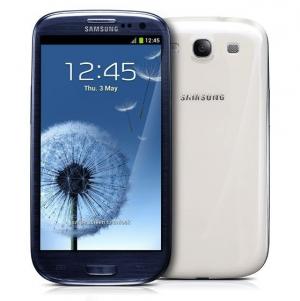
The South Korea-based phone maker has built other Android phones, namely the Nexus S and Galaxy Nexus, for Google with embedded chips, but Google controls these chips for its wallet. 

The Galaxy S III is unlikely to be the last NFC phone from Samsung in which the consumer electronics giant could control the embedded chip. A source at Samsung told NFC Times that the phone maker would include an embedded chip in all of its NFC-enabled smartphones in the future. Samsung did not respond to a request for follow-up confirmation of this, however.

But it fits with the launch by Samsung of a global mobile-commerce unit and plans to enable payments and other applications from its NFC-enabled smartphones, as NFC Times earlier reported. Samsung hired the former head of mobile payment for Visa Inc. in Asia-Pacific, Victor Kim to head the unit. He began work in January.

Samsung, which vies with Apple for the top spot in smartphone shipments worldwide, could enable mobile-commerce players to issue prepaid payment and other applications on the chips and potentially could launch its own payments services down the road.

It would build the applications and wallet on the embedded secure chips in its future NFC phones, sources have told NFC Times. Samsung is expected to hire a trusted service manager to help it manage the embedded chips.

In certain markets, this strategy could compete with the NFC business model of mobile operators, which want to control the secure elements in the phones they sell and to rent space on the chips to service providers.

But in a statement from Samsung to NFC Times, the phone maker made it clear it will not try to buck mobile operators, at least not in markets where the telcos control the distribution channels for phones, such as the U.S.

“The global version of the Samsung Galaxy S III that was announced on May 3 does include an embedded NFC chip,” Asokan Thiyagarajan, director for platforms and technology strategy in the wireless terminals division for Samsung’s Telecommunications America unit, told NFC Times. “Samsung defers to its carriers to determine whether the NFC chip is activated or deactivated for consumer use prior to sale.”

Samsung said it would release the much-anticipated Galaxy S III in the U.S. sometime this summer, following a European launch later this month. Thiyagarajan said the company would offer more details on the device specifications for the U.S. market later.

“We have not specified whether the U.S. version of Galaxy S III will have the embedded NFC chip activated or deactivated,” he said. “Again, that decision is left to the carriers who will offer the Galaxy S III for sale.”

Samsung Told by AT&T to Disable NFC on Galaxy Note
Samsung has experience dealing with the clout of U.S. mobile operators when it comes to activating NFC functionality in its phones.

A marketing director for Samsung Telecommunications America told NFC Times that AT&T instructed the handset maker not to load NFC phone software into Samsung’s hybrid smartphone and tablet, the Galaxy Note, which AT&T introduced in February.

“The direction to us was to not enable NFC,” he said.

The Note carries an NFC chip, though it’s not clear whether there is also an embedded secure element in the device.

AT&T is a member of the Isis joint venture, along with Verizon Wireless and T-Mobile USA, and likely did not want to promote NFC in the Note before Isis launches its NFC wallet in two U.S. cities later in the summer.

The Note out of the box only supports the previous version of Android 2.3, known as Gingerbread, which would have required Samsung to add NFC middleware to enable the NFC functionality. Operators in South Korea have ordered the Note with the NFC functionality turned on.

On the other hand, two other Samsung devices, the Galaxy S III and Galaxy Nexus, run the latest version of Android, 4.0, or Ice Cream Sandwich. This version has the NFC software built-in.

That’s why when Verizon wanted to block the Google Wallet from the Galaxy Nexus, it couldn’t just tell Samsung to not install the NFC software on the phone. Instead, it had to ask Google not to make the wallet app available to Verizon subscribers. Google complied.

Despite the growing popularity of its models, Samsung continues to see working with operators as key to its strategy, since telcos buy and subsidize many of its phones.

Still, Samsung might be able to use the embedded chip in its NFC phones in markets in Europe and Asia, where mobile operators don’t control all of the distribution channels or dictate handset features.

NXP’s Stacked NFC Chip
The Galaxy S III is the third generation of Samsung’s popular Galaxy S series. The phone maker has said it has sold 20 million units of the Galaxy S II, released last year.

But this phone supports NFC only if operators order it with an NFC chip inside, and then it only supports SIM-based applications via the single-wire protocol. The NFC-enabled version of the Galaxy S II is believed to carry only NXP’s PN544 chip, which has no embedded secure element attached to it.

The Galaxy S III, on the other hand, will sport NXP Semiconductors’ PN65N NFC chip, which comes stacked with NXP’s SmartMx embedded secure element.

This means the new phone could support payments and other secure applications on the embedded chip, in addition to secure applications on SIM cards.

It remains to be seen, however, whether the Galaxy S III will become the first Samsung phone to support the handset maker’s mobile-commerce strategy–with Samsung controlling the chip in certain markets outside of the U.S.

A Samsung source told NFC Times that the handset maker is likely to take a “hardware driven” approach with the phone in Europe–that is, shipping the phone in certain European countries with the embedded secure chip activated.

This could allow new mobile-commerce players, including some smaller telcos, to use the chip to issue their own prepaid payment applications, for example.

Larger, SIM-centric telcos in Europe likely would insist that the phone’s embedded chip be deactivated–just as their American counterparts are expected to do.

While not commenting on the Galaxy S III specifically, Sebastien Cano, senior vice president for North America in the mobile communication unit of France-based SIM supplier Gemalto, noted that telcos in both North America and Europe subsidize phones.

“I’d like to know why (UK-based) Vodafone would put 200 to 300 bucks in a phone and let revenue be made by other guys,” he said.

In the U.S., No. 3 carrier Sprint could add the Galaxy S III to its list of phones supporting the Google Wallet, NXP suggested in an announcement today. Google needs control of the embedded chip for its wallet in the U.S., and Sprint remains its only announced wallet partner.

Other Phone Makers Plan Embedded Chips
Samsung isn’t the only handset maker with plans to put embedded secure chips in its NFC phones.

Research In Motion has already shipped a handful of NFC-enabled BlackBerrys with embedded chips, which also support the single-wire protocol.

More recently, LG Electronics has introduced two phones for Sprint with embedded chips, the Viper 4G LTE and Optimus Elite. Both will run the Google Wallet.

HTC also has at least two phones with embedded chips on the market or coming soon, the Evo 4G LTE for Sprint and the One X, which has been released in Europe and will come to the U.S. soon via AT&T. The U.S. telco, however, is not expected to use the embedded chip.

Sony Mobile is said to be looking into the idea for its Xperia NFC phones, as well. UPDATE: According to Visa's mobile compliant products list, Sony's forthcoming sola will support an embedded secure element and Visa recently certified it to run its Visa payWave application. END UPDATE.

And Intel has included NXP’s PN65N stacked NFC chip with its reference device design, though the embedded chip is expected to be deactivated by France-Telecom Orange, the first telco that has announced plans to introduce the Android-based, Intel-powered smartphone, this summer in France and the United Kingdom.

Apple, if it supports secure NFC applications in its next iPhone, is expected to do so with an embedded secure element.

Most observers believe Apple remains the sole handset maker that could stand up to telcos in the U.S. and control the secure element in its phones.

RIM, for example, is careful not to use the embedded chip for services that would compete with those planned by telcos, either in the U.S. or in Europe.

It remains to be seen just how far Samsung will go with its embedded chips and mobile-commerce service.

Unlike RIM, Samsung is on the ascendency. It shipped nearly 100 million smartphones last year, more than tripling its shipments from 2010 and enough to edge out Apple, according to market research firm IHS iSuppli.

IHS estimated that Samsung finished second behind Apple in smartphone shipments during the first quarter of 2012. But research firms IDC and Strategy Analytics disagreed, naming Samsung the No. 1 smartphone supplier for the quarter with at least 42.2 million devices shipped, compared with 35 million for Apple.

With its growing market share, Samsung likely sees embedded chips as a way to increase the value of its phones by enabling more NFC services, while earning more revenue at the same time.

Its challenge will be to balance this strategy with the need to avoid alienating mobile operators, the major customers for its phones.