HEADLINE NEWS

UK Taxis Get NFC Tags for Promo Campaign; NFC Dynamic Screens to Play at French Sporting Event

Samsung Electronics, along with Australia-based NFC marketing firm Tapit, UK-based out-of-home advertising company Chiel and terminal vendor VeriFone are rolling out NFC stickers to 80 taxis in the UK, as part of a promotional campaign for musician Robbie Williams’ upcoming Samsung-sponsored tour.

OTI to Supply Contactless and NFC Readers for Gasoline Stations in North America

Israel-based contactless and NFC vendor On Track Innovations announced Monday it had received an order for 30,000 readers for point-of-sale terminals at retail gasoline stations in North America.

Taxis in Major U.S. Cities to Get NFC-Enabled Video Ads

Riders in 5,000 taxicabs in the U.S. would be able to tap on NFC tags on video advertising screens to download apps, brand information, coupons, maps, music and videos, according to technology suppliers that have equipped the taxis for potential advertising campaigns.

Royal Bank of Canada and Bell Mobility Announce Plans for NFC Launch

May 14 2013 (All day)

Canada’s largest bank and one of its three major mobile operators have announced plans to commercially launch NFC payments by the end of the year, following a trial this summer.

Analyst: Banks Have More to Fear from Cloud-Based Technologies Than NFC

Banks have much more to fear from cloud-based mobile payment than from NFC, even if mobile operators control the secure elements that hold the banks’ payment applications.

GSMA Proposes Global Standard for NFC-Enabled Loyalty and Couponing–Using SIM Cards

May 10 2013 (All day)

The GSMA mobile operator trade group is proposing a global standard for how point-of-sale terminals talk to NFC-enabled mobile wallets to enable consumers to redeem coupons and rewards.

Taiwanese Bank Gets Approval for NFC-Enabled Credit Cards; Okay for Other Banks Expected

Taiwanese banking regulators, as expected, have approved the first bank to issue mobile credit cards that could be downloaded over the air to SIM cards.

Google Wallet Chief Bedier Departs Company as Wallet Continues to Struggle

May 13 2013 (All day)

Google’s vice president of wallet and payments has left the company, following a difficult tenure for the former PayPal executive, who had tried to establish the Google Wallet for physical world payments and offers.

UK Retailer Marks & Spencer Sees Growing Use of Contactless

Marks & Spencer, one of the UK’s largest retailers, announced today it had rolled out contactless payment to 644 of its UK stores and said 14% of its card transactions under £20 (US$30.97) are contactless.

Identive Reports Growing NFC Business; Blames Flat Sales, Losses, on U.S. Budget Cuts

U.S.-based Identive Group reported growing NFC and smart card reader business, but fell back into the red during for the first quarter, a loss it largely blamed on U.S. federal government budget cuts.

German Bank and Telco Hold Small NFC Trial; Larger Launches Planned in Country This Year

As Germany gears up for NFC, German bank Dortmunder Volksbank along with Telefónica (O2) Germany have launched a small pilot putting a credit application onto SIM cards in Western Germany.

Cashless Technology Company Announces Rollout of Isis SmartTap on Vending Machines

Vending technology company USA Technologies plans to integrate the SmartTap mobile-commerce software into all of the company’s nearly 100,000 NFC-enabled terminals on vending machines nationwide.

Samsung Gears Up for Move into Mobile Payments with NFC Phones

Samsung Electronics is gearing up to jump into the mobile-payment market–with plans to offer a payments service from its NFC-enabled smartphones, NFC Times has learned.

The mobile phone giant, which vies with Apple for the top spot in smartphone shipments worldwide, has hired a former director of mobile payment for Visa Inc. in Asia-Pacific and is building a payment and wallet platform around embedded secure chips in its future NFC phones.

The company plans to introduce both proximity and online payment and enable other payments service providers to do the same, NFC Times has learned.
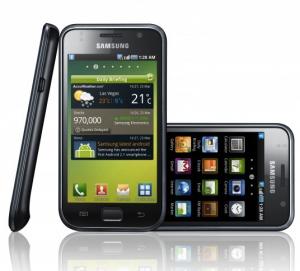
The initiative could pose a new challenge to major mobile operators, which plan to introduce their own NFC-mobile wallets based on SIM cards they issue. It could also offer more competition for major banks, though it’s possible Samsung would work with banks in certain markets.

With its growing share of the smartphone market and strong backing for NFC technology, South Korea-based Samsung sees its NFC phones and embedded secure chips that can store payment, ticketing, ID and other applications as valuable assets, as more NFC phones roll out, sources told NFC Times.

Besides NFC-mobile payment applications, Samsung would also support remote payment, as well as other mobile-commerce applications that could be part of a mobile wallet. The phone maker could earn fees from payment transactions, probably splitting them and other service providers. Samsung might also rent space on the chips.

Samsung could be the issuer of payment applications, itself, in certain markets, possibly using Samsung Card, a credit card company of which Samsung Electronics is the largest shareholder.

It would then enable new payment service providers. These service providers could range from small mobile operators to merchants to traditional banks.

Hires Former Visa M-Payment Director
But Samsung is not expected to launch a new payment scheme to compete with Visa, MasterCard or other payment networks. Its applications would support these schemes and such applications as Visa payWave and MasterCard PayPass.

The plans by Samsung to offer its own NFC applications have been rumored for some time, but the project apparently got the green light only in recent months.

The company has hired Victor Kim, who served as director of mobile payment for Visa’s Asia-Pacific region for nearly five years until June 2011.

He began work for Samsung Electronics in January of this year as director of global mobile commerce, working on delivering a payment service to mobile devices, using both NFC and remote payment, as well as building a mobile prepaid wallet service, according to his LinkedIn profile.

With Visa, Kim worked on NFC trials in South Korea, Taiwan, Malaysia and Thailand, along with remote payment projects.

He also served a short stint as director of emerging payments for Visa’s South Korea country office before joining Samsung. He had earlier headed up Visa’s chip debit program in Asia-Pacific.

Kim made the rounds at the recent Mobile World Congress in Barcelona trying to tie up partnerships with vendors and mobile players, sources said.

Samsung last week also filed a request to trademark the term “Samsung Wallet” with the U.S. Patent and Trademark Office. 

Kim did not respond to questions from NFC Times, and a Samsung spokeswoman also did not immediately respond.

Watching for New Wallet Players
The move by Samsung to a greater role in the NFC payment ecosystem would be yet another headache for major mobile operators. The telcos are already watching nervously at what other so-called over-the-top players, such as Apple, plan to do with NFC and possible mobile wallets. And Microsoft is also developing a mobile wallet for its Windows Phone 8 smartphone operating system.

If Apple does launch an NFC-based mobile wallet with its next iPhone, the company would almost certainly tie the secure wallet applications to an embedded chip in the device that it would control. Mobile operators already face competition from Google, which also has anchored its Google Wallet to embedded chips in its first wallet-enabled phones.

But any move by Samsung to control the embedded chips in its Android smartphones and introduce payment applications also could represent a blow to Google, which is counting on more Android phones–and not just its own models–to support the Google Wallet.

Samsung in the past has worked with mobile operators, not making NFC a default feature in its smartphones unless ordered with NFC chips by telcos. Most of these phones, including the popular Galaxy S II, don’t carry embedded chips, instead only supporting applications on operator-issued NFC SIMs via a single-wire protocol connection.

But Samsung could easily order embedded chips for its phones. All of the NFC chip suppliers, including those planning to introduce combo wireless chipsets incorporating NFC, can offer embedded secure elements with the NFC modem chips. Experts believe a significant percentage of NFC phones shipping this year will come with embedded chips as well as support for the single-wire protocol. The latter would enable telcos to issue NFC-enabled SIMs for the phones. 

It’s likely Samsung’s NFC-payment application will vary according to the market and the relative clout of major mobile operators in those markets. 

As Google has discovered, major operators can discourage or block the loading of wallets onto the phones they distribute, even if they don’t necessarily control the embedded chips.

U.S. carrier Verizon Wireless has tried to block the Google Wallet app and applications from Google’s Galaxy Nexus it put on sale last December. AT&T has declined to actively support the wallet on the same phone model. Both telcos are co-owners of the Isis joint venture, which plans its own mobile wallet launch this year.

Samsung, in fact, makes the Galaxy Nexus for Google, but Google controls the master keys to the embedded secure element in phones. In other Samsung smartphones, depending on the power of operators that buy handsets, the telcos could demand that Samsung turn over the master keys to the embedded chips.

“I’m not sure Samsung has that same level of leverage as Apple,” a source connected with Google told NFC Times. “I’m sure they would like to have that level of leverage. I don’t know anyone that has the kind of leverage Apple has.”

Samsung is apparently calculating that its phones are in high enough demand to withstand any pressure from major operators.  And if it were to enable some operators to become payment service providers, it could sell the phones through these carriers.

Samsung shipped nearly 100 million smartphones last year, more than tripling its shipments from 2010 and enough to edge out Apple, according to market research firm IHS iSuppli. The 2011 shipments included more than 20 million units of Samsung’s flagship Galaxy S II.

U.S. based research firm Gartner estimates Apple overtook Samsung in smartphone shipments for 2011, thanks to record sales in the fourth quarter of its iPhone. Apple shipped more than 35 million iPhones during the quarter, during which it introduced the iPhone 4S.

Including feature phones, Samsung shipped 92.7 million units for the quarter and nearly 314 million units during all of 2011, placing it second behind a declining Nokia, according to Gartner.