
Chip Makers: Tens of Millions of NFC Phones Expected in 2011
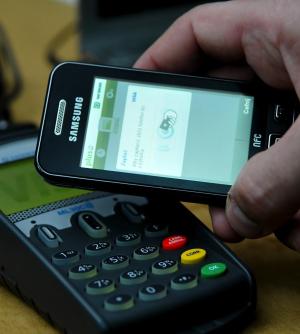
Major NFC chip makers predict 40 million to 50 million NFC phones or more will be on the market by the end of 2011, along with a smaller number of NFC bridge devices.
In interviews carried out by NFC Times, representatives of NXP Semiconductors and Inside Contactless say they have seen enough orders or indications of future orders from phone makers to confidently forecast the end of the drought of NFC devices by 2011, especially during the second half of the year.
Jeff Miles, director of mobile transactions worldwide for NXP, told NFC Times that more and more handset makers have made the decision that "this is a technology they are going support." These handset makers have either ordered chips or are in the process of doing so.
"It’s full (NFC) implementation with different suppliers," he said. "We feel (there will be) 50 million-plus (phones) next year, from every indication."
The projection is for phones using chips from all NFC suppliers, and it is in addition to such NFC bridge or alternative devices as contactless microSD cards and SIMs or SIM overlays with flexible antennas. These bridge devices will not be as numerous as NFC phones, Miles said.
Rémy de Tonnac, CEO of Inside Contactless, also estimated NFC bridge devices would be eclipsed by full NFC phones, accounting only for about 25% of shipments of NFC chips for next year. Of his projected total of 50 million NFC devices on the market in 2011 from all chip suppliers, three-quarters would be full NFC phones, de Tonnac said.
The definition of bridge devices would also include NFC stickers that can interact with phones via a Bluetooth connection, but not passive stickers, said Charles Walton, Inside’s executive vice president and chief marketing officer. He predicted most of the phones would hit the market during the second half of 2011.
"I think we’ll start to see devices that will come probably sooner than mid-year (and) then start to ramp up with bigger volume," Walton told NFC Times.
He compared 2011 for NFC phones to 2005 for contactless banking cards. That was the year banks began rolling out the cards in the United States. “This is what we’re going to see here. This is really year one (for NFC) in 2011."
NXP’s Miles said there might be a couple of NFC phones on the market before the end of 2010. That’s in addition to the Nokia C7 smartphone, which began shipping last week with an NFC chip inside. The Symbian phone requires a software upgrade for the NFC applications to work, however. And the phone doesn’t support card emulation, that is, the phone cannot act like a contactless card.
The chip makers declined to say which handset makers have ordered or expressed strong interest in their chips. But as NFC Times has reported in the past, such global phone makers as Nokia, Samsung, LG, HTC, Research in Motion and Motorola are expected to incorporate NFC in one or more models by next year, with mobile operators and service providers especially interested in smartphones. Some of the models will support Google’s Android operating system or perhaps Windows.
Apple is also working with the technology and anticipation is again running high that it will adopt NFC for the iPhone 5 due out next year. Cupertino disappointed NFC industry backers last year when the iPhone 4 did not pack NFC.
While the Nokia C7 does not support card emulation, at least not without special orders from big operators, many of the other NFC phones are expected to offer this feature.
Demand Growing for Embedded
That would require them to support at least one secure chip, known as a secure element, such as those found on SIM cards or chips embedded in the phone itself. These tamper-resistant smart card chips provide a safe place to store secure applications, including encryption keys.
NXP, Inside and a third NFC chip supplier, STMicroelectronics, all say they are seeing increased demand for NFC chips that can support embedded secure elements. The embedded chips could take the place of SIM cards on NFC phones to store payment or other secure applications. The SIM-based NFC phones would also have to support the single-wire protocol, or SWP, connection to the NFC chip.
But the same phone might support multiple secure elements, perhaps both an embedded chip and support for the SWP standard. Or it could also support a secure element in a microSD card.
To satisfy the demand for embedded secure elements, NXP has come out with a new NFC chip, the PN65, which is bundled or stacked with its secure element. Inside also is expected to introduce an NFC chip stacked with a secure element. And ST is likely to do the same. The three chip makers already have NFC chips that support the single-wire protocol. NXP also has said its SWP chip, the PN544, can connect to a separate secure embedded chip or one in a microSD card.
In years past, the SIM had been considered the de facto secure element for NFC phones, and this option is still strongly backed by the large telco trade group, the GSM Association.
Unlike the SIM, when the secure element is embedded in the handset, it will not always be clear which party controls it. In such markets as the United States, where mobile operators keep tight control over phones, the carriers would also control the embedded secure chip. But in other markets, it could be service providers, handset makers or even platform suppliers, such as Google with Android, that control the embedded chips.
And the party that controls the secure chip will probably control the revenue from NFC, say observers.
But payment and ticketing applications, which would be stored on the secure elements, will not be the only services offered on NFC phones, points out NXP’s Miles. Applications that use NFC’s tag-reading capability will also be popular, he said. One example would be location-based marketing.
And as the base of handsets grows, more and more third-party developers will become interested in including NFC features in their smartphone applications, he predicted.
"To me, you get 10 to 20 to 30 to 50 million phones, in a given market you’ve got enough critical mass for some of these guys to start to say: 'I can built something around that.' "
 Facebook
 Twitter
 LinkedIn
HEADLINE NEWS


Syndicate

