HEADLINE NEWS
Most NFC Phones to Pack Embedded Chips

The majority of NFC phones will come with embedded secure chips that can store applications, say research analysts–projections that will not come as welcome news to many mobile operators.
Device makers are likely ordering the chips to secure applications from app stores that will run on their phones. And among the applications the chips could store are payment services from banks, transit and event ticketing and ID for access control, though phone and mobile platform suppliers have stayed mum on the intended uses for the chips.
One research firm, UK-based IMS Research, projects that 75% of the roughly 70 million NFC phones predicted to be shipped this year will come with embedded chips. An analyst from another firm, U.S.-based Gartner, believes that estimate might be high, but certainly a majority of phones will carry the embedded chips this year, including handsets from such large manufacturers as Research in Motion, Nokia, Samsung and HTC.
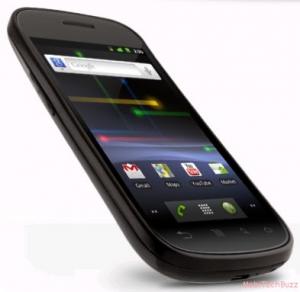
The percentage of NFC phones with embedded chips will climb even higher in 2012, projects IMS, with 77% of roughly 150 million phones forecasted to be shipped next year to carry the chips. The percentage of embedded chips will continue to increase after that, said Alex Green, senior research director at IMS.
“The overwhelming majority will have an embedded solution in the long term,” he told NFC Times.
But both he and Mark Hung, research director, wireless, at Gartner, say many if not most of the NFC phones that pack embedded chips will also support a single-wire protocol connection between the NFC chip and the SIM card slot in the phones. This would also enable secure applications, such as payment, to be stored on the SIM cards that most mobile operators issue.
“My belief is that anybody who supports eSE (embedded secure element) will also support SWP, with the possible exception of Apple,” Hung told NFC Times.
If Apple were to adopt NFC, it is expected to only support secure applications on embedded chips, since the company usually seeks to control its ecosystem. But a growing number of analysts and others in the industry believe Apple will pass on NFC for its next iPhone this year.
Both analyst firms interviewed chip and handset makers and others in the NFC ecosystem to come up with their projections.
Wallet Wars Possible
If device makers and mobile platform suppliers try to control the embedded chips, it could put them on a collision course with some mobile operators, which will be ordering most of the NFC phones that hit the market in developed countries.
The telcos want to control all of the secure elements in those phones. They fear getting cut out of most of the revenue from NFC applications just as they now get passed by when subscribers buy apps from app stores promoted by mobile platform providers.
These same platform providers, RIM, Google and Microsoft, are backing the embedded-chip model for NFC, sources have told NFC Times. Apple would no doubt support it, too, if it were to adopt NFC.
Update: A representative from NXP Semiconductors, expected to be one of two major shippers of NFC chips and secure elements this year, would only say when asked by NFC Times that the embedded chips will be in "many" NFC phones. End update.
Mobile operators, on the other hand, have been laying the foundation for using their SIM cards to carry payment and other secure applications. That includes getting standards approved and enlisting the backing of their large trade group, the GSM Association.
Many of the telcos plan to introduce their own NFC mobile wallets, with many applications in those wallets secured on their SIM cards. They would charge banks and other service providers fees to rent space on the SIMs and to help the service providers manage applications there.
IMS’ Green said the research firm projects that more than half of the NFC phones shipped with embedded chips over the next three to four years will also support applications on SIMs. “In four to five years’ time, 1.5 secure elements will be shipped for every NFC IC (chip) being shipped.” The NFC chip itself handles the short-range radio communication with readers, tags and other NFC devices.
IMS projects NFC chip makers will ship 70 million units this year and about 160 million chips next year. These are only NFC chips, not secure elements, but in many cases, the secure elements will be stacked with the NFC controllers.
The number of NFC chips shipped roughly translates to the number of NFC phones shipped in a given year, though chip shipments may be a little higher.
Projected Phone Shipments
IMS’ projections are similar to those made by such chip makers as NXP Semiconductors, which has forecasted that 70 million NFC phones will be shipped this year and about 150 million phones next year.
Some analysts, such as U.S.-based Pyramid Research, believe the projection for shipments of 70 million phones in 2011 is too high, in part given the decision by Nokia to adopt Microsoft’s Windows Phone 7 operating system, which means Nokia will be shipping fewer Symbian-based NFC phones, said Stela Bokun, senior analyst in Europe for Pyramid. The firm projects that only 11.5 million NFC smartphones will actually be sold this year. NXP’s forecast applies to all phones, including feature phones, and to shipments, not actual sales. Shipments of phones typically track closely with sales, and are usually no more than 7% to 8% higher, said Bokun.
Pyramid earlier this month projected that nearly 28% of smartphones sold in 2015 would support NFC, which the firm estimates would amount to 250 million units.
That forecast is more conservative than some others made recently. For example, IMS forecasts that by 2015, NFC chip shipments for all types of phones will top 800 million, representing just under a third of all phones projected to be sold that year, said Green.
Berg Insight weighed in recently that 24% of mobile handsets sold in 2015 will support NFC, which it estimated would amount to 400 million phones. And UK-based Juniper projects shipments of NFC-enabled smartphones would reach 20% of all smartphones by 2014, which the firm said would equate to 300 million phones.
Neither Pyramid nor Juniper nor apparently Berg Insight projected the percentage of embedded chips in NFC phones.
Problems with Multiple Secure Elements?
Multiple secure chips in NFC phones could create problems for managing the applications in the phones, said at least one trusted service manager. It might also cause technical difficulties if more than one secure element is active at the same time.
For example, if one bank payment application is on the phone’s SIM card and another is on an embedded chip, the point-of-sale terminal reader wouldn’t know which one to read.
“If you have two secure elements (activated) at the same time, and the handset is facing the reader, how is the selection is made?” asked Laurent Jullien, director of contactless and payment services at France’s Bouygues Telecom.
Potentially, there could even be a third secure element, say from a microSD card, using the same contactless antenna embedded in the NFC handset.
Aymeric Harmand, business development manager in charge of trusted service management, NFC secure elements and mobile applications for France-based vendor Oberthur Technologies, said at the recent WIMA 2011 conference in Monaco that the concept of multiple secure elements “raises a few challenges.”
“The market is not completely ready to have two secure elements in one phone,” he said. “The architecture of the phone, if architected for payment on the SIM, the microSD will not see the antenna (in the phone).”
Bouygues’ Jullien said he believes one of the chips in the phone would have to be made the default secure element. But service providers with applications on the other chip probably wouldn’t like the idea.
In any case, putting applications on multiple secure elements could create hassles for consumers, as well, he said. They wouldn’t know whom to call if one of their applications doesn’t work, Jullien said. Mobile operators, such as Bouygues, plan to offer troubleshooting of NFC applications as one of their services, but that would only apply if the applications reside on the SIM.
“Simplicity is the key for end users,” Jullien said.
Others, however, say the consumer would contact the provider of the application in case of a problem, just as many do when an app fails to function.


"Most NFC phones will come with embedded secure chips, like Google's Nexus S." I think this is a bit confusing. Google's Nexus S has an embedded secure element. Embedded secure element is 1 of the 4 applied solutions to enable NFC-Phones for (secure) payments. Until now, you find few phones which have embedded secure element. We see a lot more NFC Phones with SWP and a SIM-based secure element. For more info about the 4 applied solutions; http://www.nfc-phones.org/what-can-we-do-with-nfc-phones/ Also up to date lists of all available NFC-Phones, by country and by carrier.