HEADLINE NEWS

UK Taxis Get NFC Tags for Promo Campaign; NFC Dynamic Screens to Play at French Sporting Event

Samsung Electronics, along with Australia-based NFC marketing firm Tapit, UK-based out-of-home advertising company Chiel and terminal vendor VeriFone are rolling out NFC stickers to 80 taxis in the UK, as part of a promotional campaign for musician Robbie Williams’ upcoming Samsung-sponsored tour.

OTI to Supply Contactless and NFC Readers for Gasoline Stations in North America

Israel-based contactless and NFC vendor On Track Innovations announced Monday it had received an order for 30,000 readers for point-of-sale terminals at retail gasoline stations in North America.

Taxis in Major U.S. Cities to Get NFC-Enabled Video Ads

Riders in 5,000 taxicabs in the U.S. would be able to tap on NFC tags on video advertising screens to download apps, brand information, coupons, maps, music and videos, according to technology suppliers that have equipped the taxis for potential advertising campaigns.

Royal Bank of Canada and Bell Mobility Announce Plans for NFC Launch

May 14 2013 (All day)

Canada’s largest bank and one of its three major mobile operators have announced plans to commercially launch NFC payments by the end of the year, following a trial this summer.

Analyst: Banks Have More to Fear from Cloud-Based Technologies Than NFC

Banks have much more to fear from cloud-based mobile payment than from NFC, even if mobile operators control the secure elements that hold the banks’ payment applications.

GSMA Proposes Global Standard for NFC-Enabled Loyalty and Couponing–Using SIM Cards

May 10 2013 (All day)

The GSMA mobile operator trade group is proposing a global standard for how point-of-sale terminals talk to NFC-enabled mobile wallets to enable consumers to redeem coupons and rewards.

Taiwanese Bank Gets Approval for NFC-Enabled Credit Cards; Okay for Other Banks Expected

Taiwanese banking regulators, as expected, have approved the first bank to issue mobile credit cards that could be downloaded over the air to SIM cards.

Google Wallet Chief Bedier Departs Company as Wallet Continues to Struggle

May 13 2013 (All day)

Google’s vice president of wallet and payments has left the company, following a difficult tenure for the former PayPal executive, who had tried to establish the Google Wallet for physical world payments and offers.

UK Retailer Marks & Spencer Sees Growing Use of Contactless

Marks & Spencer, one of the UK’s largest retailers, announced today it had rolled out contactless payment to 644 of its UK stores and said 14% of its card transactions under £20 (US$30.97) are contactless.

Identive Reports Growing NFC Business; Blames Flat Sales, Losses, on U.S. Budget Cuts

U.S.-based Identive Group reported growing NFC and smart card reader business, but fell back into the red during for the first quarter, a loss it largely blamed on U.S. federal government budget cuts.

German Bank and Telco Hold Small NFC Trial; Larger Launches Planned in Country This Year

As Germany gears up for NFC, German bank Dortmunder Volksbank along with Telefónica (O2) Germany have launched a small pilot putting a credit application onto SIM cards in Western Germany.

Cashless Technology Company Announces Rollout of Isis SmartTap on Vending Machines

Vending technology company USA Technologies plans to integrate the SmartTap mobile-commerce software into all of the company’s nearly 100,000 NFC-enabled terminals on vending machines nationwide.

Google Drops NXP in Favor of Broadcom for NFC Stack, Latest Nexus Devices

Nov 19 2012 (All day)

Google has chosen U.S.-based Broadcom as its NFC chip supplier for its new Nexus 4 smartphone and Nexus 10 tablet and has incorporated Broadcom’s NFC software stack in its new Android 4.2 operating system running on the devices. 

The move signals the beginning of the end of the dominance of NFC chip supply for Android devices enjoyed by NXP Semiconductors, which had also supplied the NFC stack for earlier versions of Android.

The Nexus 4 and Nexus 10, which went on sale Tuesday, will use Broadcom’s BCM20793, a standalone NFC chip, part of the BCM2079x line, which the U.S.-based semiconductor supplier announced in September of 2011.
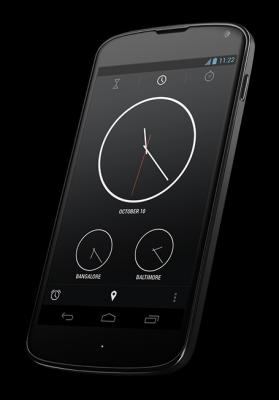
It’s the first disclosed shipments of NFC chips by Broadcom for particular devices, though at least one other consumer device carrying Broadcom chips is expected to be announced as early as this week. UPDATE: Broadcom announced Monday that Nindendo is incorporating its NFC chip in the new Wii U game console. The device also includes Broadcom's Wi-Fi and Bluetooth technology. END UPDATE.

Broadcom has touted the 40-nanometer technology of its NFC chips, which it contends makes the chips smaller and more power efficient than others on the market.

The Nexus 4 and the Nexus 10 also come with an embedded secure element, which STMicroelectronics is providing, another first for Android NFC phones. Both Visa Inc. and MasterCard Worldwide have certified the ST chip to run their contactless applications, Broadcom told NFC Times.

The Broadcom NFC chip in the Nexus devices supports SIM cards as secure elements, as well. Both types of secure elements connect to the Broadcom NFC controller via a single-wire protocol connection.

Google has announced that its Nexus 4 smartphone, which is made by LG Electronics, comes with a preloaded Google Wallet app. The Samsung Electronics-produced Nexus 10 tablet presumably could be used for payments, as well, since it also carries an embedded secure chip, though Google is only promoting its Android Beam feature for the tablet. This feature uses NFC’s peer-to-peer communication mode.

The current architecture for the Google Wallet calls for the storing of a MasterCard PayPass-enabled prepaid card on the embedded chip in the NFC device, which consumers would tap at a PayPass terminal to make a purchase. That purchase is then funded by cloud-based debit and credit cards. Google is expected to add support in its wallet for a physical magnetic-stripe payment card.

Broadcom, in an announcement today, called its NFC software stack–which is the phone middleware that enables NFC applications to function–“vendor-agnostic and open.” The chip maker contends that device makers “now have the freedom to choose their preferred silicon provider.

“In general, the market clearly is taking off–a million (Android) activations a week with NFC,” Mohamed Awad, Broadcom’s associate product line director, told NFC Times. “That’s a significant number. One of the challenges, one of the things a growing market like that needs is choice. What we’ve done here with support of our partners is really give the ecosystem choice.”

Mark Hung, wireless research director for U.S.-based research and consulting firm Gartner, and an expert on the NFC chip market, said the move by Google will have important implications as NFC technology enters its next growth phase.

“This is probably the most significant development in the NFC market since Google first decided to incorporate NFC in the Nexus S back in 2010,” he told NFC Times. “For the first time, this levels the playing field amongst the NFC chipset providers by incorporating a standards-based stack into the Android operating system.”

In a statement today to NFC Times, NXP reiterated earlier contentions that its NFC software stack does not block other chip suppliers and that its NFC chip along with its embedded secure element have been chosen by the device makers based on features and performance of the chips.

NXP: 'Not Replaced for Android 4.2'
“The NFC market is growing significantly, and it is only natural that Google has decided to add vendors for some of their new devices,” Jeff Miles, vice president of NXP’s mobile transactions division, said in the statement. “It is also a common Google practice to switch vendors for key functions between successive Android releases and associated Nexus devices.”

He added that NXP was “not replaced for Android 4.2,” and noted that Google has introduced three new Nexus devices, one of which uses NXP’s NFC controller chip and secure element combination, the PN65.

NXP may be referring to the Nexus 7, Google’s 7-inch tablet that the search giant began shipping last summer with Android 4.1. It can be upgraded to version 4.2. Both versions are dubbed Jelly Bean.

NXP has design wins for more than 200 devices, some of which are still in the pipeline. Most of them are believed to be Android phones, and the vendor announced in September that it had shipped more than 100 million NFC chips to date. The vast majority are believed to be for the Android platform. And about 65% of NXP’s NFC chip shipments this year come stacked with its embedded secure element, including all NFC chips used in the popular Samsung Galaxy S III.

The Netherlands-based chip maker also is providing the stack for the first devices shipping this fall from Nokia, Samsung and HTC using Microsoft’s Windows Phone 8 platform.

A Microsoft representative told NFC Times that the device makers requested the stack from NXP so they could use the vendor’s NFC chips. But he said Microsoft is also working with chip maker Inside Secure or is willing to do so for a stack and alternative NFC chip supply.

Support for NFC Forum Standard
Among the features in Broadcom’s NFC stack and its NFC chips is support for a standard software connection between the application processor and the NFC chip, called the NFC controller interface, or NCI. The NFC Forum announced the publication of the specification last week.

NXP’s workhorse PN544 NFC chip does not support the NCI, and NXP declined to say whether it was shipping the follow-up chip, the PN547, which does comply with the NFC specs, or even if the chip was available yet. NXP announced the PN547 last February.

NXP’s Miles said NXP has upgraded its own Android NFC software stack to support the NCI, which then could be used with the PN547. He said NXP would continue to maintain it for new Android versions. And he pointed out that, as before, the stack is open source, just as the Android platform.

But even if NXP continues to update its stack, Broadcom’s NFC stack now becomes the default stack for the Android platform in place of NXP’s, noted Gartner’s Hung.

Awad of Broadcom, while he acknowledged that the NCI specification is new, pointed out that the previous Android stack, from NXP, was “not based on a standard.” So even if the NXP stack is open source, it still requires more development work for a smartphone or other Android device maker to use an NFC chip other than one from NXP. The NXP stack also had some preferences for Mifare technology, so would favor the technology's owner, NXP, said observers.

“That’s not really sustainable,” Awad contends, adding that Broadcom also complies with NFC Forum standards for chips used in NFC tags–a not-so-veiled reference to use by some tag suppliers of NXP’s proprietary Mifare Classic chip.

“We’re really supporting standard tag types; we’re not supporting proprietary implementations,” he said.

NXP offers standard tags, too, including its recently announced NTAG21x line, which complies with the NFC Forum type 2 tag specifications. But it has acknowledged that some tag suppliers still use the popular Mifare Classic chip, which can only be read by NFC phones sporting an NXP chip. Companies rolling out the tags with Mifare Classic have included Samsung Electronics, which introduced branded NFC tags, called TecTiles, last June in the U.S.

Broadcom acquired its Topaz tag business when it bought UK-based Innovision, in mid-2010, from which it also acquired the IP it used as a basis for its NFC chips.

Awad declined to specify when Broadcom would introduce a combo wireless chip incorporating NFC, along with such other technologies as Wi-Fi and Bluetooth. Broadcom is a major supplier of the combo chips to smartphone makers and is the largest supplier of Wi-Fi and Bluetooth technology for mobile phones, according to analysts.

By some accounts, it is taking longer for Broadcom to incorporate NFC in its combo chips than the chip maker had expected. Awad denied that, but said that Broadcom would introduce an NFC-enabled combo chip only when it was “comfortable” in doing so.

New Android Embedded Chip Supplier
Broadcom does not have smart card technology, which is why it needs to work with STMicroelectronics and other secure chip suppliers in order to offer embedded secure elements connected to its NFC controllers. 

The Nexus 4 and Nexus 10 are the first design wins for Switzerland-based STMicroelectronics for embedded chips.

Laurent Degauque, embedded security business line manager for STMicroelectronics, declined to independently confirm that the chip maker's secure elements will be used in the Nexus devices.

But he said the same chip ST uses for its embedded secure element, the ST33, is already used by smart card vendors supplying NFC SIMs to mobile network operators.

The ARM-based chip carries more than 1.2 megabytes of flash memory, and can support Mifare, thanks to ST’s Mifare license from NXP. It makes ST one of the few chip makers outside of NXP that can support all levels of Mifare in an NFC phone, which would be needed for transit ticketing and some access-control applications.

The embedded chip for the Nexus 4 and 10 uses software from France-based Oberthur Technologies, NFC Times has learned.

NXP’s Miles argues that an implementation such as the Broadcom NFC controller with the ST chip has a larger footprint than NXP’s stacked PN65 chip, combining the controller and secure element.

He also said the software for NXP's NFC controller and secure element are “jointly developed and validated,” making for better integration performance and interoperability between the NFC controller and secure element.

ST also has its own NFC controller, but no device maker is believed to be using it yet for devices now on the market. Degauque said he expects that to change soon, including for Android devices. These device makers will need a second source of supply, something such chip makers as Inside Secure also is counting on.

“You see that the NFC market is opening,” Degauque told NFC Times. “It had to open. We had never seen a major market open to only one supplier.”