HEADLINE NEWS

Orange Group NFC Veteran Barnaud Departs for Wallet Vendor C-SAM

U.S.-based mobile-wallet provider C-SAM has hired Vincent Barnaud, the long-serving contactless services head at France Telecom-Orange group.

Telco and Bank in Brazil to Launch NFC Pilot; Rollout to Follow

Mobile operator TIM Brasil and Banco Bradesco have disclosed plans for an NFC trial that they say would enable users to pay for purchases at contactless point-of-sale terminals by tapping their Motorola or LG Electronics NFC phones, with the funds deducted from their debit accounts.

Taiwanese Telco and Banks Announce Plans for NFC-Payment Projects

May 29 2013 (All day)

Taiwan’s largest mobile operator, Chunghwa Telecom, and four banks announced plans today to launch NFC mobile payment, likely starting with Cathay United Bank and a six-month pilot.

Isis Gears Up for National Launch Despite Challenges Ahead

The Isis joint venture continues to gear up for a nationwide launch of its NFC-enabled Isis Mobile Wallet this year and has been in discussions with major U.S. banks along with merchants, NFC Times has learned.

MasterCard Prepares to Offer PayPass on Embedded Chips in Samsung NFC Phones

MasterCard Worldwide is the latest payment scheme to work with Samsung Electronics, with plans to soon offer its PayPass application for embedded chips in new Samsung NFC phones, NFC Times has learned.

UK Taxis Get NFC Tags for Promo Campaign; NFC Dynamic Screens to Play at French Sporting Event

Samsung Electronics, along with Australia-based NFC marketing firm Tapit, UK-based out-of-home advertising company Chiel and terminal vendor VeriFone are rolling out NFC stickers to 80 taxis in the UK, as part of a promotional campaign for musician Robbie Williams’ upcoming Samsung-sponsored tour.

Visa Europe: Contactless Transactions to Continue to Grow Rapidly in 2013

Consumers in Europe did 19 million transactions with Visa-branded contactless bank cards in March, up by nearly 50% from December, announced Visa Europe Tuesday, which predicts monthly transactions will increase to 52 million by the end of 2013.

OTI to Supply Contactless and NFC Readers for Gasoline Stations in North America

Israel-based contactless and NFC vendor On Track Innovations announced Monday it had received an order for 30,000 readers for point-of-sale terminals at retail gasoline stations in North America.

Taxis in Major U.S. Cities to Get NFC-Enabled Video Ads

Riders in 5,000 taxicabs in the U.S. would be able to tap on NFC tags on video advertising screens to download apps, brand information, coupons, maps, music and videos, according to technology suppliers that have equipped the taxis for potential advertising campaigns.

Royal Bank of Canada and Bell Mobility Announce Plans for NFC Launch

May 14 2013 (All day)

Canada’s largest bank and one of its three major mobile operators have announced plans to commercially launch NFC payments by the end of the year, following a trial this summer.

Analyst: Banks Have More to Fear from Cloud-Based Technologies Than NFC

Banks have much more to fear from cloud-based mobile payment than from NFC, even if mobile operators control the secure elements that hold the banks’ payment applications.

GSMA Proposes Global Standard for NFC-Enabled Loyalty and Couponing–Using SIM Cards

May 10 2013 (All day)

The GSMA mobile operator trade group is proposing a global standard for how point-of-sale terminals talk to NFC-enabled mobile wallets to enable consumers to redeem coupons and rewards.

Samsung Strategy Exec: NFC Faces Threats from Fragmentation, Greed and Apple

NICE, France – A planning chief for Samsung Electronics’ mobile business said consumer awareness of NFC remains a major problem, even in such markets as South Korea, where tens of millions of NFC-enabled phones are already in the pockets of consumers.

Hankil Yoon, senior vice president of product strategy for Samsung’s mobile communication business, speaking this week at the NFC World Congress in Nice, also warned companies rolling out NFC not to be too “greedy” and to avoid charging consumers extra for NFC services or technology. And he said there is too much fragmentation in the NFC standards, services and handset certification requirements.

“Use of NFC services is very low,” said Yoon. “One example, in Korea, as you know, we started launching NFC services on Galaxy S II, Galaxy Note and Galaxy S III, so in Korea I think there are tens of millions of NFC devices already in the market. (But) consumers, they don’t know how to use it. They don’t even know they have something called NFC that they can use for transportation and mobile payment.”
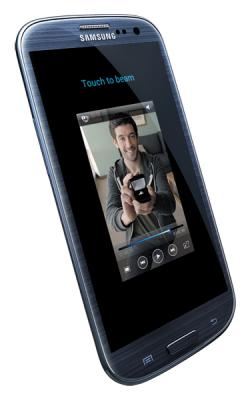
Samsung is by far the largest supplier of NFC phones worldwide. And Yoon is a key backer of the technology within the company. He said he was the planning chief at Samsung who “made it possible” for NFC to be included in the device maker’s flagship smartphone, the Galaxy S III.

Samsung earlier this month announced it had sold 20 million units of the popular handset, only a little more than three months since launching the model, and expects that total to increase to 30 million by the end of the year. All of the Galaxy S III units are believed to support NFC.

But the poor awareness among consumers, fragmentation and other problems could delay the timely expansion of the NFC ecosystem, allowing companies with “global scale” to potentially overtake the ecosystem with alternative technology, said Yoon, referring to Apple, which last week announced its iPhone 5 without NFC.

“There are players like Apple that came up with a solution not based on NFC,” said Yoon, likely also referring to Apple’s planned Passbook wallet, which will come as a default feature in the iOS 6 operating system and use QR codes for many of its services. “That may be a good thing, but once that becomes popular and consumers start to perceive that they don’t need NFC, they just need what they have in Apple, then the (growth) of the NFC ecosystem will be delayed that much more.”

Yoon estimated there are a total of more than 70 million NFC devices now in the market, up from 10 million a year earlier. The figures would refer to phones from all handset makers.

While that is “phenomenal” growth, it still represents less than 10% of the total smartcard market, he noted. Yoon said Samsung expects continued strong growth in total NFC phone shipments next year, citing analyst figures that forecasted 183 million NFC smartphones would be shipped in 2013, up from 93 million projected for 2012.

“Samsung is solving the chicken-and-egg problem by providing devices first and encouraging others to follow,” Yoon said. 

Plans for Tabs That Accept Payments
Yoon, like other phone and mobile platform providers of late, contend that there has been too much emphasis by the ecosystem on consumers using NFC phones to make payments.

He plugged Samsung’s enhanced NFC peer-to-peer feature, S Beam, which enables users to tap two Galaxy S IIIs together to transfer photos, music and videos. And he pitched tag-reading applications, as well.

But Yoon also mentioned that Samsung is planning to launch Android-based tablets that will have NFC functionality targeted at small business owners.

“It’s not about making payments, it’s about accepting payments for small business owners,” he said. “So they can use Samsung devices to accept payments from their customers’ NFC devices, too.”

But Yoon did not elaborate on the plans, including when Samsung might launch tablets that could double as point-of-sale terminals or how they would work.

The devices would obviously have to include software and extra security to accept contactless payments in card-emulation mode. Any portable POS terminal could serve as competition to smartphone-based acceptance devices being rolled out by U.S.-based startup Square and similar companies targeting the market for small and remote merchants.

Fragmentation Threatens Adoption
Meanwhile, Yoon also indicated Samsung believes the rollout of mobile wallets, NFC services and standards for the technology are too fragmented, and so is the certification process for devices. The latter requires separate certification or validation testing for payment schemes, standards organizations and mobile operators for the same devices. In addition, there are too many vendors proposing NFC products, he said.

“The market itself is very big: It’s several tens of billions of dollars annually,” Yoon said. “This is a large enough pie with which everyone can share.”

But he said that, at present, the industry needs a more unified approach to rolling out NFC services. He warned that there are too many standards, for example. “You need to have something in common, maybe not one single standard but at most three standards.”

He did not specify which standards he was talking about, though seemed to complain about the lack of interoperability for NFC payment services. “Suddenly, you don’t want to have a credit card service that can’t work outside your country.”

When questioned by NFC Times after his presentation, Yoon declined to offer much elaboration. But he did confirm he was talking about the market for NFC services amounting to tens of billions of dollars.

Standards might refer to secure elements. At present there are three types of secure elements that can store payment and other secure applications in NFC phones: SIM cards, embedded chips and microSD cards. Of these, only SIMs have yet to be standardized.

In fact, Samsung, while supporting SIM cards as secure elements and the single-wire protocol standard in its phones, is also putting an embedded secure chip in most, if not all, of its NFC handsets.

As NFC Times has reported, the South Korea-based device maker plans to enable payment and other services on the chips in markets where mobile operators do not control most of the channels of distribution. The company has formed a mobile-commerce unit for this purpose.

But Yoon declined to discuss the device maker’s strategy in response to questions from NFC Times, except to say that Samsung hasn’t yet formed the m-commerce unit. He also indicated that when formed, it would focus on the domestic market in Korea, where Samsung is introducing a mobile wallet.

But sources have told NFC Times that Samsung’s plans for the tens of millions of embedded chips in its NFC phones extend far beyond South Korea, though no service provider is yet believed to have launched any NFC applications on the chips.

‘Be Less Greedy’
Besides the problem with poor awareness of NFC among consumers, Yoon said the NFC “value chain” was adding too many costs and those costs were being passed on to consumers in some cases. And when consumers are asked to pay for NFC without seeing additional benefits, it’s one more reason for them not to use the technology.

“The participants will have to be less greedy,” he said. “If you start charging fees to the consumer, it means that much more delay in the growth of the ecosystem.”

He didn’t specify whether he was talking about mobile operators, service providers or other companies charging consumers extra for NFC payment or other services or for the technology itself. There are a couple examples of each so far in the limited number of NFC rollouts, such as telcos charging extra for NFC SIMs and banks adding fees for NFC payment.

And that includes Yoon’s own company, Samsung, which is asking U.S. consumers to pay nearly $15 for a pack of five of its branded TecTiles programmable NFC tags.

Samsung introduced the tags in June, in advance of the U.S. launch of the Galaxy S III.

The Samsung Telecommunications America unit touted the programmability of the tags to enable consumers to launch a range of features on their Samsung Android phones. For example, users could change their phones’ Bluetooth, Wi-Fi, sound and brightness settings or automatically join a Wi-Fi network by tapping their phones to tags. They could program other tags to send a text message, share a business card, open a Web address or map or check on social media sites.

Yoon said Samsung plans to introduce TecTiles to other regions and indicated the company might be reconsidering its decision to charge consumers for the tags.

“If we can bring some more value from the cloud, and consumers just get the tags for free and use the services from the cloud, I think that will help expand NFC-based ecosystem.”