HEADLINE NEWS
Samsung: More NFC Devices to Come, Led by Galaxy S II

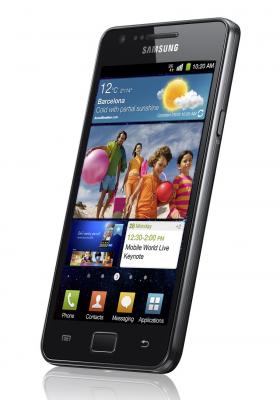
Samsung Electronics predicts the release of the NFC version of its flagship Galaxy S II next month will boost the popularity of the technology in various markets, said Hankil Yoon, vice president for product strategy in Samsung's mobile communications division.
Samsung, the No. 2 phone maker worldwide, this week announced it had sold 10 million Galaxy S II units, just five months after introducing the Android-based smartphone. Shipments doubled in just the last two months.
But nearly all of those come without an NFC chip inside, which mobile operators have to order at added cost.

“As you can see over time, we will have many more NFC-enabled devices,” said Yoon, who was speaking at the recent NFC World Congress in Sophia Antipolis, France. “Basically, with the launch of the Galaxy S II, NFC version, NFC will become more popular in the market.”
Yoon noted that France’s largest mobile operator, France Telecom-Orange, has announced it will introduce the NFC version of the phone next month. Sister operator Orange UK is also expected to soon launch the phone with an NFC chip inside. And T-Mobile USA, the fourth largest U.S. carrier, announced Tuesday it would stock the phone with NFC inside, along with a new 4G Android phone from HTC, with NFC. Reports say AT&T has ordered the NFC version of the Galaxy S II, though both AT&T and T-Mobile are not ready to introduce NFC services yet.
Brisk sales of the Samsung flagship this coming holiday season by these and other mobile operators, could boost NFC phone shipments for 2011, though most operators are not ready to launch services, acknowledged Yoon, who told NFC Times the handset maker has not yet seen “huge” demand for NFC phones before services roll out.
Some observers now doubt that NFC phone shipments from handset makers will top 30 million this year.
Yoon said it could take two to three years before NFC really takes off. But release of popular phones, such as the Galaxy S II, would help spur more demand.
“I agree this is a kind of chicken-and-egg problem,” he said. “So with the devices, I believe services and the business-model ecosystem will establish, just like the application (app) ecosystem established because of the devices.”
NFC Not a Default Feature
Still, while Yoon said that eventually, “virtually all smartphones coming from Samsung will have an NFC chipset,” the handset maker is not planning to make NFC a default feature in its phones, he told NFC Times. Costs are too high, at least for now, to have NFC-enabled phones shipped to markets, especially developing countries, without any NFC services, he said.
“It’s not just about putting the chip in the device,” he said. “Obviously, you have to put more resources for software development, hardware development and especially antenna optimization. The (handset) cost gets higher because NFC technology is still a little bit expensive. So with the spread of the technology and services, I expect the cost will come down.”
Yoon said Samsung shipped 4 million NFC-enabled phones between January and August of this year, mainly Google’s Nexus S and an early NFC version of the Galaxy S II in South Korea. That compares with a cumulative 100,000 NFC phones Samsung sold through January of 2011. The handset maker manufactured its first NFC prototypes in 2005.
Yoon made it clear during his presentation that NFC is important for Samsung’s long-term strategy and not only for its Android phones or devices. He promised that Samsung would expand the number of phones running Samsung’s own bada operating system that have an NFC option. And as he was reviewing Samsung’s platforms during his presentation, he hinted that Windows Phone devices might also get the NFC treatment.
“Windows Phone, there are no NFC-enabled devices yet, but I think there will be some NFC-enabled devices soon,” Yoon said.
Samsung is also working on incorporating NFC in other devices. Samsung reportedly produced a prototype of a tablet computer supporting Microsoft’s planned Windows 8 operating system, which was demoed earlier this month. The company is likely working on Android-based tablets, too. Yoon did not mention that, but said that, “as a consumer electronics company, we have many devices, so our goal is to connect all of these devices around NFC technology.”
When asked whether Samsung favored the embedded model for secure elements or the SIM-based approach supported by most mobile operators, Yoon said the handset maker would not choose one over the other.
A ‘Tricky’ Question
“We’ve been getting that kind of question a lot,” Yoon said. “It’s tricky. Right now, Google and Apple, these types of companies are very strong in the market. So we cannot ignore that. (But) also, for Samsung, operators are very important.”
Yoon said that Samsung is supporting either SIM-based secure elements or embedded chips. He noted that the Nexus S contains an embedded chip because Google wanted it. But Samsung’s bada phones and its Galaxy S II support the single-wire protocol and SIM-based NFC applications, though not apparently also an embedded chip.
This explains why U.S. mobile operator Sprint, which is rolling out the Google Wallet, is not reportedly ordering the NFC version of the Galaxy S II, since Sprint doesn’t issue SIM cards and Google apparently plans to anchor its wallet to embedded chips, at least for now, in the United States.
Yoon said Samsung was open to partnerships with various players in the NFC ecosystem.
“We need to support many different markets, many different devices and many different needs,” he said. “So, we’ll be open to partnerships, operators, service providers and application developers and all the participants. We are willing to collaborate and bring NFC into full blossom.”