HEADLINE NEWS
New Apple NFC Patent Gives the iPhone a Key Role in Device Sharing

The iPhone would serve as the “resource-sharing” hub for a variety of devices, from home computers to game consoles to TV set-top boxes to presumably also the new iPad–using Near Field Communication and other wireless technologies, according to a new patent application filed by Apple Inc.
The patent request, filed April 1, gives the most detailed picture yet of what the company appears to have planned for NFC, and it goes beyond just sharing photos and video clips among devices to sharing other “resources,” including displays and audio.
And the patent application includes perhaps the first mention of using RFID tags that could be attached to a variety of devices and read by NFC chips in the iPhone. This would apparently avoid the need to have all other Apple devices equipped with full NFC chips.
“The other patents talk (only) about communication between devices; this one (also) talks about tapping a tag,” said Einar Rosenberg, CTO of U.S.-based NFC application developer Narian Technologies, who has been following Apple’s NFC and RFID patent requests closely. “This one, really, it’s putting everything together.”
Speculation is rife that Apple plans to incorporate NFC in future versions of the iPhone. Previous patent requests had mainly described how Apple would use NFC to sync data among devices and enable, for example, the iPhone to send commands to a Macintosh computer.
Rosenberg believes the new patent request describes iPhones packing full NFC chips, which would likely also support card-emulation mode. That could allow for use of the iPhone for payment and ticketing, although none of Apple’s patent applications involving NFC or RFID mentions anything about card emulation or support for a secure chip to store these types of applications.
Apple is to come out with its fourth-generation iPhone in mid-2010, the earliest model that might incorporate NFC.
While the new patent application emphasizes NFC, it describes use of 2-D bar codes as an option to initiate sharing of resources among devices. The iPhone would scan the code by taking a picture of it. The codes could also be read by optical scanners on devices to initiate the sharing process, the patent request stated.
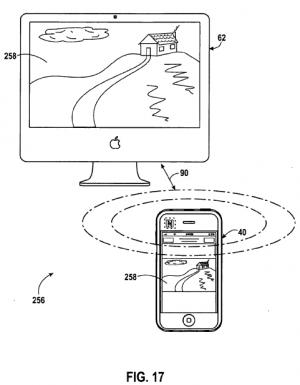
The patent application goes into detail describing how consumers could share information, such as video clips, video games, photos, TV programs and movies, by tapping their iPhones on computers, iPods or other media players, game consoles, digital cameras, digital video recorders and DVD players, among other devices.
But the patent request goes beyond describing synching data or commands, noting that NFC and other wireless technologies could enable devices to share some of their features.
“For example, a television may have a display for television video and speakers for television audio, but sharing the display or speakers with another device may involve a complicated or unintuitive process,” stated the patent application. “A user may share resources from any electronic devices on a single device. To use the resource of one device on another, the user may simply tap the two devices together.”
And the patent application appears to cast the iPhone, which it refers to as the “handheld device,” in the role of a sort of remote control for the exchange of resources. It apparently enables the iPhone user to send content, such as TV programs or movies, to other devices. And two iPhones could share data by being tapped together. Consumers would link up their devices using a menu in an iPhone application.
More specifically, to share information or other resources, the patent request describes how a user might tap or wave his iPhone near the NFC chip in a computer, which would wake up the NFC interface in the phone.
The two devices might then exchange profile information, such as the names of the devices, type of devices, their serial numbers, owner’s name, as well as other identification information. This other ID could include a hash or shortened or encrypted version of the user’s account for a Web service, such as iTunes, or a public or private encryption key.
The serial number on the computer that the iPhone reads could enable the phone to search a database on the Internet, which could give the phone the computer’s IP address, as well as the location to find a software plug-in to let the phone share resources with the computer, if that software is not already on the phone.
Then the phone and computer could authenticate each other based in part on information in the device profiles. The authentication would use encryption keys, verifying that the phone and computer belong to the same owner.
Then the devices would scan for available network channels over which to exchange data or other resources, such as a WiFi or Bluetooth connection and would swap passwords and other network configuration details needed for this.
All this would happen quickly and the iPhone user would then have the option to launch the resource-sharing service, according to the patent application.