HEADLINE NEWS

OTI to Supply Contactless and NFC Readers for Gasoline Stations in North America

Israel-based contactless and NFC vendor On Track Innovations announced Monday it had received an order for 30,000 readers for point-of-sale terminals at retail gasoline stations in North America.

Taxis in Major U.S. Cities to Get NFC-Enabled Video Ads

Riders in 5,000 taxicabs in the U.S. would be able to tap on NFC tags on video advertising screens to download apps, brand information, coupons, maps, music and videos, according to technology suppliers that have equipped the taxis for potential advertising campaigns.

Analyst: Banks Have More to Fear from Cloud-Based Technologies Than NFC

Banks have much more to fear from cloud-based mobile payment than from NFC, even if mobile operators control the secure elements that hold the banks’ payment applications.

GSMA Proposes Global Standard for NFC-Enabled Loyalty and Couponing–Using SIM Cards

May 10 2013 (All day)

The GSMA mobile operator trade group is proposing a global standard for how point-of-sale terminals talk to NFC-enabled mobile wallets to enable consumers to redeem coupons and rewards.

Taiwanese Bank Gets Approval for NFC-Enabled Credit Cards; Okay for Other Banks Expected

Taiwanese banking regulators, as expected, have approved the first bank to issue mobile credit cards that could be downloaded over the air to SIM cards.

UK Retailer Marks & Spencer Sees Growing Use of Contactless

Marks & Spencer, one of the UK’s largest retailers, announced today it had rolled out contactless payment to 644 of its UK stores and said 14% of its card transactions under £20 (US$30.97) are contactless.

Identive Reports Growing NFC Business; Blames Flat Sales, Losses, on U.S. Budget Cuts

U.S.-based Identive Group reported growing NFC and smart card reader business, but fell back into the red during for the first quarter, a loss it largely blamed on U.S. federal government budget cuts.

German Bank and Telco Hold Small NFC Trial; Larger Launches Planned in Country This Year

As Germany gears up for NFC, German bank Dortmunder Volksbank along with Telefónica (O2) Germany have launched a small pilot putting a credit application onto SIM cards in Western Germany.

Cashless Technology Company Announces Rollout of Isis SmartTap on Vending Machines

Vending technology company USA Technologies plans to integrate the SmartTap mobile-commerce software into all of the company’s nearly 100,000 NFC-enabled terminals on vending machines nationwide.

Infineon Introduces New Embedded Secure Element, Hoping to Tap Growing Market

Germany-based Infineon Technologies today introduced a new embedded secure element, targeting the growing market for chips that handset makers are including in their NFC-enabled devices.

Vendor Group: NFC Secure Element Market to Grow by Two-Thirds This Year

Smart card vendor association Eurosmart has substantially increased its estimate for NFC secure element shipments for 2012–by 50% to 150 million units–and forecasts that secure element shipments will grow by another 67% in 2013 to 250 million units.

Gemalto Reveals Some Details of MCX Deal; Vendor Will Earn Fees for Transactions

France-based smart card and security vendor Gemalto will operate the mobile-payment platform for U.S. merchant group MCX, earning a fee for every transaction, in addition to what appears to be a hosting fee it says is worth tens of millions.

Google Payments Chief: Closed NFC Platforms 'Not a Winning Strategy'

The head of payments at Google, Osama Bedier, cautions against NFC wallet providers closing their platforms, warning the move would backfire.

Bedier, when asked by NFC Times about potential competition with the Isis joint venture and the possibility Isis telcos would try to block the Google Wallet from accessing its NFC phones, said such a move would only “buy time” for the carriers or others seeking to restrict their NFC platforms.

“I can't speak for those carriers, but it is not a winning strategy to try to block access anymore, although it may buy you a bit of time,” he told NFC Times in an interview. “They may try it, but it won't last, and I hear from the carriers that they want to be open.”

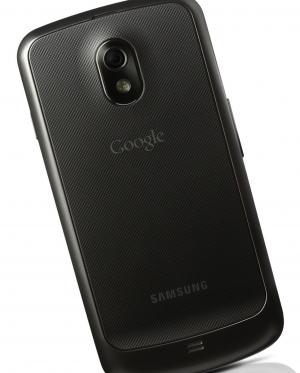
Google officially launched its NFC wallet Sept. 19, with only one phone model, its own Android-based Nexus S 4G, sold through Sprint, which is the sole operator of the big four U.S. carriers that is not part of Isis.

Consumer Interest Piqued 
NFC Times has learned from sources that interest has been high among consumers, with an estimated 200,000 downloads and activations of the Google Wallet in the first two weeks following the launch. A Google spokesman would not confirm the figure, saying only “we're happy with early reports.”

Still, observers agree that Google needs to get more NFC models supporting its wallet into the pockets of consumers. With the announcement of the Galaxy Nexus, however, Google made no mention of consumers being able to use it for the wallet. The high-end handset is due out next month.

Google instead has touted the phone’s ability to do unrelated NFC-based peer-to-peer content sharing, using a newly christened  “Android Beam” feature. This is at a time when the Web giant is trying to garner more publicity for its wallet by announcing merchants that accept payment and offers stored inside the wallet running on the Nexus S 4G.

Blocking Move by Isis?
A source has told NFC Times that the first U.S. operator expected to sell the phone, Verizon Wireless–the largest telco in the Isis joint venture–is balking at supporting the Google Wallet. The implication is that Verizon sees the wallet as competition for Isis. AT&T and T-Mobile USA are also part of Isis. 

Another source, Hans Reisgies, an industry veteran and executive vice president for U.S.-based Sequent Software, a specialist trusted service manager seeking to work with secure element and wallet owners, believes none of the Isis telcos will support the Google Wallet on their phones, including the Galaxy Nexus, just as Sprint, which remains outside of Isis, is the only telco that carries the Nexus S 4G and the wallet.

“They (Isis telcos) do not want to take a phone that has Google Wallet; it competes with their intention to offer their own wallet service,” he contends. "I talk to operators in Europe, and they say the same thing: 'We’re not taking the Google Wallet.'”  

He added, however, that operators in both North America and Europe, especially smaller ones, that are not heavily invested in rolling out their own NFC wallets and services are more likely to do business with Google–if the terms are right. “There are carriers that will take it. (But) can Google get enough momentum with consumers that the carriers are forced to take the Google Wallet?”

Verizon on Friday announced it would carry the Galaxy Nexus and would enable the NFC functionality, though did not mention payment or the Google Wallet. This might refer to the handset's Android Beam feature and tag reading. 

Experts told NFC Times that in the case of Google's own handsets, it would be difficult though possible for Verizon to block access to the embedded secure chip that anchors the Google Wallet. Google presumably owns those secure chips, though Verizon might take over ownership as part of its distribution agreement.

A Google spokesman told NFC Times that the Galaxy Nexus, as expected, “can” support the Google Wallet. But he declined to comment on whether an Isis telco selling the phone would agree to allow the phone to support the Google Wallet.

“We can't elaborate further on the details of the consumer release of this phone in the U.S. or other countries,” he said.

Bedier acknowledged that the Google Wallet requires access to a phone's secure element for both its payment and “Offers,” such as coupons and vouchers.

The Galaxy Nexus technically can support the Google Wallet. By all accounts, it carries an embedded secure element, just as the Nexus S does. It also has the NFC middleware and application-programming interface needed to support the wallet. Google uses the same type of embedded chip in the 4G version of the Nexus S to store payment data and keys for its banking partner Citigroup and for its own Google Prepaid Card. And the chip also stores coupons and other offers.

Payment, as well as coupons, loyalty points and other offers need to be stored on the same chip in order to enable consumers to make the payment and redeem, say, a coupon in a single tap, using NFC’s card-emulation mode. This “SingleTap” feature is critical to the type of user experience Google wants for the wallet. The secure element could also be on a SIM card or even a microSD.

Dickson Chu, Citi’s head of global enterprise payments for digital networks and mobile, speaking at a conference earlier this month, reportedly complained that Isis was taking the role of a “gatekeeper.” Isis would charge fees to banks and other service providers to rent space on its SIM cards or other secure elements, as many mobile operators plan to do when they roll out NFC. That’s in addition to charging fees for delivering coupons or offers. Google plans to charge fees from advertisers for delivering coupons and other offers but not from payment service providers.

“It's unclear what they (Isis telcos) are trying to achieve, other than extract a toll as gatekeepers,” Chu reportedly said. “There's so much more that they could do...as it is they are just hampering the development of NFC as a mass-market commercial proposition.”

Bedier played down any competition with Isis, however.

“It’s hard to tell if Isis is a real competitor—it's hard to tell what they really have,” Bedier told NFC Times. “But I have an open-market mentality, and would love to work with them.” He was speaking shortly before Google announced its Galaxy Nexus.

“What we have learned over the past five years is that the consumers will choose, and it is hard to operate a closed model anymore,” he added. “The whole ecosystem has opened up, and the app revolution has changed the face of mobile.”

In contrast with Google, the Isis telcos are not expected to have problems sourcing NFC smartphones that can support the Isis wallet. The joint venture announced last month that six major handset makers, Samsung Electronics, LG Electronics, HTC, Research in Motion, Motorola Mobility and Sony Ericsson, plan to introduce NFC standard phones that could carry the Isis wallets and applications.

Even if Google were to get its wallet distributed on a variety of devices, this could create its own problems. It would need to manage keys to a variety of secure elements, both embedded and on SIMs, from different owners, such as handset makers and mobile operators.

Merchant Recruitment Challenges
Meanwhile, observers also see challenges ahead for Google's efforts to sign up new retailers to support the wallet. Google has only announced a handful of new merchants, mainly small regional chains, to the list of about 20 chains supporting the wallet when it unveiled it last May.

One of the major chains announced early on, Subway sandwich shops, will only enable about 30% of its locations for now and only for contactless payment, not yet for coupons or other offers. One problem is that Subway has a wide variety of point-of-sale terminals used by its franchisees.

But Bedier contends that recruiting merchants to sign up to support the Google Wallet was going “phenomenally well.” Bedier said there are additional wallet merchants who have not been announced or have not sent out press releases.

Google is not using any particular recruiting inducements, and does not plan to pay for merchants’ terminals or otherwise fully fund the adoption, he said. But Google will help merchants set up pre-rollout pilots, and that might include terminals, engineering help, and training, he noted.

This assistance might refer to the first phase of the rollout going on now. Sources have said that Google has subsidized at least some of the POS terminals now being used by Google Wallet merchants.

As for international expansion, sources have told NFC Times that Google has talked to banks and merchants, along with some operators, in both Europe and Asia.

Bedier said that Google Wallet is currently focusing on the U.S. market, but he expected it to expand overseas next year. He declined to say where. Previously he had said that Google Wallet would expand to Europe during the first half of 2012.