HEADLINE NEWS

Taxis in Major U.S. Cities to Get NFC-Enabled Video Ads

Riders in 5,000 taxicabs in the U.S. would be able to tap on NFC tags on video advertising screens to download apps, brand information, coupons, maps, music and videos, according to technology suppliers that have equipped the taxis for potential advertising campaigns.

Analyst: Banks Have More to Fear from Cloud-Based Technologies Than NFC

Banks have much more to fear from cloud-based mobile payment than from NFC, even if mobile operators control the secure elements that hold the banks’ payment applications.

GSMA Proposes Global Standard for NFC-Enabled Loyalty and Couponing–Using SIM Cards

May 10 2013 (All day)

The GSMA mobile operator trade group is proposing a global standard for how point-of-sale terminals talk to NFC-enabled mobile wallets to enable consumers to redeem coupons and rewards.

Taiwanese Bank Gets Approval for NFC-Enabled Credit Cards; Okay for Other Banks Expected

Taiwanese banking regulators, as expected, have approved the first bank to issue mobile credit cards that could be downloaded over the air to SIM cards.

UK Retailer Marks & Spencer Sees Growing Use of Contactless

Marks & Spencer, one of the UK’s largest retailers, announced today it had rolled out contactless payment to 644 of its UK stores and said 14% of its card transactions under £20 (US$30.97) are contactless.

Identive Reports Growing NFC Business; Blames Flat Sales, Losses, on U.S. Budget Cuts

U.S.-based Identive Group reported growing NFC and smart card reader business, but fell back into the red during for the first quarter, a loss it largely blamed on U.S. federal government budget cuts.

German Bank and Telco Hold Small NFC Trial; Larger Launches Planned in Country This Year

As Germany gears up for NFC, German bank Dortmunder Volksbank along with Telefónica (O2) Germany have launched a small pilot putting a credit application onto SIM cards in Western Germany.

Cashless Technology Company Announces Rollout of Isis SmartTap on Vending Machines

Vending technology company USA Technologies plans to integrate the SmartTap mobile-commerce software into all of the company’s nearly 100,000 NFC-enabled terminals on vending machines nationwide.

Vendor Group: NFC Secure Element Market to Grow by Two-Thirds This Year

Smart card vendor association Eurosmart has substantially increased its estimate for NFC secure element shipments for 2012–by 50% to 150 million units–and forecasts that secure element shipments will grow by another 67% in 2013 to 250 million units.

Gemalto Reveals Some Details of MCX Deal; Vendor Will Earn Fees for Transactions

France-based smart card and security vendor Gemalto will operate the mobile-payment platform for U.S. merchant group MCX, earning a fee for every transaction, in addition to what appears to be a hosting fee it says is worth tens of millions.

Inside Reports NFC Revenue Down Sharply in First Quarter; Some Recovery Expected in Q2

France-based chip supplier Inside Secure today reported a sharp decline in its revenue in the first quarter from its NFC chips, blaming the situation on excess inventories of NFC chips on hand by its main customer BlackBerry.

Australian Supermarket Chain Sees Fast Take-Up of Contactless Payment

More than half of credit card transactions at Australian supermarket chain Coles are contactless, and the merchant hit the milestone just over six months after rolling out contactless terminals across its more than 700 supermarkets.

Google Confirms Verizon is Trying to Block Its Wallet, as Wallet War Heats Up

Dec 7 2011 (All day)

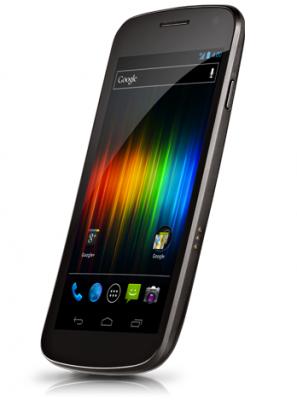
Google has confirmed in statements to the press that Verizon Wireless is trying to block it from offering the Google Wallet on its own Galaxy Nexus smartphone, which Verizon is expected to put on sale later this month.

A Google spokesman has issued a statement saying that Verizon has “asked us not to include this (wallet) functionality in the product,” and that consumers won’t be able to download the wallet app to the phone.

It helps confirm earlier reports by NFC Times that Verizon, the largest U.S. mobile carrier and part of the Isis joint venture planning its own wallet launch next year, would try to block the Google Wallet from the Galaxy Nexus Android phone when Verizon puts the phone on sale.

Update: Google's statements forced Verizon to respond Tuesday, and the telco sent out its own statements to the press, denying Google's assertions: “Recent reports that Verizon is blocking Google Wallet on our devices are false,” a Verizon spokesman said. “Verizon does not block applications.”

Then the spokesman suggested that the embedded secure chip in the Galaxy Nexus, which Google uses to secure applications in its wallet, was one of the sticking points. “Google Wallet does not simply access the operating system and basic hardware of our phones like thousands of other applications," he said. “Instead, in order to work as architected by Google, Google Wallet needs to be integrated into a new, secure and proprietary hardware element in our phones.” 

He added that Verizon is seeking the “best security and user experience,” and that “we are continuing our commercial discussions with Google on this issue.”  

The Google Wallet would operate the same way on the Galaxy Nexus as on the Nexus S 4G, which has hosted the wallet since Google launched it in September. So, the secure element would not have been a suprise to Verizon. And there have been no reports of significant security problems with the Google Wallet. Some observers believe competition between Google and Isis is the real sticking point. End update.

“Verizon and other carriers in the U.S. in Isis are trying to protect their investment and also stop, if possible, the spread of rival wallets before their (own) wallets are ready, especially from a giant, such as Google,” Tim Jefferson, managing director of UK-based The Human Chain, a consulting firm focused on telecom business in Europe and North America, told NFC Times. “They are also trying to keep control of what they see as their mobile ecosystem with its lucrative revenue streams, away from OTT (over-the-top) players, including Google, but also Amazon, PayPal, Facebook, etc., which Verizon sees as potentially disintermediating them.”

Isis, which includes two of the other four major U.S. carriers, AT&T and T-Mobile USA, plans to launch its Isis wallet and NFC services by the end of the second quarter of 2012 in two mid-tier U.S. cities, Salt Lake City, Utah, and Austin, Texas, before a nationwide rollout, planned for 2013.

The Isis telcos mainly plan to put payment and other secure applications in their wallets on SIM cards they issue, for which they would charge rental fees from service providers, such as banks.

Isis chief technology officer Scott Mulloy, while emphasizing during a panel discussion at last month’s Cartes & IDentification conference and trade show that Isis would be a “very open, inclusive platform,” declined to answer a question from NFC Times on whether that includes allowing the Google Wallet onto NFC phones rolled out by Isis telcos. Mulloy mainly was talking about Isis being open to service providers and other mobile operators

Even though the Galaxy Nexus, which is manufactured for Google by Samsung Electronics, carries its own embedded secure chip, Verizon or other telcos could control this chip and block apps, such as the Google Wallet, from using it. That’s because U.S. telcos buy the phones and control the distribution channels.

Google has only one of the major four U.S. carriers in its camp, Sprint, which promotes the Nexus S 4G for the Google Wallet. This Android phone was released several months ago.

The Nexus S 4G also has an embedded chip that stores two payment applications, a mobile credit card issued by U.S.-based Citigroup and a prepaid card from Google, which users can fund from other credit or payment accounts. Both applications support MasterCard PayPass.

Google announced the Galaxy Nexus in October and despite being the much-anticipated follow-up to the Google Nexus S 4G–still the sole model supporting the Google Wallet–the Web giant did not promote the wallet app on the new phone.  

Google had generally declined to comment on the reports that Verizon would block its wallet, though Osama Bedier, head of payments at Google, in an interview with NFC Times in late October, warned that “it is not a winning strategy to try to block access anymore, although it may buy you a bit of time,” when asked about competition with Isis.  

If it's true that Verizon will block the Google Wallet from the Galaxy Nexus, it’s another challenge for Google in getting its NFC wallet off the ground.

Sources have told NFC Times that consumer use of the wallet, launched in September, remains low. And two to three major issuers, JPMorgan Chase, Capital One and probably U.S. Bank, plan to launch mobile-payment services with Isis, as NFC Times has reported–an apparent snub to Google.

In addition, the head of the Google Wallet initiative at Citi, Dickson Chu, left the bank late last month for a position at daily deal site LivingSocial. Citi is still the lone bank that has announced its support for the Google Wallet.

Google faces other problems in establishing its wallet, not least of which is enticing merchants to accept the coupons, offers and loyalty programs that form the core of Google’s business case for the wallet.

While the Web giant has signed up some high-profile U.S. chains to support its initiative, including Walgreens retail pharmacies, Macy’s department stores and Toys “R” Us,” many merchants are suspicious of Google’s assurances that it will protect their customer data. Google lists only 30 merchants as Google Wallet partners.

Consumers can tap the Nexus S 4G running the Google Wallet to pay at many other merchants–around 150,000 merchant locations in the United States in all–but only the 30 chains would also be able to accept coupons and offers from the wallet, and only a subset of these actually do so, at present.

Although technically possible with existing contactless payment terminals, Google Offers and related applications likely will require newer contactless point-of-sale terminals–with readers that pack full NFC chips.

Any acceleration of the wallet war could hurt efforts to establish NFC mobile payment and related services in the United States and elsewhere, say observers.

“Ultimately the consumer should be able to choose any wallet that they want and any friction on behalf of wallet consortiums will mean consumers defect to more open alternatives,” Nick Holland, senior analyst for U.S.-based Yankee Group, told NFC Times earlier. “I just hope that in the short term turf wars that will occur as mobile wallets fight for dominance, that the consumer value proposition isn't overlooked.”