HEADLINE NEWS

UK Taxis Get NFC Tags for Promo Campaign; NFC Dynamic Screens to Play at French Sporting Event

Samsung Electronics, along with Australia-based NFC marketing firm Tapit, UK-based out-of-home advertising company Chiel and terminal vendor VeriFone are rolling out NFC stickers to 80 taxis in the UK, as part of a promotional campaign for musician Robbie Williams’ upcoming Samsung-sponsored tour.

OTI to Supply Contactless and NFC Readers for Gasoline Stations in North America

Israel-based contactless and NFC vendor On Track Innovations announced Monday it had received an order for 30,000 readers for point-of-sale terminals at retail gasoline stations in North America.

Taxis in Major U.S. Cities to Get NFC-Enabled Video Ads

Riders in 5,000 taxicabs in the U.S. would be able to tap on NFC tags on video advertising screens to download apps, brand information, coupons, maps, music and videos, according to technology suppliers that have equipped the taxis for potential advertising campaigns.

Royal Bank of Canada and Bell Mobility Announce Plans for NFC Launch

May 14 2013 (All day)

Canada’s largest bank and one of its three major mobile operators have announced plans to commercially launch NFC payments by the end of the year, following a trial this summer.

Analyst: Banks Have More to Fear from Cloud-Based Technologies Than NFC

Banks have much more to fear from cloud-based mobile payment than from NFC, even if mobile operators control the secure elements that hold the banks’ payment applications.

GSMA Proposes Global Standard for NFC-Enabled Loyalty and Couponing–Using SIM Cards

May 10 2013 (All day)

The GSMA mobile operator trade group is proposing a global standard for how point-of-sale terminals talk to NFC-enabled mobile wallets to enable consumers to redeem coupons and rewards.

Taiwanese Bank Gets Approval for NFC-Enabled Credit Cards; Okay for Other Banks Expected

Taiwanese banking regulators, as expected, have approved the first bank to issue mobile credit cards that could be downloaded over the air to SIM cards.

Google Wallet Chief Bedier Departs Company as Wallet Continues to Struggle

May 13 2013 (All day)

Google’s vice president of wallet and payments has left the company, following a difficult tenure for the former PayPal executive, who had tried to establish the Google Wallet for physical world payments and offers.

UK Retailer Marks & Spencer Sees Growing Use of Contactless

Marks & Spencer, one of the UK’s largest retailers, announced today it had rolled out contactless payment to 644 of its UK stores and said 14% of its card transactions under £20 (US$30.97) are contactless.

Identive Reports Growing NFC Business; Blames Flat Sales, Losses, on U.S. Budget Cuts

U.S.-based Identive Group reported growing NFC and smart card reader business, but fell back into the red during for the first quarter, a loss it largely blamed on U.S. federal government budget cuts.

German Bank and Telco Hold Small NFC Trial; Larger Launches Planned in Country This Year

As Germany gears up for NFC, German bank Dortmunder Volksbank along with Telefónica (O2) Germany have launched a small pilot putting a credit application onto SIM cards in Western Germany.

Cashless Technology Company Announces Rollout of Isis SmartTap on Vending Machines

Vending technology company USA Technologies plans to integrate the SmartTap mobile-commerce software into all of the company’s nearly 100,000 NFC-enabled terminals on vending machines nationwide.

Google to Make Wallet Announcement; Deals with Opposition from Visa, Big Banks, to Cloud Model

Oct 22 2012 (All day)

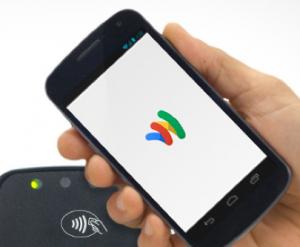
Google is expected to make a major announcement next week related to its Google Wallet, NFC Times has learned.

Google declined to discuss the announcement, which is expected to be made at the Money 2020 conference in Las Vegas, where Google Wallet chief Osama Bedier is scheduled to speak Monday.

That announcement will no doubt relate to the Web giant’s continuing quest to expand its business from the online to the offline worlds. 

UPDATE: According to sources, Google has signed a partnership agreement with Discover Financial Services that calls for rolling out co-branded Google-Discover credit cards accepted on Discover's network of 7 million merchant locations. The magnetic-stripe cards would enable Google to collect data on each transaction, just as it does when consumers use their Google Wallet phones to tap to pay.

An advantage of the approach is that the payment card using Discover's large U.S. acceptance network would not require a contactless terminal or user with an NFC-enabled Android phone supporting Google Wallet. The agreement between Google and Discover has similar elements to a deal PayPal and Discover announced in August that will enable PayPal users to pay in-store at Discover terminals. END UPDATE.

The changes probably won’t affect NFC, which remains a key component for the wallet to enable users to tap to pay and redeem coupons and offers at the physical point of sale–though contactless acceptance points for nonpayment applications are limited.

If Google makes the announcement Monday, it would coincide with announcements planned by the Isis joint venture and probably the Isis member mobile carriers, Verizon Wireless, AT&T Mobility and T-Mobile USA, of the launch of their much-anticipated two-city NFC trial in Salt Lake City, Utah, and Austin, Texas.

The Isis model has the support or at least acquiescence of all four major U.S. payment schemes as well as big banks.

Dustup with Visa
That is not the case for Google’s cloud-based wallet, which the Web giant introduced in early August and which has faced opposition–mostly behind the scenes–from major issuers and two of the four payments schemes, especially Visa Inc.

Credible sources have told NFC Times that Visa sent Google a cease-and-desist letter, about three weeks ago, objecting to the way the wallet conducts transactions with a MasterCard PayPass-enabled prepaid card on the phone, while funding it in the cloud with credit and debit cards that may be Visa-branded. Visa considers the new Google Wallet model as a strike against its brand, said sources.

The new Google Wallet enables consumers to load any of their debit or credit cards into the wallet without the permission of the issuers, storing the details on Google’s servers.

These cards automatically fund purchases in the cloud, but the actual point-of-sale transaction is conducted by Google’s prepaid card that supports MasterCard PayPass and is stored on the embedded chip in the wallet phone. U.S.-based Bancorp Bank, which is largely a BIN sponsor–that is, providing the bank identification number that allows the application to run on the MasterCard’s network–is technically the issuer.

Google probably makes use of its acquisition of New York-based TxVia, announced in early April, for the new wallet. TxVia provides a payments platform for processing a range of prepaid cards, including general purpose and gift cards, as well as payroll and government disbursement cards. 

Google announced in mid-September that use of its wallet doubled in just six weeks after the launch of the new version–though Google Wallet transactions were believed to be very low to begin with.

But Visa, by far the largest payment network in the U.S., complains that while Google Wallet users might see the Visa brand on the cloud-based cards they have loaded into their wallets, they would not look for the brand at the point of sale, noted sources. Instead they might look for the PayPass brand or separate contactless payments mark at the point-of-sale.

“The value of the Visa brand comes from the huge network of acceptance points and from that you can leverage to issuing cards,” one industry consultant told NFC Times. “Google is just moving the acceptance to the MasterCard brand. It means you don’t need to have a Visa brand at the stores, you just need a MasterCard brand.”

In addition, Visa is trying to gain followers for its own digital wallet, V.me, which stores card credentials from Visa and other brands for e-commerce transactions. And the Google Wallet also makes it difficult for Visa to reconcile transactions and to handle dispute resolution for its cards.

But besides refusing to fund the Google Wallet transactions through its network–which could invite antitrust scrutiny–it’s unclear what action Visa could take to counter Google’s wallet implementation.

Still, the threat of possible action was apparently enough to prompt Google’s Bedier to visit Visa’s San Francisco Bay Area offices from Google’s nearby Silicon Valley headquarters for extensive meetings about two weeks ago, a source told NFC Times.

If they reached a resolution, it might be reflected in Google’s announcement next week of enhancements or additions to its wallet.

Spokespersons for both Google and Visa decline to confirm that Visa sent a cease-and-desist letter or even to acknowledge any discord between the two companies.

“Visa is a long-term partner to Google, and we are working closely with them on Google Wallet,” a Google spokesman told NFC Times.

A Visa spokeswoman said that, by policy, it doesn’t comment on its “client communications.

“However, I can share that Visa and Google engage productively on a variety of topics including the Visa payWave license, wallet strategy and other services, where we believe positive collaboration will benefit Visa financial institution partners and Visa account holders,” she said.

Big Issuers Cold to New Wallet
Visa announced in September of 2011–at the time of Google’s launch of its first wallet version–that it would work with Google, building on Visa’s strategy of “enabling consumers to make mobile payments with whatever device they choose, using the trusted accounts they already have.”

That agreement included a license for Google to Visa’s contactless payment application, payWave. American Express and Discover Financial Services also signed on to make their applications available for the original wallet, sometimes referred to as Google Wallet 1.0.

MasterCard was already a key part of the Google Wallet program, along with Citigroup. The first wallet proposed to put all payment applications on the embedded secure chip in the wallet phones.

But not only Visa is said to be unhappy with the new cloud-based approach by Google for its wallet. American Express and other big issuers do not like it either, because they lose their direct connection with their customers, say observers. AmEx also has an acceptance brand to protect.

And Google, as effective issuer of the prepaid card on the secure element, collects the transaction data related to the purchase, which it then plans to use to create targeted promotions to consumers. Google believes that that will more than cover for its loss on interchange of roughly 1% of each Google Wallet transaction and its potentially greater losses from liability for fraudulent Google Wallet transactions.

A spokesman for American Express, around the time of the launch of the new Google Wallet in August, reportedly said that while AmEx remained in discussions with Google about working together on the wallet, “we did not provide approval to be included.”

In late August, Google Wallet product manager Robin Dua said Google expects more payment card issuers to soon announce support for the wallet–enabling their customers to easily add their cards to the NFC-enabled cloud-based wallet.

The new wallet gives Google a way to scale with the new wallet, since it doesn’t have to negotiate and implement the bank’s cards on the secure element, only in the cloud, he said, although Google still needs access to NFC secure elements, which are usually controlled by telcos, especially in the U.S. and other developed markets. 

To date, Google only has access to secure elements on Android phones, mainly those sold by Sprint, which remains the lone telco supporting the Google Wallet. That remains a major obstacle for Google's ability to scale with its wallet.

Google has provided an API enabling issuers to allow their cardholders to log onto their banking or credit card sites and simply “click-to-add” the cards to the wallet. So far, however, Google has only announced Discover Financial Services and such small issuers as Barclaycard US, Green Dot, and Silicon Valley Bank as using the API.

No major banks are on the list and some observers believe they will not get onboard with the new wallet, just as they didn’t with Google’s first wallet version, except for Citi.

“The issue with banks, they didn’t trust Google and didn’t want to get in bed in Google,” Zilvinas Bareisis, senior analyst based in the UK for U.S.-based research and consulting firm Celent told NFC Times. “Now they’re in a worse position. It’s no longer their card. If I, as a customer, want to register my card, I can. Instead, they no longer settle with the merchant, they settle with Google.”

Google: ‘We’re Not Disintermediating’
Peter Hazlehurst, global head of payments, product management at Google, in an interview with NFC Times last week, contends that Google has no intention of cutting banks or brands off from their customers and wants to “work with all of the issuers.

“We’re not disintermediating their brand experience by making sure that it’s front and center, and the consumer has a great relationship with their issuer,” he said.

“Fundamentally, we’re doing this because we think it’s great for the user, and the reason we’re in the middle of the transaction is because there is no other way to do it technically,” he said, adding:  “And we’ve been talking to the networks and issuers on creating new methods of making payment flow through the networks, but that is a long process.”