HEADLINE NEWS

Taxis in Major U.S. Cities to Get NFC-Enabled Video Ads

Riders in 5,000 taxicabs in the U.S. would be able to tap on NFC tags on video advertising screens to download apps, brand information, coupons, maps, music and videos, according to technology suppliers that have equipped the taxis for potential advertising campaigns.

Analyst: Banks Have More to Fear from Cloud-Based Technologies Than NFC

Banks have much more to fear from cloud-based mobile payment than from NFC, even if mobile operators control the secure elements that hold the banks’ payment applications.

GSMA Proposes Global Standard for NFC-Enabled Loyalty and Couponing–Using SIM Cards

May 10 2013 (All day)

The GSMA mobile operator trade group is proposing a global standard for how point-of-sale terminals talk to NFC-enabled mobile wallets to enable consumers to redeem coupons and rewards.

Taiwanese Bank Gets Approval for NFC-Enabled Credit Cards; Okay for Other Banks Expected

Taiwanese banking regulators, as expected, have approved the first bank to issue mobile credit cards that could be downloaded over the air to SIM cards.

UK Retailer Marks & Spencer Sees Growing Use of Contactless

Marks & Spencer, one of the UK’s largest retailers, announced today it had rolled out contactless payment to 644 of its UK stores and said 14% of its card transactions under £20 (US$30.97) are contactless.

Identive Reports Growing NFC Business; Blames Flat Sales, Losses, on U.S. Budget Cuts

U.S.-based Identive Group reported growing NFC and smart card reader business, but fell back into the red during for the first quarter, a loss it largely blamed on U.S. federal government budget cuts.

German Bank and Telco Hold Small NFC Trial; Larger Launches Planned in Country This Year

As Germany gears up for NFC, German bank Dortmunder Volksbank along with Telefónica (O2) Germany have launched a small pilot putting a credit application onto SIM cards in Western Germany.

Cashless Technology Company Announces Rollout of Isis SmartTap on Vending Machines

Vending technology company USA Technologies plans to integrate the SmartTap mobile-commerce software into all of the company’s nearly 100,000 NFC-enabled terminals on vending machines nationwide.

Vendor Group: NFC Secure Element Market to Grow by Two-Thirds This Year

Smart card vendor association Eurosmart has substantially increased its estimate for NFC secure element shipments for 2012–by 50% to 150 million units–and forecasts that secure element shipments will grow by another 67% in 2013 to 250 million units.

Gemalto Reveals Some Details of MCX Deal; Vendor Will Earn Fees for Transactions

France-based smart card and security vendor Gemalto will operate the mobile-payment platform for U.S. merchant group MCX, earning a fee for every transaction, in addition to what appears to be a hosting fee it says is worth tens of millions.

Inside Reports NFC Revenue Down Sharply in First Quarter; Some Recovery Expected in Q2

France-based chip supplier Inside Secure today reported a sharp decline in its revenue in the first quarter from its NFC chips, blaming the situation on excess inventories of NFC chips on hand by its main customer BlackBerry.

Australian Supermarket Chain Sees Fast Take-Up of Contactless Payment

More than half of credit card transactions at Australian supermarket chain Coles are contactless, and the merchant hit the milestone just over six months after rolling out contactless terminals across its more than 700 supermarkets.

Orange to Roll Out NFC SIMs as it Tries to Seed French Market

By: 
Dan Balaban

French mobile operators have announced they will more than double the number of NFC-enabled phones rolled out to subscribers by the end of 2012, to 2.5 million, the most of any country in Europe, they predict.

France Telecom-Orange, France’s largest operator, which is leading the NFC rollout in France, acknowledges there will be few places for French subscribers to use the phones by the end of the year.

But for Orange, it is part of a strategy to “seed the market” by equipping millions of its subscribers with phones and, soon, NFC SIM cards in hopes it will prompt banks, transit operators and other service providers to roll out services.

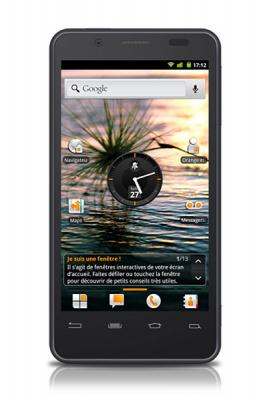
Orange has put its own branded NFC-enabled Android phone on sale in France and the UK, using the Intel-based reference device design. The telco is also the first to pledge support for the NFC-enabled mobile wallet recently announced by Microsoft for devices running the software giant’s planned Windows Phone 8 platform.

Of course, Orange subscribers will be choosing these Windows devices–just as they will the NFC-enabled Samsung Galaxy S III and its predecessor, the Galaxy S II–not for the NFC functionality, but for the high-end multimedia features and software, fast processors and large screens.

High-Priced SIMs
But Orange, which has pushed and prodded the NFC ecosystem for years to get moving–albeit with its decidedly SIM-centric approach–is putting its money where its mouth is when it comes to NFC.

There are extra costs for Orange to deploy the NFC phones, including validation tests to make sure the technology works as promised and NFC hardware and software implementation costs if NFC is not a default feature in the handsets.

And the telco is planning to increase its NFC investment considerably with its planned SIM rollout.

NFC Times has learned that Orange soon will begin its rollout of NFC-enabled SIM cards to all new postpaid customers in France–which make up a large majority of Orange’s customer base in France. The move, expected this summer, will make Orange the first mobile operator outside of South Korea, to roll out NFC SIMs generally to the subscriber base.

Orange is late with the SIM rollout and scaled it back from an earlier pledge to issue new NFC SIM cards for its postpaid customers in most of the group’s European operations. But it is still an ambitious undertaking.

Orange will be paying about €2 extra (US$2.50) for each of the NFC SIMs, sources told NFC Times. The telco issues up to about 5 million new and replacement postpaid SIMs a year, so the rollout would cost the telco about €10 million for the first year.

In addition, Orange, as of mid-June, said it had put 12 NFC phones on sale since launching NFC two years ago as part of a multioperator trial in the city of Nice. The French telcos have branded the NFC services as Cityzi. Another four NFC phones are available for purchase from Orange shops but need a software upgrade to work with Cityzi services, including the Samsung Galaxy S III and HTC One X.

“We are investing millions to create a market,” Vincent Barnaud, head of the mobile NFC program at Orange Group, told NFC Times.

Orange's branch operator in the UK began a small commercial launch of NFC payment, called Quick Tap, with issuer Barclaycard in May of 2011. And Orange operators in Poland and Spain plan launches in 2013.

But the launches in Poland and Spain had originally been planned for this year.

And the UK Quick Tap launch has been stunted so far, with only one phone available, the 2G Samsung Tocco Lite, after Orange UK withdrew a mid-tier Samsung Wave 578 for an undisclosed reason. Orange UK promised Android phones in April, including what is expected to be the Galaxy S II, but has yet to make them available for Quick Tap payment.

Unlike Orange France, Orange UK is not aggressively rolling out either NFC phones or SIMs.

“In France, the French agree to seed the market, even if no service is available (yet), whereas the UK doesn’t want to launch communication about a handset if there is no service available,” said Barnaud.

Waiting for Services
The French are moving forward on a city-by-city basis for now, with the help of French government funding for municipal NFC services, such as costs for tags and readers at public buildings, though places to tap are limited. NFC has launched in only three French cities so far, and these services remain small. 

Two banks, BNP Paribas and Crédit Mutuel-CIC, and probably a third, Société Générale, are planning national rollouts of NFC payment, making use of a growing number of contactless point-of-sale terminals. But the launch dates remain unclear.

It's also unclear when the transit authority for the Paris region, STIF, will launch NFC-based transit ticketing. It will participate in a trial expected to begin in the next few weeks with as many as 2,000 users in the Paris suburb of Argenteuil, according to Didier Durand, director of mobile contactless services for Orange in France. Durand and Orange last week helped inaugurate a trial at the regional airport serving the city of Toulouse that will allow 50 frequent flyers to test an application that puts a security pass for airport facilities on SIM cards in BlackBerry NFC phones.

For services besides tag reading, subscribers will need NFC SIMs, and Orange’s two main competitors, SFR and Bouygues Telecom, have put on hold their plans to roll out the expensive SIMs for now–likely as part of belt tightening caused by fierce competition from new low-cost operator Free Mobile.

Orange’s Barnaud insists that pressure to cut costs because of the rock-bottom rates offered by Free isn’t the reason for Orange’s delay in rolling out its own NFC SIMs.

Orange had planned to launch the NFC SIM rollout before the end of last year and then moved it back to the spring, before again moving the launch date to this summer.

Problem with SIMs?
France-based SIM vendor Gemalto is supplying the cards for Orange, and NFC Times has learned that at least one of the problems causing the delay is that the old contactless transit-ticketing application used in France, known as B-prime, was apparently put onto the cards, according to a source.

Many transit operators and authorities have used this application for their contactless fare-collection cards and readers. B-prime was developed before final adoption of the ISO 14443 standard governing contactless technology.

While B-prime is similar to the Type B option in the ISO standard, the two technologies cannot communicate with each other. Moreover, B-prime also does not support multiple applications.

But keeping both transit applications on the NFC SIMs slows transaction times down for the cards, which Orange does not want.

Gemalto did not immediately respond to a request for comment.

Besides Orange, the only mobile operators to put NFC SIMs in general circulation are those in South Korea. There, operators SK Telecom, KT Corp. and LG U+ began rolling out NFC SIMs last year. KT launched NFC first, in the fall of 2010.

In France, the NFC SIMs will carry about 1-megabyte of memory, said Barnaud. That compares with 128K for many of Orange’s conventional SIMs. The NFC SIMs are costing Orange two to three times that of its conventional SIMs, said sources, though the telco declines to release the price.

Orange has likely negotiated a favorable deal with Gemalto. NFC SIMs in other places are expected to run at even higher multiples as compared with conventional SIMs.

Vendors contend the cards require new technology and higher security. Volumes remain low and their R&D costs are high, they say. The added memory is also a part of the cost premium, they add.

Barnaud said Orange needs the 1MB of memory to offer extra services, not all of them for NFC.

“If we renew the SIM, we want to make sure they are big enough to secure a large number of services, both proximity and cloud-based,” Barnaud said.

Who Deactivates the Embedded SE?
Orange has been a leader in pushing for international standards for NFC technology, including the single-wire protocol connection between the SIM and NFC chip.

Like other European telcos, it hopes to see SIM cards become the preferred secure element in NFC phones.

Barnaud contends, however, that Orange is not forcing handset makers to deactivate the embedded chips that come in some of their phones, leaving the SIM as the only active secure element. That includes the new Galaxy S III from Samsung, which carries an embedded secure chip, which has been deactivated in France.

“Nobody knows how to make multiple secure elements work correctly in the same phone,” he said. “We ask (handset) vendors not to activate their embedded secure element if it means a poor user experience and technical problems.”

But he added that the choice is up to the handset makers: “They want to go with (embedded) secure element proposition, they can; then we won’t use the SIM.”

Research In Motion disabled the embedded chip in its BlackBerry NFC phones voluntarily, he insists.

But for handset makers that need orders from mobile operators, such as RIM, observers believe they would have little choice but to deactivate the embedded chip to sell to Orange.

For Orange, which has been working on NFC technology for nearly 10 years, and is just now beginning to execute its SIM-based strategy, phones from handset makers offering NFC services on their own embedded chips would not be a welcome addition to the telco’s lineup of NFC devices. NT