HEADLINE NEWS

ZTE: Europe is Next Target for NFC Phones

China-based phone maker ZTE indicated it will be targeting Europe with its NFC phones, although it did not specify models or release dates.

Samsung to Embed Secure Element in Galaxy S III, Other NFC Phones

May 14 2012 (All day)

Samsung Electronics and NXP Semiconductors have confirmed that Samsung’s next flagship smartphone, the Galaxy S III, will sport an embedded secure chip, in addition to supporting applications on SIM cards.

American Express Onboard for Isis Two-City Launch

American Express and Isis have announced that AmEx plans to participate in the two large NFC pilots Isis plans to launch this summer in Salt Lake City, Utah, and Austin, Texas.

HTC Steps Up NFC Phone Presence with Three High-End Handsets

May 10 2012 (All day)

New Orleans – Phone maker HTC is displaying three high-end NFC phones at the International CTIA Wireless show in New Orleans, including its Droid Incredible 4G LTE, destined for U.S.

MasterCard Unveils Wallet Offer; Expands PayPass Name to Online Transactions

NEW ORLEANS – MasterCard today announced its answer to Visa’s digital wallet and other wallets planned by competitors, introducing its PayPass Wallet Services.

MasterCard Announces NFC Device Certifications; New NFC Mark

May 9 2012 (All day)

MasterCard has announced certifications for 17 NFC phones as well as its own mark that handset makers could display on device packaging, advertisements or even on the devices themselves, showing the phone is able to do contactless payments with MasterCard PayPass.

Samsung Unveils Galaxy S III, Supporting NFC Payments and Enhanced P2P

May 4 2012 (All day)

Samsung Electronics has introduced its much-anticipated Galaxy S III, which, as expected, will support NFC for mobile payment, along with an enhanced version of Google’s Android Beam peer-to-peer pairing-and-sharing feature.

Barnes & Noble First E-Reader Seller to Disclose Plans for NFC Support

In a first for an e-reader seller, the CEO of bookstore chain Barnes & Noble said the company plans to include NFC chips in its Nook e-readers, which he said could make the connection between the devices and the company’s physical stores.

Airline to Introduce NFC App Following Successful Sticker Launch

May 3 2012 (All day)

Scandinavian Airlines plans to introduce an NFC application for frequent flyers as early as this summer, enabling those with Android NFC phones to tap for a faster flow through check-in, security screening and boarding.

Report: Google and PayPal Challenge UK Joint Venture Plans

Google and PayPal have reportedly expressed concerns to European antitrust regulators, saying they fear that if major UK mobile operators are allowed to form their proposed NFC mobile-commerce joint venture, they would have too much power to control secure elements in NFC phones, the Financial Times reported Sunday.

Telefónica UK Launches O2 Wallet; Promises NFC Later in 2012

Telefónica UK, known as O2, launched its long anticipated O2 Wallet today, offering text-based money transfers and online product searches and purchasing, but no NFC yet.

Wentker Departs Visa; Bains Leaves GSM Association

Dave Wentker, considered the No. 2 man in Visa Inc.’s mobile-payment unit and a former vice chairman of the NFC Forum, has left the payment network after more than 15 years, NFC Times has learned.

DoCoMo Reveals Strategy for Its Move to NFC

Mar 7 2011 (All day)
By: 
Dan Balaban

NTT DoCoMo will sell "hybrid" NFC phones that support both standard NFC and domestic FeliCa technology from Japan’s Sony Corp. when the big telco makes its planned move to NFC late next year.

The hybrid phones are DoCoMo’s answer to perhaps the biggest obstacle that had caused the telco to resist the move to NFC–the massive infrastructure of nonstandard FeliCa readers deployed throughout Japan in shops, transit stations and other venues.

The phones will carry separate embedded chips, one supporting NFC and the other FeliCa, said DoCoMo. Plans also call for NFC-enabled SIM cards that support FeliCa. But the SIMs will take longer to develop.
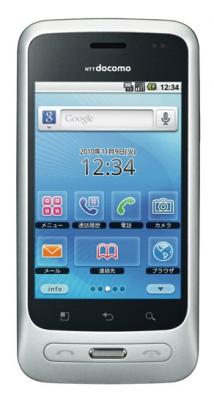
The FeliCa chips or SIMs would enable the phones to be used at what DoCoMo has estimated is 1.5 million terminals supporting proprietary Sony technology in Japan. At the same time, the phones would support standard NFC applications on SIM cards that subscribers could use overseas and, later, inside Japan.

DoCoMo, Japan’s dominant mobile operator and one of the most influential telcos globally, last month confirmed its plans to move to NFC as part of an announcement of a planned NFC-based roaming service with South Korean telco KT Corp. DoCoMo said it plans to launch NFC in Japan around the end of 2012.

DoCoMo had struggled with the decision, and the strategy to introduce hybrid phones is not without its problems.

Until suppliers can overcome challenges of putting FeliCa onto SIM cards, DoCoMo and presumably its smaller rivals, KDDI and Softbank Mobile, will have to order NFC phones with an extra embedded chip to store FeliCa applications. DoCoMo calls this its "intermediate implementation," which stores the NFC applications elsewhere in the phones, on SIM cards (see diagram below). Some major global handset makers, however, might not want to add that extra embedded FeliCa chip to their NFC phones just for the Japanese market.

But Kyoshi Mori, mobile systems and standards specialist focusing on NFC at DoCoMo, noted that one of the world’s largest handset makers, Samsung Electronics, is already onboard with the plan.

"And so we are confident that other global handset vendors seeking to deploy in a mature mobile NFC market will be interested in developing for us," he told NFC Times.

The only alternative to hybrid NFC phones would be upgrading the FeliCa terminals throughout Japan to also accept standard contactless technology, ISO/IEC 14443 types A and B, which all standard NFC phones support.

Huge Infrastructure
But this would likely require replacement of many or most of the terminals and would be much more expensive than adapting the phones.

DoCoMo estimates about a half million merchant terminals accept the telco’s own brand of contactless-mobile credit payment, iD. Some other contactless payment schemes–there are at least seven in Japan–share terminals with iD. The terminals can accept payment from both FeliCa contactless cards and FeliCa wallet phones.

DoCoMo quotes a figure of "1.5 million shops" that accept FeliCa. This might count the same shop multiple times if it takes more than one FeliCa-based payment scheme. But DoCoMo’s Mori said it includes all terminals for contactless credit and prepaid e-money schemes, popular transit cards issued by agencies throughout Japan (some of which also can be used for retail purchases, such as Tokyo’s Suica card), and terminals for couponing, loyalty, membership and airline check-in.

While in the future some of these terminals may also support standard contactless payment services, such as Visa payWave or MasterCard PayPass, they are expected to continue to support FeliCa for years to come.

That’s because the contactless payment schemes alone had issued at least 135 million contactless FeliCa cards and at least another 25 million FeliCa-based payment applications on mobile phones as of last November, according to FeliCa Networks, the Sony-DoCoMo joint venture that licenses and manages the mobile FeliCa technology.

DoCoMo began ordering wallet phones, or what it calls "Osaifu-Keitai," with the FeliCa chip inside in 2004, and the other Japanese telcos followed. All told, there were 66 million Japanese subscribers carrying wallet phones as of March 2010, according to FeliCa Networks.

Reasons DoCoMo Came Around to NFC
DoCoMo and Sony had once hoped to export the mobile FeliCa technology abroad, but over the past few years DoCoMo had come under increasing pressure from its domestic rivals and international standards bodies, among others, to move to NFC.

DoCoMo sees other reasons to migrate. More than 15 million Japanese traveled abroad last year, many of them high-end DoCoMo customers. The telco wants to enable them to use contactless services, such as payment and transit ticketing, in the countries they visit when these services abroad support standard contactless technology.

Besides South Korea and China–two of the top destinations for Japanese travelers–the telco is also targeting Europe and the United States, according to slides of a presentation DoCoMo gave last month. Subscribers in the future could preload NFC applications prior to leaving Japan for use overseas, suggested DoCoMo. DoCoMo also has a business tie-up with China Mobile that is expected to cover cross-border NFC services, among other areas.

Among the partners for the international roaming project DoCoMo announced last month with KT is Visa Inc., which wants to put its Visa payWave application onto DoCoMo phones.

DoCoMo also is making the move to NFC to gain access to more smartphones from global handset makers, especially phones supporting Google’s Android operating system. Smartphone sales are starting to take off in Japan. And Android also acts as a counterweight to Apple’s iPhone, which has been sold exclusively in Japan by DoCoMo competitor Softbank.

About 80% of all new phones sold in Japan have the FeliCa chip inside, but the vast majority of the wallet phones are made by Japanese manufacturers and are not smartphones. Japanese phone makers have only a small presence in international markets.

And in a sign of potential problems ahead with getting non-Japanese handset makers to put FeliCa chips in their NFC phones, DoCoMo in November announced four smartphones for its new winter and spring lineup, and only the smartphones from Japanese manufacturers, Sharp and Toshiba–both supporting Android–carry the FeliCa chip. An Android phone from South Korea-based LG Electronics, along with the BlackBerry Curve 9300, from Research in Motion, do not support the wallet-phone features. In addition, Apple does not put the FeliCa chip inside its iPhones shipped to Japan.

The first hybrid, NFC-FeliCa, phones are expected to be Android phones made by Samsung, with the embedded FeliCa chip inside.

Delays for the FeliCa SIM
DoCoMo, however, said its "ideal implementation" (see diagram) would be to put both FeliCa and standard NFC applications onto SIM cards the telco issues. This would allow the telco to avoid ordering NFC phones with embedded FeliCa chips inside.

But Mori said DoCoMo could not predict when these FeliCa-enabled NFC SIMs would be ready. They are likely to be available "much later" than the 2012 launch date for NFC in Japan because "many issues still need to be sorted out," he said. The NFC cross-border launch with KT in South Korea will use phones with embedded FeliCa chips. SIMs would store only NFC applications, not those supporting FeliCa.

DoCoMo is not elaborating on the problems it is encountering developing FeliCa-enabled NFC SIMs, but acknowledged that licensing issues will play a role.

Sony would have to license SIM chip or SIM card vendors to put FeliCa in their products. It’s not clear whether Sony has even agreed to this, yet.

In addition, a source with knowledge of the technology hurdles noted that among the challenges would be the need to support FeliCa in the hard-coded SIM card operating systems, which would add to development lead times. The chip might be difficult to produce.

Update: A joint venture by Sony and NXP Semiconductors, Moversa, announced in late 2007 to produce a secure chip for NFC phones supporting both FeliCa and NXP's Mifare technology never got off the ground. It's not clear how much technology issues got in the way. But Mifare licensing issues probably killed the deal, which ended in 2009. End update.

A Sony representative could not be reached for comment immediately. A spokeswoman in Asia for France-based SIM card supplier Gemalto, which is DoCoMo’s SIM partner for the NFC roaming project with KT, said the vendor would have no comment.

Migrating to Standard POS Terminals in Japan
Despite the need for the embedded FeliCa chips, at least some other global handset makers besides Samsung are expected to offer NFC phones for DoCoMo and other Japanese operators. With more than 110 million subscribers among the three major telcos, fast turnover of handsets and demand for high-end devices, the Japanese handset market is one of the most important in the world. Besides FeliCa, other domestic standards have largely kept non-Japanese suppliers out, but that is changing.

And as more Japanese subscribers carry standard NFC phones, Japanese service providers could introduce standard contactless-mobile applications for domestic use.

For example, government contactless applications, such as the national driver’s license, which uses international standards, could find their way onto phones, though the idea of putting government ID onto wallet phones might increase security fears among subscribers.

Visa also could help start the migration of FeliCa contactless payment terminals in Japan to international standards. And DoCoMo said it is partnering with large credit card company Sumitomo Mitsui Card and e-money service provider bitWallet to begin enabling payment terminals to support standard, ISO 14443, contactless applications in addition to FeliCa. DoCoMo owns a large share of Sumitomo Mitsui Card and has owned shares in bitWallet in the past.

Led by DoCoMo, Japan has built what is by far the most advanced contactless-mobile infrastructure in the world. But moving that infrastructure to NFC will not be easy. Still, DoCoMo’s green light for the migration to NFC represents a big boost for the technology, observers agree. NT

Article comments

 
dgwbirch Mar 7 2011

Two quick questions:

1. Why do you have a registration system that makes me create yet another username and password that I will have forgotten in about 15 minutes time, why can't you use OpenID or whatever.

2. Whatever happened to Moversa? Weren't they supposed to be producing the "ideal" chips by now? I

http://www.paymentsnews.com/2009/02/moversa-introduces-u-sam-for-contact...

Dan Balaban's picture
Dan Balaban Mar 8 2011

NXP killed Moversa later in 2009. I'm not sure how much technology issues played a role in that, but I think NXP mainly decided it was not a good idea to license its valuable Mifare technology for the venture, after all. I don't believe Moversa had created a secure chip for a SIM during its short lifetime.

Besides being able to post comments, the registration system allows readers to sign up for the free NFC Times HTML news updates.

Please register or login to post a comment.