HEADLINE NEWS

OTI to Supply Contactless and NFC Readers for Gasoline Stations in North America

Israel-based contactless and NFC vendor On Track Innovations announced Monday it had received an order for 30,000 readers for point-of-sale terminals at retail gasoline stations in North America.

Taxis in Major U.S. Cities to Get NFC-Enabled Video Ads

Riders in 5,000 taxicabs in the U.S. would be able to tap on NFC tags on video advertising screens to download apps, brand information, coupons, maps, music and videos, according to technology suppliers that have equipped the taxis for potential advertising campaigns.

Analyst: Banks Have More to Fear from Cloud-Based Technologies Than NFC

Banks have much more to fear from cloud-based mobile payment than from NFC, even if mobile operators control the secure elements that hold the banks’ payment applications.

GSMA Proposes Global Standard for NFC-Enabled Loyalty and Couponing–Using SIM Cards

May 10 2013 (All day)

The GSMA mobile operator trade group is proposing a global standard for how point-of-sale terminals talk to NFC-enabled mobile wallets to enable consumers to redeem coupons and rewards.

Taiwanese Bank Gets Approval for NFC-Enabled Credit Cards; Okay for Other Banks Expected

Taiwanese banking regulators, as expected, have approved the first bank to issue mobile credit cards that could be downloaded over the air to SIM cards.

UK Retailer Marks & Spencer Sees Growing Use of Contactless

Marks & Spencer, one of the UK’s largest retailers, announced today it had rolled out contactless payment to 644 of its UK stores and said 14% of its card transactions under £20 (US$30.97) are contactless.

Identive Reports Growing NFC Business; Blames Flat Sales, Losses, on U.S. Budget Cuts

U.S.-based Identive Group reported growing NFC and smart card reader business, but fell back into the red during for the first quarter, a loss it largely blamed on U.S. federal government budget cuts.

German Bank and Telco Hold Small NFC Trial; Larger Launches Planned in Country This Year

As Germany gears up for NFC, German bank Dortmunder Volksbank along with Telefónica (O2) Germany have launched a small pilot putting a credit application onto SIM cards in Western Germany.

Cashless Technology Company Announces Rollout of Isis SmartTap on Vending Machines

Vending technology company USA Technologies plans to integrate the SmartTap mobile-commerce software into all of the company’s nearly 100,000 NFC-enabled terminals on vending machines nationwide.

Infineon Introduces New Embedded Secure Element, Hoping to Tap Growing Market

Germany-based Infineon Technologies today introduced a new embedded secure element, targeting the growing market for chips that handset makers are including in their NFC-enabled devices.

Vendor Group: NFC Secure Element Market to Grow by Two-Thirds This Year

Smart card vendor association Eurosmart has substantially increased its estimate for NFC secure element shipments for 2012–by 50% to 150 million units–and forecasts that secure element shipments will grow by another 67% in 2013 to 250 million units.

Gemalto Reveals Some Details of MCX Deal; Vendor Will Earn Fees for Transactions

France-based smart card and security vendor Gemalto will operate the mobile-payment platform for U.S. merchant group MCX, earning a fee for every transaction, in addition to what appears to be a hosting fee it says is worth tens of millions.

Visa Announces Certification of Six NFC Phone Models for SIM-based payWave

Jan 11 2012 (All day)

Visa has announced its first certifications of NFC phones, approving six models to run its contactless application, payWave, on SIM cards.

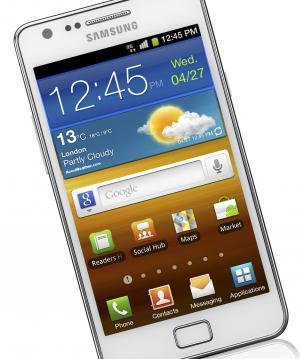
Visa and its European affiliate, Visa Europe, have approved the popular Samsung Galaxy S II, along with the LG Optimus Net and four BlackBerry models, the Bold 9900 and 9790, and Curve 9360 and 9380, to run payWave on SIM cards.

The certifications will be welcome news to banks and mobile operators in such countries as Poland, the United Kingdom, Spain and France that are planning their initial NFC rollouts using payWave. Some of their counterparts in North America and Asia also plan launches.

“The players are now in place for mobile payments to become a reality,” Sandra Alzetta, head of mobile business and innovation strategy at Visa Europe, said in a statement. “We are working with our member banks, mobile network operators and key handset partners to ensure that future payment technologies are as easy, intuitive and secure as card-based transactions are today.”

The certifications mean the NFC models have passed tests for security and usability conducted by Visa-approved labs. Banks and mobile operators can now commercially launch mobile payment with payWave running on SIM cards in the phones without the banks or other parties having to request waivers from Visa. They would still need Visa-approved NFC-enabled SIM cards, and it's not clear whether Visa has certified any NFC SIMs from card vendors. A spokesperson for Visa Europe, which issued the initial release, did not immediately respond when asked about SIM certification.

Visa and MasterCard have granted waivers to issuers for phones and SIMs many times in the past, mainly for NFC pilots, but also for some limited rollouts, especially in the case of MasterCard.

As of last fall, MasterCard had disclosed certifications of three NFC phone models: the Nexus S 4G to run the MasterCard PayPass application on an embedded chip for the Google Wallet, as well as the BlackBerry Bold 9900 and BlackBerry Curve 9360, two of the same models Visa has certified. Update: MasterCard also has certified the Curve 9380. End update. As with the Visa certifications, the MasterCard approval of the BlackBerrys is to run PayPass on SIM cards in the phones, though these models also carry embedded chips.

Update: Visa would not say whether it had certified any phones with embedded secure chips. “Visa...prefers to keep this confidential as per our NDAs (nondisclosure agreements) with handset manufacturers,” a Visa Inc. spokesman told NFC Times.

MasterCard told NFC Times it has certified NFC-enabled SIMs from France-based Gemalto and Japan-based Toshiba. Visa also declined to say whether it had certified any vendor's NFC-enabled SIM cards. End update.

Commercial NFC launches in such countries as the United Kingdom, Turkey and probably South Korea use NFC phones and probably cards for which MasterCard has granted waivers. Visa may have granted a waiver for the South Korean NFC rollouts, as well.

Telcos and banks in these countries using PayPass plan to expand their rollouts, while banks and telcos in Poland and France, among other European countries, are also interested in launching NFC commercially with PayPass.

The Visa NFC phone certifications required tests of security and usability with payWave terminals that also accept contactless payWave cards. About 175,000 point-of-sale terminals accept payWave in Europe alone. Besides security, card schemes, such as Visa, want consumers to have a consistent user experience, whether they use cards, NFC phones, NFC bridge technologies or passive stickers.

But unlike contactless cards, which have standard antenna configurations, antenna configurations vary across NFC models as well as in bridge technologies. The payment networks have lowered the required read ranges for NFC phones, bridge technologies and passive stickers, generally to around 2 centimeters, from the 4-centimeter range for cards. Visa has already certified some bridge technologies. Update: Visa said it tested the NFC phones to a range of 2 centimeters. End update.

Still, it will be a challenge for the payment networks and their labs to certify the variety of devices in a timely fashion, especially as the pace of introductions of NFC phones quickens.

Update: One former representative for a mobile operator in Europe, still involved in mobile payment, told NFC Times that he doubts the certification plans for NFC phones by payment networks are sustainable.

“I'm very surprised handset manufacturers agreed to do it,” said the source, who asked not to be identified. “(It's) not so because of the cost, but because of the delay implied before selling the product. The handset market is so competitive and time to market so critical, I think it will quickly evolve towards self-certification by the (phone) manufacturers.” End update.