
U.S. Retailer Group: NFC Could Boost Store-Branded Cards
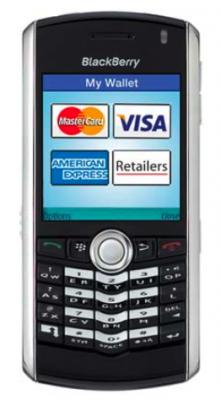
Near Field Communication could help give retailers a new edge in the “wallet-share war” they have been losing for years to banks and their open-loop payment card brands, according to a new report from the giant National Retail Federation.
The new opportunity for store cards and other lower-cost payment options is among the many observations in a just-released “Mobile Retailing Blueprint” from the federation, a retail trade association with 5,600 members.
The 176-page report, which was drafted by an industry committee formed by the federation’s technology standards arm, covers a range of mobile technologies available to retailers to enable consumers to find stores, download coupons, compare products and handle payment.
It’s part of the federation’s Mobile Retail Initiative, designed to help retailers use mobile phones to capture more business and cut costs. According to the federation, while 75% of retailers are evaluating mobile strategies, less than 40% are actually doing anything about it past the early planning stages.
Besides NFC, the report discusses a number of other mobile technologies, including SMS and smartphone Web browsers, GPS and 2-D bar codes. It notes that NFC is “just on the horizon,” offering payment, couponing and other mobile marketing and loyalty applications.
“We’re saying, be aware, there’s a way to go before NFC is in all the phones,” Richard Mader, executive director of the federation’s technology standards division, the Association for Retail Technology Standards, and chairman of the mobile blueprint committee, told NFC Times. “We’re saying, there are options to reach out to the consumer.”
Winning Back ‘Wallet Share’
Among the report’s observations is that NFC could help reinvigorate closed-loop retail-branded cards, which consumers–their wallets already stuffed with plastic–more and more leave at home in favor of open-loop bank cards they can use almost anywhere. It’s a war retailers have been losing over the past two decades, said the report.
“The NFC-enabled mobile phone can change the consumer's wallet,” the report stated. “The ability to reduce transaction fees by offering alternative nonbranded payment options using NFC mobile-contactless payment may represent a business case for retailers.”
Compared with cards carrying such brands as Visa or MasterCard, NFC mobile phones could help retailers “reduce their transaction costs,” using such alternatives as private-label credit, prepaid or gift cards; co-branded retailer cards; PIN debit cards; lower fee-based branded cards; or even cards that process transactions over automated-clearinghouse networks. Retailers often charge high interest rates on their private-label cards, as well.
“Retailers may, therefore, be able to drive higher acceptance rates of their preferred-payment options than is possible with plastic cards,” stated the report. “Once a retailer-preferred payment card is issued to a customer's NFC-enabled mobile phone, the customer always carries that payment card with the phone.”
Besides lower fees, NFC could enable merchants to integrate mobile promotions, such as couponing, with their preferred-payment cards, stated the report.
“The two things retailers are interested in: coupling of payment with promotional applications (such as) coupon and loyalty programs and the ability to have their own branded cards as a mobile-payment app, NFC-enabled phones provide that capability for the retailers,” said Cathy Medich, director for strategic programs for the Smart Card Alliance trade group and chairwoman of the payments subcommittee working on the blueprint. “The nice thing about a phone, people always have it with them.”
The report also covers payment over mobile networks, using SMS, phone Web browsers, even 2-D bar codes, such as those used by coffee chain Starbucks with its Starbucks Card Mobile app for Apple's iPhone.
NFC payment applications would have to be stored on secure chips in the phones, noted Medich. These applications are generally much faster than network-based payment and consumers could redeem coupons or loyalty points–perhaps with the same tap of the phone as used to make the payments.
“Merchants are putting in place contactless payment terminals, (and) one of the real reasons is they are anticipating NFC phones in the future,” Medich told NFC Times.
Among members of the payments subcommittee were representatives from Yum! Brands, which calls itself the world's largest restaurant company with more than 37,000 restaurants worldwide, including KFC, Pizza Hut, and Taco Bell outlets; and Safeway, one of the largest supermarket chains in the United States and Canada.
The blueprint committee also included such other retailers as big U.S. home improvement merchant Home Depot and Spain’s largest department store chain, El Corte Inglés. That’s in addition to technology vendors and standards groups.
Pushing Preferred Cards
For retailers, there is a lot of interest in the possibility of using mobile phones to make their store cards the preferred payment means for consumers.
“For example, we’ve heard from retailers; they would very much like to have a wallet (that) when a consumer walks into their store, they would be shown their credit card,” Mader said. “If you went into a Home Depot, the wallet software would show the Home Depot credit card. The consumer can say, 'no, I’m not going to use that. I’m going to use my Visa.' ”
Though other mobile technology could provide this kind of functionality, it would probably need to happen right at the point of sale.
Mohammad Khan, president and co-founder of contactless reader vendor Vivotech, a contributor to the blueprint report, said the company has technology to enable readers to select preferred cards.
“The reader knows that I’m sitting in this merchant now with a (digital) wallet,” said Khan, whose company also supplies platforms to deliver payment and loyalty programs over the air to NFC phones. “If I’m carrying different cards, the reader can know the merchant’s preferred card, (and) it can use the card.”
Of course, the consumer gets the final say over which card in the phone’s wallet he will use. But if he’s downloaded the store brand, he will always have it with him, Khan said.
The federation’s blueprint committee plans to issue updated versions of the report as the technology and applications evolve.
 Facebook
 Twitter
 LinkedIn
HEADLINE NEWS


Syndicate

