HEADLINE NEWS
MicroSD Vendor Announces Taiwanese M-Payment Trial Using HTC NFC Phones

Giesecke & Devrient Secure Flash Solutions has announced a trial launched last month in Taiwan by Cathay United Bank of mobile payment applications running on microSD cards in full NFC phones.
As NFC Times reported June 18, shortly before the trial launched, organizers of the pilot have loaded a MasterCard PayPass credit application and a separate Mifare-based EasyCard e-purse onto microSDs that are inserted in a modified version of the HTC Incredible S. The HTC NFC phone is called the Incredible E.
The Android phone from Taiwan-based HTC is equipped with an NFC chip and antenna and a single-wire protocol, or SWP, connection to the microSD card slot.
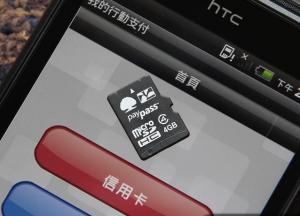
The project is the first of its kind outside of China, where China UnionPay and at least two banks, including China Construction Bank, have launched NFC mobile payment on microSDs in what in China is called the HTC Stunning. UnionPay is also using other handsets supporting so-called “SWP-SD” technology.
UPDATE: A source involved in the project told NFC Times that only about 10,000 of the specially equipped HTC phones have sold in China, with the time needed to gear up for the launch meaning that the phone didn't go on sale until the fourth quarter of 2011, at least eight months after the non-NFC version of the phone had hit the market. Four Chinese banks, including Construction Bank, have issued a combined 200,000 microSDs supporting the technology, but most are used for securing remote payment, not NFC payment. END UPDATE.
Cathay United, which has participated in other NFC trials involving mobile operators, is issuing the microSD cards for the pilot, which does not require the participation of a telco.
The bank reportedly has issued 2,000 of the cards for the trial.
The vendor, which is a joint venture of Giesecke & Devrient Secure Flash Solutions and Taiwan-based flash memory supplier Phison Electronics, noted that Cathay United customers are able to tap their phones to make contactless payments at local stores and to pay fares on subway trains and buses in the capital city, Taipei.
Cathay United issues the PayPass application, which is accepted at about 25,000 point-of-sales terminals in Taiwan. The separate Mifare-based EasyCard application, issued by EasyCard Corp., is accepted at about 30,000 POS terminals in 12,000 retail outlets on the island, including major convenience stores. That’s in addition to readers at subway gates and onboard buses.
G&D said MasterCard has approved the card for the trial, which might mean the card scheme has granted a waiver. The microSD has not yet appeared on MasterCard’s list of certified secure elements, though the phone and microSD are believed to have been tested by one of MasterCard’s certification labs. EasyCard Corp. has approved the microSD, as well, said G&D Secure Flash Solutions.
The NFC-enabled version of the HTC Incredible S is different from other NFC-enabled Android phones HTC has introduced. HTC has released such high-end handsets as the One X and Evo 4G LTE, both of which carry embedded secure elements. And the HTC Droid Incredible 4G LTE will support secure NFC applications on SIM cards. The smartphones have been released in the U.S.
As NFC Times reported in February, two other Taiwanese banks have also considered launching PayPass on microSD cards in the HTC handset, E.Sun Bank and Taishin Bank. They have apparently decided not to launch the project, however.
In the NFC-enabled HTC phone model in China and Taiwan, the SWP connection between the NFC chip and microSD card slot is not standard, as it is between the SIM card and NFC chip in SWP-enabled NFC phones. But international standards organizations are drafting specifications to standardize an SWP link for microSDs.
By using microSDs as a secure element, banks can generally bypass mobile operators to introduce NFC mobile payment on their own. But in countries where telcos control the distribution channels, the operators could refuse to sell the phones or disable the NFC interface in them.
Cathay United and EasyCard have both been involved in pilots of NFC phones involving mobile operators. And both are expected to be part of a joint venture with telcos that is likely to be finalized before the end of the year.
The joint venture would set up a common trusted service manager to manage secure elements, among other platform components to help the parties roll out NFC services. HTC is also trying to join the group, which would include five Taiwanese telcos.
NFC rollouts organized by the joint venture probably would use SIM cards as the preferred secure element but could add microSDs later.
Besides the microSDs using an SWP connection in NFC phones in China and Taiwan, there are also microSDs on the market with their own embedded contactless antennas, from U.S.-based supplier DeviceFidelity.
But microSDs with their own antennas haven’t yet gotten beyond the trial stage. And so far, there does not appear to be a lot of demand in the West for microSDs that could connect to the antenna in full NFC phones, since few such phones exist.