HEADLINE NEWS
Inside Gets Contract for Nokia’s First NFC Windows Phone; Microsoft to Weigh in Later

MONACO – Inside Secure is expected to announce as early as Friday that Nokia has selected it as NFC chip supplier for the handset maker’s first NFC-enabled Windows Phone, to be introduced in the third quarter.
The contract is believed to be the first for Inside in addition to its deal to supply NFC chips to Research In Motion for BlackBerry NFC handsets, along with at least one model for the small maker of rugged handsets, Sonim Technologies.
The Nokia deal also helps Inside put a dent in the early dominance of the NFC chip market by NXP Semiconductors, which has announced it has design wins for more than 130 NFC mobile phones and tablets. Most of NXP’s wins are for devices on the Android platform, but Nokia also uses NXP chips in all six Symbian NFC phones and one MeeGo handset it has released so far. Nokia also has announced the yet-to-be released Symbian 808 PureView with a 41-megapixel camera will carry an NFC chip.

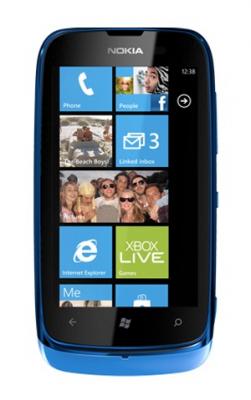
Nokia’s choice of France-based Inside as chip supplier for the Windows Phone-based Lumia 610 likely hinged on Inside’s “Open NFC” software stack, which could be adapted relatively quickly to the Microsoft platform, said a key NFC analyst.
The NFC version of the Lumia 610, due out in the third quarter, adapts Windows Phone 7.5, with enhancements to the operating system and the addition of Inside’s NFC middleware. Windows Phone 8, on the other hand, will come with NFC built into the platform by Microsoft.
But Microsoft apparently declined to retrofit Windows Phone 7.5 with NFC. That left Nokia responsible for adapting 7.5, known as Mango, for NFC itself. Nokia has told NFC Times it wanted to introduce an NFC-enabled Windows Phone as soon as possible.
UPDATE (April 16, 2012): Inside confirmed that Nokia is using its MicroRead NFC chip and Open NFC software stack for its Lumia 610. END UPDATE.
“Nokia is left with how can they implement NFC,” Mark Hung, research director for wireless at U.S.-based research and consulting firm Gartner, told NFC Times. “They really have two choices (for NFC chips), NXP or Inside Secure. Obviously, NXP has great Android support and also last year they announced a port for Windows 8. But they don’t have Windows Phone 7.”
Windows 8 is the next version of Microsoft’s operating system for PCs and tablets, which is expected to have many elements in common with Microsoft’s next mobile operating system, Windows Phone 8. Both new platforms are expected to be released by the end of the year, though could take longer to come to market.
Inside has said its NFC phone software stack, Open NFC, supports Microsoft’s mobile operating system, in addition to other mobile platforms, including Android.
“Open NFC made a lot of sense for them (Nokia) to pick Inside,” Hung said. “They still have to do some porting and personalization. (But) it allows them to bring a product quickly to market on a Windows Phone platform.”
Inside Track to Chip Supply for Windows Phone 8?
But the design win won’t necessarily give Inside an advantage over NXP or any other NFC chip maker ready with silicon when Nokia chooses a primary chip supplier for its NFC phones based on Windows Phone 8, said Hung.
The new platform will come with full NFC support from Microsoft, which might pick the NFC software stack supplier itself, just as Google did when it chose NXP’s software stack for Android. Microsoft also is building its own NFC mobile wallet for Windows Phone 8, sources have said.
The NFC software stack, or middleware, is vital to the NFC functionality of the phone. The software connects the NFC chip to the phone’s operating system on one end and to the application programming interfaces and, by extension, the applications on the other.
A source at NXP who asked not to be named, called the NFC version of the Lumia 610 and Inside’s chip for it a one-off implementation by Nokia. And he noted that Microsoft has not been involved in adapting Windows Phone 7.5 to support NFC.
Inside executives, citing restrictions on publicly traded companies, declined to comment.
Inside, as it was preparing to relaunch its initial public offering, announced in early February that it had won a contract to supply NFC chips to a leading phone maker on a major mobile platform. It declined to name the device maker or platform, but they turn out to be Nokia and Windows Phone.
Inside had earlier been in the running to supply Nokia with NFC chips for its Symbian platform. Despite receiving funding from Nokia’s venture capital arm, Nokia passed on Inside and went with chips from NXP.
Encouraging Developer Support
The Finland-based phone maker is phasing out Symbian and is betting its future on Windows Phone. On Wednesday, Nokia announced it had chosen a low-cost model, the Lumia 610, for its first NFC-enabled Windows Phone device.
The phone will be sold first by France Telecom-Orange group and will support payment on SIM cards, along with other NFC features–tag reading and peer-to-peer communication. Both MasterCard Worldwide and Visa have already certified the device to run their respective contactless payment applications.
Unlike with the NFC chips supplied to RIM, Inside's NFC chips for the Lumia 610 will not come stacked with an embedded secure element. Nokia, catering to SIM-centric mobile operators, is supporting the single-wire protocol-enabled SIM as the only secure element for the handset.
Nokia said it hopes to ship the NFC version of the phone to operators globally. The non-NFC version is expected to be released this month in Asia and then Europe at a sub-€200 (US$263.79) unsubsidized price.
“We wanted to promote the NFC ecosystem, and we believe the Lumia 610 would be a success because it’s an affordable device addressing young people,” Andrea Bacioccola, lead program manager for NFC in Nokia’s Windows Phone program, told NFC Times. “It will be available for operators all around the world.”
He said Nokia is encouraging Windows Phone developers to start working on NFC applications, including apps that could support secure applications stored on NFC SIM cards.
By contrast, Google has not published its Google Wallet application-programming interface, or API, for its NFC-enabled Android phones. The wallet is anchored by an embedded secure element.
“It will be published,” Bacioccola said of the Windows Phone APIs involving NFC. “They (developers) will get APIs and all the documentation and support from Nokia. With the Nokia Lumia 610, you will be able to create secure NFC applications.”
Of course, Windows Phone developers would have to get permission from mobile operators to access NFC applications stored on SIM cards. And the SIM applications themselves would likely be developed by smart card vendors.