HEADLINE NEWS
Infineon Confirms H2 Shipments of 20 Million Embedded Chips–Destined for BlackBerrys

Infineon Technologies said it shipped at least 10 million embedded secure chips during both the third and fourth quarters of 2011 and predicts it will continue to sell “double-digit millions” of embedded chips each quarter after that.
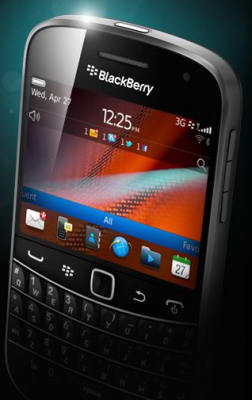
The figures, totaling at least 20 million chips for the second half of 2011, offer a close approximation of how many NFC-enabled BlackBerry Bold and Curve smartphones that handset maker Research In Motion is shipping during the latter half of 2011 and perhaps early 2012 and also how many NFC chips France-based vendor Inside Secure has shipped during the last two quarters of this year.
Infineon, though not revealing the handset models its chips are used in, supplies the embedded smart card chips that come stacked with Inside Secure’s SecuRead NFC chip package. Virtually all of the SecuRead chips have been shipped to RIM for NFC-enabled BlackBerrys.

Inside CEO Rémy de Tonnac declined to reveal how many NFC chips the France-based chip supplier has shipped this year, but indicated there would be an announcement soon. The vendor in October announced it had shipped 10 million NFC chips for 2011 through Oct. 15, and said shipments were accelerating in the fourth quarter.
If Inside has shipped 20 million NFC chips this year, it would mark a strong showing for the vendor, which competes directly with Netherlands-based NXP Semiconductors. Analysts and industry suppliers in recent months estimated shipments of about 40 million NFC phones worldwide for 2011, perhaps fewer. NXP has supplied chips to all Android NFC phones this year, including the Google Nexus S and NFC versions of the Galaxy S II, both made by Samsung Electronics, and for all Nokia Symbian NFC phones.
Infineon, one of the largest smart card chip makers worldwide, told NFC Times it believes the majority of all NFC-enabled smartphones will carry embedded secure chips. But a high percentage will also support SIM cards as secure elements, with a single-wire protocol connection to the NFC chips. “(Many) phones will come with two secure elements," said Jürgen Spänkuch, director of business development for embedded security, part of Infineon’s chip card and security division,
Germany-based Infineon appears to be sticking to its NFC strategy of focusing on the market for embedded secure chips, though it also can produce chips for NFC-enabled SIM cards and secure chips in microSD cards.
It made the prediction of double-digit millions of shipments each quarter last spring, and to hit the goal, it needs to partner with chip makers that produce the NFC modem chips. Infineon does not make its own NFC chips, unlike most of its smart card industry rivals, such as Samsung Semiconductor, STMicroelectronics and Renesas Electronics.
Inside, which bought the smart card chip unit of U.S.-based Atmel last year, is likely working on its own embedded secure chips.
But both Inside and Infineon in recent weeks told NFC Times their partnership is continuing.
Infineon declined to say which other chip makers it has discussed possible partnerships with, but one of them is probably U.S.-based Broadcom, which announced in September plans for a standalone NFC chip next year and later to incorporate NFC technology into combo Bluetooth and WiFi chipsets it ships to top smartphone makers.
Some other large wireless semiconductor suppliers are gearing up to supply the combo chips with NFC, including Qualcomm, CSR, probably Marvell and perhaps Texas Instruments. TI has introduced a standalone NFC chip for devices other than smartphones, but which might need a secure element for some applications. It also could produce combo NFC chips.
To do payment and other secure applications, such as access control and transit ticketing, smartphones and other devices with combo wireless chips would require a secure element. Makers of these combo chips, in general, do not have their own secure chip technology so would need to partner with smart card chip suppliers. Besides Infineon, NXP and probably other smart card chip makers are targeting the market to supply secure chips for wireless combo chips.
Helmut Gassel, head of Infineon’s smart card chip unit, said embedded smart card chip technology could not simply be integrated into the combo chips themselves because payment schemes will need to certify the secure chips. This increases the opportunity for secure element suppliers.
“The secure portion will remain a dedicated piece of hardware,” said Gassel, who at the end of the year will leave the smart card chip industry to become president of Infineon’s new Industrial & Power Control Division.
Infineon also declined to say which other handset makers will use its embedded chips, though a source told NFC Times that one of them is Chinese phone maker ZTE. It’s not clear whether that would be part of a stacked chip with Inside Secure.
Besides BlackBerry handsets for RIM, Inside also confirmed supply to U.S.-based rugged phone maker Sonim Technologies and has announced it will supply Chinese handset maker ZTE with NFC chips. It’s not clear when ZTE will introduce NFC phones, and rival NFC chipmaker NXP Semiconductors–which has its own embedded chip–also has announced it will supply ZTE with NFC chips.
NXP’s highest profile win for embedded chip technology is with Google, for the Web giant’s Nexus S NFC phones made by Samsung Electronics. The 4G version of the phone supports the Google Wallet, which relies on the embedded chip for its payment applications and offers.
BlackBerry phone maker RIM has not talked much about its plans for the embedded chips in its NFC-enabled handsets. But it has said it plans to enable contactless corporate badges and other ID applications to be stored on the chips, in partnership with access-control card and reader supplier HID Global.
The ID applications would enable employees to tap the phones to enter buildings and offices, as well as providing other corporate ID services. RIM might not control the embedded chips in all its phones.