HEADLINE NEWS

UK Taxis Get NFC Tags for Promo Campaign; NFC Dynamic Screens to Play at French Sporting Event

Samsung Electronics, along with Australia-based NFC marketing firm Tapit, UK-based out-of-home advertising company Chiel and terminal vendor VeriFone are rolling out NFC stickers to 80 taxis in the UK, as part of a promotional campaign for musician Robbie Williams’ upcoming Samsung-sponsored tour.

OTI to Supply Contactless and NFC Readers for Gasoline Stations in North America

Israel-based contactless and NFC vendor On Track Innovations announced Monday it had received an order for 30,000 readers for point-of-sale terminals at retail gasoline stations in North America.

Taxis in Major U.S. Cities to Get NFC-Enabled Video Ads

Riders in 5,000 taxicabs in the U.S. would be able to tap on NFC tags on video advertising screens to download apps, brand information, coupons, maps, music and videos, according to technology suppliers that have equipped the taxis for potential advertising campaigns.

Analyst: Banks Have More to Fear from Cloud-Based Technologies Than NFC

Banks have much more to fear from cloud-based mobile payment than from NFC, even if mobile operators control the secure elements that hold the banks’ payment applications.

GSMA Proposes Global Standard for NFC-Enabled Loyalty and Couponing–Using SIM Cards

May 10 2013 (All day)

The GSMA mobile operator trade group is proposing a global standard for how point-of-sale terminals talk to NFC-enabled mobile wallets to enable consumers to redeem coupons and rewards.

Taiwanese Bank Gets Approval for NFC-Enabled Credit Cards; Okay for Other Banks Expected

Taiwanese banking regulators, as expected, have approved the first bank to issue mobile credit cards that could be downloaded over the air to SIM cards.

UK Retailer Marks & Spencer Sees Growing Use of Contactless

Marks & Spencer, one of the UK’s largest retailers, announced today it had rolled out contactless payment to 644 of its UK stores and said 14% of its card transactions under £20 (US$30.97) are contactless.

Identive Reports Growing NFC Business; Blames Flat Sales, Losses, on U.S. Budget Cuts

U.S.-based Identive Group reported growing NFC and smart card reader business, but fell back into the red during for the first quarter, a loss it largely blamed on U.S. federal government budget cuts.

German Bank and Telco Hold Small NFC Trial; Larger Launches Planned in Country This Year

As Germany gears up for NFC, German bank Dortmunder Volksbank along with Telefónica (O2) Germany have launched a small pilot putting a credit application onto SIM cards in Western Germany.

Cashless Technology Company Announces Rollout of Isis SmartTap on Vending Machines

Vending technology company USA Technologies plans to integrate the SmartTap mobile-commerce software into all of the company’s nearly 100,000 NFC-enabled terminals on vending machines nationwide.

Infineon Introduces New Embedded Secure Element, Hoping to Tap Growing Market

Germany-based Infineon Technologies today introduced a new embedded secure element, targeting the growing market for chips that handset makers are including in their NFC-enabled devices.

Vendor Group: NFC Secure Element Market to Grow by Two-Thirds This Year

Smart card vendor association Eurosmart has substantially increased its estimate for NFC secure element shipments for 2012–by 50% to 150 million units–and forecasts that secure element shipments will grow by another 67% in 2013 to 250 million units.

Google Introduces Two NFC Devices; Wallet Changes Expected

Google announced two new NFC-enabled devices and enhancements to its Android Beam peer-to-peer feature during the opening keynote address today of its Google I/O developers conference in San Francisco.

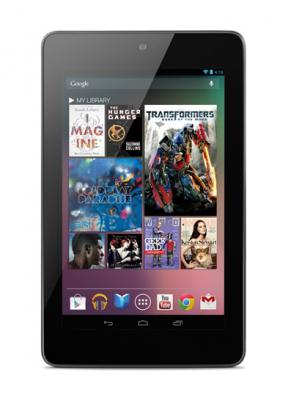
The Android-based devices, the Nexus 7, Google’s first tablet under its own brand; and a new media-streaming device, the Nexus Q; both support NFC. Both will be available in July for shipment, said Google.

The Web giant noted during the keynote that more than a million NFC-enabled Android devices are shipping every week. “And that number is growing quickly,” said Hugo Barra, director of Android product management for Google.

Meanwhile, Google is expected to introduce changes to its Google Wallet, probably during the conference. The changes are expected to emphasize cloud-based applications and a more open development environment, sources have told NFC Times.

Google is not expected to abandon NFC for its wallet, but the changes to the wallet, as NFC Times reported earlier, could make use of its acquisition a few months ago of U.S.-based TxVia, which provides a payments platform for processing a range of prepaid cards. The wallet revamp also is expected to reduce the Web giant’s dependence on ownership of the NFC secure element.

That has hindered the availability of NFC phones that can support the Google Wallet, since mobile operators can block Google from using the secure element on most phones. But it’s not the only problem Google has faced with its wallet, which it launched last September.

“They’ve made it impossible for everyone to work with them,” one critic, a U.S. payments industry veteran, told NFC Times, noting that Google has wanted to control too much of the wallet and data connected with it. “Banks and telcos (and merchants) are weary of Google. One year later, they have nothing.”

One session scheduled for the Google I/O conference today, Introducing Google Wallet Cloud APIs, could shed more light on Google’s new wallet strategy. By opening up the APIs to the wallet, Google could introduce a number of commerce-based applications, though it is not expected to open up access to the secure element for security reasons.

Google also has a separate session planned describing new ways to sell digital goods, including premium content, through the Google Wallet.

NFC-Enabled Google Tablet
But the Web giant didn’t mention the wallet during its opening keynote presentation, in which it unveiled the tablet and media-streaming device. Google also used the presentation to introduce the latest version of its mobile operating system, Android 4.1, dubbed Jelly Bean.

NXP Semiconductors announced that the Nexus 7 will carry its PN65 NFC chip, which includes an embedded secure element. That indicates the device could support the Google Wallet, although in its specifications for the tablet, Google lists NFC as a feature, then adds Android Beam in parentheses.

“The tablet builds on the successful introduction of NFC features in Nexus-branded smartphones and innovations like Google Wallet, enabled by NXP technology,” said NXP in a statement.

The tablet will support Jelly Bean, and Google appears to be targeting the device at the Amazon Kindle Fire, not Apple’s iPad. 

Google emphasized that the device is optimized for viewing e-books, magazines, movies and TV shows, like the Kindle. And the price of the Nexus 7, at $199, also matches the cost of the Kindle Fire and is much less than the iPad. The Kindle does not carry an NFC chip.

Taiwan-based computer maker Asus is making the tablet for Google, which has already introduced three of its own Android phones.

Jelly Bean will support faster pairing of devices using NFC P2P functionality. Google had earlier introduced an enhanced P2P feature for its Android devices, called Android Beam, as part of the predecessor to Jelly Bean, Android 4.0, or Ice Cream Sandwich. The latest enhancements in Jelly Bean for P2P pairing build on Android Beam.

“First, you can send someone a photo or video by just tapping your phones together,” said Barra during the keynote. “Second, you can instantly connect and pair your phone with an NFC-enabled Bluetooth device, like a speaker or headset by just tapping it with your phone.”

Enhancing Android Beam
The fast pairing features are not new to NFC devices, especially pairing NFC devices with Bluetooth headsets and speakers. And for exchanging large content fast, such as photos and videos, Google is likely using a similar NFC implementation as Samsung introduced, called S Beam, for its flagship smartphone, the Galaxy S III.

S Beam is designed to use NFC to quickly open a Wi-Fi Direct connection between the two devices. The content is sent via this connection, without going through a Wi-Fi access point.

Einar Rosenberg, head of U.S.-based NFC development house Narian Technologies, said he believes Google will encourage developers to integrate Android Beam functionality into their apps, where appropriate.

“Beam right now is pretty much limited to throwing what you have on one screen onto another,” he said. “What they’re going to do now is allow the imagination of those tens of thousands or hundreds of thousands of developers to more easily integrate Beam into their offerings.”

The orb-shaped Nexus Q enables people to stream music and videos from the Google Play store and YouTube. Users can share a Wi-Fi network and enter their songs or videos onto the same playlist, or queue. Google called the Nexus Q the “world’s first social-streaming device.”

But Google didn’t specify during the opening keynote what it has in mind for the NFC chip inside the Nexus Q.

At one point during the demo, however, a moderator tapped what appeared to be an Android smartphone to the device. So the NFC functionality could be used to quickly pair users' phones and tablets to the Nexus Q, and perhaps to pair the Q with NFC-enabled audio speakers and TV sets. All the content then flows over a Wi-Fi connection.