HEADLINE NEWS
G&D Says Venyon Buyout Shows NFC Commitment

In buying out its joint venture partner Nokia, German smart card maker Giesecke & Devrient said it remains committed to the trusted service management business, despite delays in rollouts of Near Field Communication services.
The split between G&D and Nokia comes nearly three years after the joint venture officially began doing business, as Venyon, the first company formed purely in anticipation of the TSM market for NFC phones. G&D and Nokia had announced plans for the venture six months earlier, in June 2006.
At the time, many in the industry, G&D and Nokia among them, thought NFC rollouts would begin in 2008 and as projects expanded, there would be demand for millions of application downloads, as well as management of the services over the air.
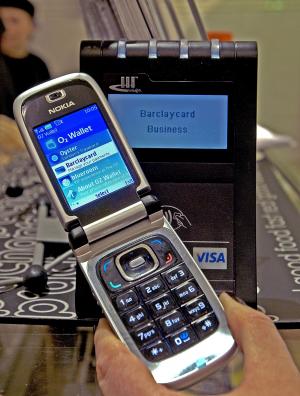
That has yet to materialize. The lack of NFC rollouts, or even many phones on the market supporting the contactless technology, has meant Venyon has conducted only about a dozen trials to date that have been made public. The company says, however, it has handled more than 20 pilots all told. The business plan for Venyon, as with other TSMs, has been to charge fees to banks, transit operators and other service providers for securely downloading and managing payment, ticketing and other applications on secure chips in NFC phones.
G&D had owned 57% of the company, with Nokia, the world’s largest phone maker, owning the rest. A G&D spokesman said Venyon will continue as a separate entity, with its management structure intact. That includes continuing to base the subsidiary in Helsinki, Finland, near Nokia headquarters. And, Lauri Pesonen, formerly Nokia’s head of NFC consumer solutions, will continue to serve as Venyon CEO, said the company at the time of the announcement.
“We believe in the future of the NFC market,” the G&D spokesman told NFC Times. “Then, acquiring Nokia’s stake is an investment in the future of this market. We believe in the strength of Venyon.”
The parties have declined to say how much initial capital they put into the venture. An industry source estimates the combined investment at roughly 15 million euros (US$22 million), though if true, they would have easily burned through that by now. G&D also declined to say how much it cost to buy Nokia out. The handset maker says it is exiting the venture to focus on NFC phones, among other things.
In any case, Venyon emerges under sole ownership leaner than before. It closed one of four offices, in the U.S. early in 2009 and has about 30 employees. That is down from more than 40 at its peak.
While it maintains Venyon is well-positioned to provide trusted service management for a “growing” NFC market, G&D intends to use Venyon’s expertise not only for NFC phones, but to help in the delivery of secure services, including payment and transit ticketing, to mobile phones in general.
NFC Times has learned G&D is working on planned trials of RF-enabled SD cards for BlackBerry handsets, for example. The cards, likely microSDs, would carry payment or other applications. This is separate from G&D’s “Mobile Security Card,” a microSD for Android phones, which the vendor announced in November. The product provides a smart card ID to mobile phone users to secure mobile-banking and access to corporate networks.
Mobile Security Card might also benefit from Venyon as well as G&D’s acquisition, announced earlier this year, of Sweden-based SmartTrust, which manages GSM and 3G applications over the air for mobile operators. G&D says it can use the SmartTrust OTA platform not only for SIM cards or SIM applications, but for other secure chips and devices.
Just how well G&D can incorporate Venyon into these activities remains to be seen. Venyon and SmartTrust will work together on the planned second phase of a trial in Norway, delivering a MasterCard PayPass issued by the country's largest bank, DnB NOR, to SIM cards issued by its largest mobile operator, Telenor. SmartTrust already provides OTA management for Telenor's GSM applications on the telco's SIMs.
But while Venyon, indeed, looked well-positioned when the venture launched, continued delays in the NFC market and an evolving concept of trusted service management may throw further problems Venyon’s way.
In many countries, it seems likely banks and other service providers intend to call on the same companies that personalize and, often, issue their banking cards to also handle downloads and provisioning of their credit or debit applications on NFC mobile phones. These personalization companies might need to license a TSM platform to accomplish this. But Venyon has been reluctant to license its platform in trials. It wants to provide services directly to the banks. Its TSM competitors, such as Cassis International, Vivotech and Gemalto, have not shown a similar reluctance to license their platforms, however.
Venyon CEO Pesonen told NFC Times the company is open to considering licensing its platform, but believes offering its services directly to banks, telcos and other players is still Venyon's key selling point. He also said he believes demand for TSM services will be global.
"The first commercial launches have yet to be executed," he said. 'If you look for TSM service, it’s not bound by borders."
Venyon can point to some high-profile pilots for which it has handled application downloads and management. That includes the O2 Wallet trial launched in London in November 2007 that tested transit ticketing and credit card payment, and a trial involving U.S.-based Citi that enabled participants to pay with a bank application to ride the New York City subway. Venyon only managed the Visa payWave credit application issued by Barclaycard for the O2 Wallet trial, not Transport for London's Oyster ticketing service. And G&D began the trial in New York before Venyon took over–after the joint venture began operations.
Both of those trials used Nokia phones, as have about 80% of Venyon’s publicly disclosed trials. But Venyon says it has never been limited to handling TSM services only for Nokia phones.
In fact, most trials, regardless of TSM, used Nokia phones. In any case, G&D’s sole ownership of Venyon would put this perception to rest.
"I think, over time, we were successful in establishing a netural position in the market," said Pesonen.