HEADLINE NEWS
Dutch Banks and Telcos Announce Plans for NFC Mobile-Payment JV

The three largest banks and three largest mobile operators in the Netherlands today announced their intention to form a joint venture to launch mobile payment, using full NFC phones.
The banks, ING, Rabobank and ABN Amro; and telcos, KPN, T-Mobile Netherlands and Vodafone Netherlands; have not yet specified a launch date, but say they plan a rollout sometime in 2012. The partners also are fine tuning plans for the payment applications they will offer and how they will roll out contactless terminals at the point of sale. And they plan to hire a CEO for the venture, which they will form next year, Arjan Bol, director of payments for ING bank, told NFC Times.
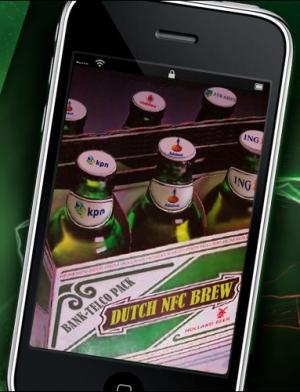
As NFC Times reported earlier this summer, the Dutch banks and telcos gave the project the green light at a meeting June 28, following months of discussions. The venture by the three banks and three telcos–dubbed the six pack–would be a first of its kind among financial institutions and mobile operators, working together to roll out mobile payment.

"Holland is unique in that the main banks represent around 90% of the market and the telcos also 80% to 90% of the market, Bol told NFC Times. This way, you make sure both basically on the mobile side and acceptance side our customers can use their mobile phones for payments."
In a statement today, the joint venture said that for ease of use and security of mobile payment in the Netherlands, a "single, uniform system for mobile transactions" was needed, based on international standards. The group would be open to other banks, telcos and service providers.
While telcos and banks in France have taken a coordinated approach to NFC mobile-payment standards and procedures and have jointly launched a small precommercial project in the city of Nice, they are not working as closely as the Dutch parties and have had difficulty working out how to share revenue. In the United States, major mobile operators have formed a joint venture and are pursuing their own plans for NFC-based mobile payment–without major U.S. banks or card networks. The U.S. telcos are also recruiting a CEO for their venture. U.S. banks, meanwhile, are starting to pursue their own contactless-mobile projects, using contactless stickers and microSD cards.
"It is the first time that major banks and mobile operators in a European country have joined forces with regard to mobile payments," stated the Dutch group.
But the agreement by the Dutch banks and telcos to work together does not necessarily mean they have finalized a business model or finished hashing out how they will share revenue from the payment services they launch. Much of that will be done on a bilateral basis, ING's Bol indicated.
"We have agreed on a starting point," he told NFC Times. "The dirty details are still in the making."
The banks have agreed to put the NFC payment applications onto SIM cards the telcos will issue, so they likely have agreed to some type of model in which banks would rent space for their payment applications on the telcos' SIMs. Bol declined to discuss models. ING has been designated to speak for the rest of the partners, a bank spokeswoman said.
There are still many unanswered questions for the project, however, especially how the parties will jump-start contactless payment, since a contactless-payment infrastructure is almost nonexistent in the Netherlands. Much of the discussions among the banks and telcos the past 12 months have concerned how to get contactless terminals rolled out, NFC Times has learned. Bol said the rollout of EMV payment in the Netherlands means merchants will have newer point-of-sale terminals installed, which can more easily be upgraded to accept contactless.
But the banks and telcos still have to convince merchants to accept contactless and, according to Bol, the banks have no plans for a separate contactless-card rollout that could use the same terminals. Banks may issue contactless cards separately, however, and ABN Amro is trialing cards.
Despite the lack of NFC phones at present, Bol said the parties have confidence that enough compelling models will be available by the time they launch the service in 2012.
"We have had long discussions about that, and we basically (will go) all the way for the right thing (with full NFC). We will not use any bridges," Bol said.
The banks and telcos also have been in the market for a trusted service manager that could deliver the payment applications to secure chips in the phones. While the parties are likely to build an NFC platform to support multiple applications, it’s not clear yet whether one of those applications will be the Dutch contactless transit ticketing scheme.
For now, payment is the only definite application for the joint venture, which will likely support both MasterCard PayPass and Visa payWave contactless applications.
It’s (payment) a crucial starting point," Bol said. "Other applications will be added."
As NFC Times reported earlier, the parties had planned to make a decision on whether to go forward with the project around April, but delayed it for more study.