
DoCoMo Expected to Begin the Move to NFC in 2013
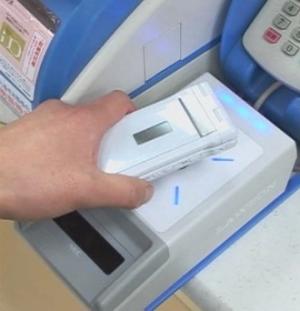
While Japan’s dominant mobile operator, NTT DoCoMo, declined to confirm a press report that it would move to standard NFC phones starting in 2013, most market observers agree the pressure on DoCoMo to adopt NFC will become too strong to resist.
A source at DoCoMo confirmed to NFC Times that the telco is "actively looking" at migrating from the proprietary Sony FeliCa technology it now uses to NFC phones that can store payment and other secure applications on SIM cards supporting the single-wire protocol standard. But he declined to say when the move would happen or if DoCoMo had made a final decision. A report by economic news publisher Nikkei last week said DoCoMo would begin moving the FeliCa applications to SIM cards in about three years.
DoCoMo is the driving force behind the largest rollout of contactless-mobile phones worldwide, with more than 60 million distributed.
"We cannot predict, unfortunately, the timing of this move, as it is dependent on many factors," the DoCoMo source told NFC Times.
Still, DoCoMo appears poised to make the move–hoping to reinvigorate its "Osaifu-Keitai," or wallet-phone, service it launched in 2004. The service now features DoCoMo’s own payment scheme, iD, along with a number of other payment services, transit ticketing, loyalty programs, airline check-in and others. While DoCoMo’s determination to enter the payments market led to the rollout of contactless wallet phones to more than half of Japanese subscribers and deployment of hundreds of thousands of contactless terminals, most informed observers in Japan agree use of the phones for payment has been disappointing.
"There’s no killer application in the Japanese market–DoCoMo’s iD and domestic payment didn’t succeed," said a source with a major vendor on the wallet-phone rollout. "Some global applications like (MasterCard) PayPass and (Visa) payWave could."
It remains to be seen whether the MasterCard or Visa payment applications would get Japanese consumers to tap their phones to pay more than they do with FeliCa. But among the advantages DoCoMo sees for moving to NFC is enabling its subscribers to use wallet services when they roam overseas after NFC gets rolling in South Korea, China, Taiwan and countries in Europe and North America.
Japan’s two other major cellular operators, KDDI and Softbank Mobile, have been pushing for NFC. They have been forced to go along with the wallet-phone offer to keep up with DoCoMo, though they do not collect any revenue from enabling the services. Among new mobile applications they see possibilities for is government ID, such as the national driver’s license. Japan's driver’s license cards support standard contactless technology, that is, ISO/IEC 14443, type A or B.
Global Impact
A move by DoCoMo to NFC would reach far beyond Japan, believes Red Gillen, senior analyst at U.S.-based Celent research and author of a report released in June on Japan’s wallet-phone rollout.
"Should NTT DoCoMo move to the NFC standard, there is no doubt that the other major Japanese carriers would follow," he told NFC Times. "With the world's largest mobile-contactless market coming online for NFC, the stakes for industry players will be far greater–the resulting competition and economies of scale will drive technology pricing downward (globally)."
Also moving DoCoMo and the other mobile operators toward NFC are concerns that global smartphone makers will not support the FeliCa chip in their devices, which are taking market share from Japan’s sophisticated feature phones. For example, DoCoMo introduced Samsung’s popular Galaxy S Android smartphone in October but without the FeliCa wallet features. Competing operator Softbank has sold roughly 3 million iPhones in Japan since 2008, none with the FeliCa chip inside. But Android smartphone makers and perhaps Apple with its iPhone plan to support NFC for their global shipments.
At the same time, Japanese phone makers want to compete overseas but are held back by having to comply with domestic handset specifications, including supporting FeliCa, said Kenichi Oga, a veteran of the Japanese payment-terminal business and now a member of the NFC study group for the Japan IC Card System Application Council, a standards organization.
"This is the beginning of the smart phone-dominated market," he said. "Manufacturers of the mobile phones want to see the open market."
NFC Migration Long and Costly
Still, the challenges for the move to NFC in Japan are daunting. DoCoMo says it has more than 450,000 terminals in place for its iD payment scheme alone, most of which it funded directly or indirectly. The FeliCa terminals are expensive, costing more than US$500 apiece.
Among the factors the DoCoMo source said the telco is weighing in evaluating the move to NFC is how best to replace the FeliCa terminals so they could accept standard contactless payment while continuing to support the Sony technology for consumers carrying FeliCa-only wallet phones.
In addition, the new NFC phones DoCoMo and the other Japanese telcos roll out would have to continue to support FeliCa for service providers with FeliCa-only terminals. Yet, developers would have to put the FeliCa applications, along with the standard contactless applications, on the same SIM cards in the phones, no mean feat given that FeliCa and other contactless applications were built for embedded chips, not SIMs.
DoCoMo also questions how widespread the availability of NFC will be in coming years, though the DoCoMo source told NFC Times the telco assumes NFC will become a “standard functionality in the latest phones.”
DoCoMo next April plans to remove the SIM locks that block subscribers from using their DoCoMo-purchased phones on other carriers’ networks. But the embedded FeliCa chip means it would still be difficult for consumers to change phones and take the wallet services with them.
Sony Seeding a New Market?
Sony is one of the few parties that is believed to have made money out of Japan’s wallet-phone rollout–earning royalties or other compensation for all of the FeliCa chips in the wallet phones and readers and from high fees charged by FeliCa Networks, the monopoly trusted service manager it owns with DoCoMo.
While Sony also could supply standard NFC chips, the move to NFC would would open up the Japanese market to global NFC suppliers. So Sony stands to lose much.
An announcement by Sri Lankan mobile operator Mobitel last week that it planned to launch wallet services based on FeliCa–with the support of Sony–could indicate how the company plans to save mobile FeliCa. It’s unclear, however, whether Sony is trying to seed the market for FeliCa-based wallet phones in such developing markets as Sri Lanka through price concessions or subsidies.
But as for Japan, the days appear to be numbered for mobile-wallet phones supporting only FeliCa contactless technology.
 Facebook
 Twitter
 LinkedIn
Article comments
HEADLINE NEWS


Syndicate


Hi Dan..
Coming to this late,, but none-the-less.. just a bit confused..
You make this sound very much like Sony Felica is somehow not NFC - with the so-called 'standard' being the alternative from NXP?
It should be clear to all that FeliCa is, and always has been, NFC..!!
Perhaps this reference guide would be useful: http://bit.ly/dECtMh
My understanding is that, as both Sony and Philips are founding members of the NFC Forum, some time ago they agreed on Rev. 7 as the common ISO platform for inter-op between all reader/writers no matter who the OEM.
I would disagree with FeliCa being termed a failure here.. by the very numbers you have quoted above, well over 60% of the market has enabled devices and we observe tap & go payments on the street as routine.. nowhere else in the world is even close to this yet..?!?
Clearly, as we have seen with 3G roll-out of WCDA in Japan long before elsewhere, DoCoMo has the capacity to create and deploy product well before the final global spec. which, in that example, they adopted once an 'official' standard was finally determined. THe result of course is an entirely 3G market now in Japan where the US is still at somewhere around 35% penetration.
I will close this with my observation from Mobile World Congress in Barcelona Feb. 2010 where Samsung proved some 500 handsets with NXP to select delegates for hands-on trial. The swipe of a chipped conference pass, or to enter the gates, was painfully slow - more often than not it required several attempts - and ultimately a very poor user experience in comparison to my daily use with FeliCa.
I've seen many suggest that the Sony offering is 'expensive'.. but rarely if ever seen any mention that it performs far better than a 'cheaper' solution.
Just my 3yen
Dear Ken,
Thanks for the comment. You are correct when you say that FeliCa performs well. In particular, it is certainly fast. JR East is getting transaction speeds of 150 ms or faster for Suica transit applications on FeliCa cards and, if I'm not mistaken, the FeliCa wallet phones, as well.
And that's true, the Samsung S5230 used in Spain needed fixes, as we reported http://www.nfctimes.com/news/fixes-required-samsung-nfc-phone-ahead-impo...
And after all, it is only a 2G phone.
But while NFC could support Sony's FeliCa, FeliCa is not NFC. The FeliCa handsets do not comply with the NFC standard and could not pass the new certification program introduced by the NFC Forum. NTT DoCoMo or the other operators cannot buy NFC phones from Samsung or other handset makers and expect them to work with the FeliCa infrastructure in Japan, nor could service providers, such as banks, issue PayPass or Visa payWave applications for the FeliCa phones.
It's still a proprietary system, and DoCoMo is in the process of deciding whether to migrate from it in favor of NFC. My latest information says that the telco has not yet made that decision, given the big investment involved.
When I've said that the DoCoMo-led contactless-wallet rollout has not been successful, I mean that after more than six years, the rollout doesn't appear to have come close to returning DoCoMo's huge investment in phones, readers and other infrastructure and has not yet yielded the kind of third "revolution" for mobile commerce that DoCoMo was seeking, following mobile voice and data services.
DoCoMo certainly deserves credit for placing a big bet on its "Osaifu-Keitai," contactless-mobile services, which the telco and Sony had hoped to one day export. But that bet has not yet paid off.
Hi Dan..
Pls. pardon my delay to respond due to heavy year-end schedule and seasonal related travels.. many thanks for your follow-up comments.
Not sure on relevance of that MWC Samsung trial device being 'only a 2G phone' would have to do with an NFC tap & go function. I do find it 'strange' that the Sony Felica solution, in full commercial deployment now for some 6-years, is performing far better than that recent Samsung trial but yet somehow was not deemed to be the 'standard'.. what are your thoughts.. surely the NXP solution is a 'proprietary system' as well..?!?
My understanding is both Philips and Sony, as founding members of NFC Forum, had finally agreed - and announced - a common standard, as I originally stated.
At any rate, again, the RFID Handbook by Klaus Finkenzeller, published by Wileys in 2010, clearly states under section 13.4:
"NFC is compatible with Mifare, a common NXP contactless smartcard technology, and with Felica, Sony's contactless smartcard system.." http://bit.ly/dECtMh
As for the so-called 3rd revolution; it's somewhat difficult to divine the true cost-benefit with significant and critical info buried under IP/NDA. That being said, clearly Felica is at the tipping point with daily active user penetration and demonstrated value of this fetch and get system extending well beyond making simple payments.
In comparison to DCM's investment vs. return on cameraphones, for example, I would suggest NFC has far better up-side potential.
All the best to you & yours for 2011.. it will be interesting.. 8-)
Nice article. Good to hear DoCoMo finally see the shortcoming of Felica and wondering what best strategies out there to make a killer application that pays off / generate new income based on NFC.
My personal view is that if a proprietary product does not gained worldwide acceptance and become defacto global standard, it will slowly peter out. What interesting most is to hear "roaming payment" application described here and I guess NFC may finally explode, like GSM knocked out DAMPs/CDMA in 2G era.
uhhh.. Moversa is NXP and Sony.. working on standard together..!!?!
http://www.nxp.com/infocus/campaigns/sony_jv/
NXP and Sony decided to shut down Moversa a while back. It didn't make business sense to keep it going. DoCoMo is weighing the business issues of moving to standard NFC. It's heavily invested in the FeliCa infrastructure, and even though FeliCa is one of the protocols supported in NFC, the FeliCa infrastructure in Japan will not support NFC.
DoCoMo and Sony had once hoped their FeliCa-style wallet technology would become a worldwide standard itself. Now DoCoMo has to make a decision about whether to keep it going.
Hi Dan..
Thanks... this segment is not my dedicated focus. However, simply put, the FeliCa technology is Sony.. with DoCoMo and wide range of banks etc. as minority shareholders and tech. partners. Osaifu-Ketai is the DoCoMo-branded offering running on the FeliCa platform.
Since N-Mark was finally decided & announced by NFC Forum, where Mr. Tagawa-san from Sony serves as Chairman, seems to me their 'Felica-style wallet technology' - complete with contributed IP and now global market - is more accomplished than lost.
As for DoCoMo, suggest they will update with a handy software patch and next-gen chipsets when there is a compelling (read: widely installed POS base outside Japan) reason to do so.. 8-)
Cheers..