HEADLINE NEWS
Chinese Bank Launches NFC Payment on Embedded Secure Element in HTC Phones

Handset maker HTC and China Merchants Bank have officially announced the launch of a mobile-payment service that puts a contactless payment application on an embedded secure chip in HTC Android phones.
Outside of the Google Wallet in the U.S., the project is believed to be one of the first mobile-payment services to use the embedded chip in NFC-enabled Android phones or any NFC smartphone for that matter.
There are already millions of NFC phones in circulation with embedded secure chips, including those from South Korea’s Samsung Electronics and Taiwan-based HTC. The same phones also support the SIM as secure element.

By using the embedded chips, service providers could potentially avoid dealing directly with mobile operators and to put their applications on NFC SIM cards issued by the telcos. But operators also exercise various degrees of control over embedded secure elements in NFC phones in markets in which they subsidize a significant percentage of handsets.
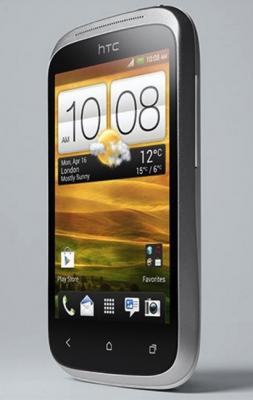
In China, consumers would buy the HTC One XC, the Chinese version of HTC’s One X flagship, and the lower-end HTC Desire C reportedly at bank branches. Both phones come loaded with a contactless debit application or electronic purse supporting Quick Pass, which is payment network China UnionPay’s answer to Visa payWave and MasterCard PayPass. The global version of the One X is also reportedly available for the project.
The bank and handset maker are reportedly calling the service, “mobile wallet.” The phones include Android-based mobile-wallet software. HTC and the bank had a soft launch of the service in June, but only announced it Tuesday.
It’s unclear how widely the project is rolling out, however. The Chinese NFC market is characterized by telcos and payments players launching a number of NFC and contactless technologies, which are in various stages of experimentation.
For example, China UnionPay launched a project with HTC and a couple of other phone makers that puts its Quick Pass application on microSD cards that have a nonstandard single-wire protocol connection to the NFC chip. China Construction Bank and at least one local bank in the southwestern Chinese city of Chongqing have issued the microSDs, but few are used for contactless payment.
China’s largest operator, China Mobile, recently announced a deal to cooperate with UnionPay in rolling out NFC on SIMs supporting a standard single-wire protocol connection. The big telco plans to launch a large trial starting in February. China Mobile had earlier launched proprietary RF-SIM cards.
And China’s three mobile operators, led by China Telecom, have issued SIM cards with flexible antennas, mainly supplied by China-based Watchdata. China Telecom, among others, might also issue SIMs with embedded antennas that support the standard contactless frequency, 13.56 MHz, for closed-loop payment.
As NFC Times has reported, Android handset makers have included embedded chips in many of their phones and all of Samsung’s popular Galaxy S III models are believed to carry embedded chips. Samsung has formed a mobile-commerce unit or is in the process of doing so and plans to enable payment and other applications in markets in which telcos don’t control the distribution of phones.
Research In Motion also includes embedded chips in all of its NFC-enabled BlackBerrys, though is only proposing to use the chip for enterprise ID applications so far, not wanting to alienate mobile operators it desperately needs to buy its models.
Google continues to anchor its wallet to embedded chips in its own phones and others offered by U.S. carrier Sprint and Sprint owned mobile virtual network operator Virgin Mobile USA.