HEADLINE NEWS

ZTE: Europe is Next Target for NFC Phones

China-based phone maker ZTE indicated it will be targeting Europe with its NFC phones, although it did not specify models or release dates.

Samsung to Embed Secure Element in Galaxy S III, Other NFC Phones

May 14 2012 (All day)

Samsung Electronics and NXP Semiconductors have confirmed that Samsung’s next flagship smartphone, the Galaxy S III, will sport an embedded secure chip, in addition to supporting applications on SIM cards.

American Express Onboard for Isis Two-City Launch

American Express and Isis have announced that AmEx plans to participate in the two large NFC pilots Isis plans to launch this summer in Salt Lake City, Utah, and Austin, Texas.

HTC Steps Up NFC Phone Presence with Three High-End Handsets

May 10 2012 (All day)

New Orleans – Phone maker HTC is displaying three high-end NFC phones at the International CTIA Wireless show in New Orleans, including its Droid Incredible 4G LTE, destined for U.S.

MasterCard Unveils Wallet Offer; Expands PayPass Name to Online Transactions

NEW ORLEANS – MasterCard today announced its answer to Visa’s digital wallet and other wallets planned by competitors, introducing its PayPass Wallet Services.

MasterCard Announces NFC Device Certifications; New NFC Mark

May 9 2012 (All day)

MasterCard has announced certifications for 17 NFC phones as well as its own mark that handset makers could display on device packaging, advertisements or even on the devices themselves, showing the phone is able to do contactless payments with MasterCard PayPass.

Samsung Unveils Galaxy S III, Supporting NFC Payments and Enhanced P2P

May 4 2012 (All day)

Samsung Electronics has introduced its much-anticipated Galaxy S III, which, as expected, will support NFC for mobile payment, along with an enhanced version of Google’s Android Beam peer-to-peer pairing-and-sharing feature.

Barnes & Noble First E-Reader Seller to Disclose Plans for NFC Support

In a first for an e-reader seller, the CEO of bookstore chain Barnes & Noble said the company plans to include NFC chips in its Nook e-readers, which he said could make the connection between the devices and the company’s physical stores.

Airline to Introduce NFC App Following Successful Sticker Launch

May 3 2012 (All day)

Scandinavian Airlines plans to introduce an NFC application for frequent flyers as early as this summer, enabling those with Android NFC phones to tap for a faster flow through check-in, security screening and boarding.

Report: Google and PayPal Challenge UK Joint Venture Plans

Google and PayPal have reportedly expressed concerns to European antitrust regulators, saying they fear that if major UK mobile operators are allowed to form their proposed NFC mobile-commerce joint venture, they would have too much power to control secure elements in NFC phones, the Financial Times reported Sunday.

Telefónica UK Launches O2 Wallet; Promises NFC Later in 2012

Telefónica UK, known as O2, launched its long anticipated O2 Wallet today, offering text-based money transfers and online product searches and purchasing, but no NFC yet.

Wentker Departs Visa; Bains Leaves GSM Association

Dave Wentker, considered the No. 2 man in Visa Inc.’s mobile-payment unit and a former vice chairman of the NFC Forum, has left the payment network after more than 15 years, NFC Times has learned.

Smartphone Makers Weigh Move to NFC

By: 
Dan Balaban

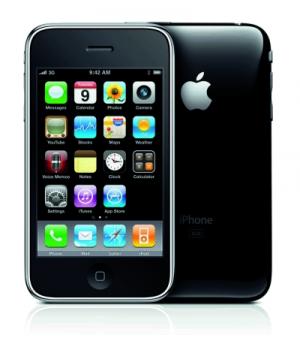
While anticipation remains high that Apple will incorporate Near Field Communication in its next iPhone, it’s not the only smartphone maker looking at NFC.

NFC Times has learned that just about all major smartphone makers, including BlackBerry manufacturer Research in Motion and Android phone maker HTC are considering putting NFC into one or more models. It's too early to say when the first commercially available smartphones packing NFC will hit stores. Some observers predict a few models could make their debuts before the end of 2010–earlier if Apple moves on NFC as industry backers hope. And Nokia has promised more NFC handsets in 2010. If true, one or more would likely run the Symbian smartphone operating system.

Few of the phone makers are tipping their hands of course in the competitive and growing smartphone market. But the interest is unmistakable.

“We have positive signs from all the major handset manufactures,” said Tim Jefferson, director of UK-based mobile telecom consulting company, The Human Chain. “They all are working on it (NFC), otherwise they are getting left behind.”

That includes makers of feature phones, as well. New NFC feature-phone models would help ease the frustration of mobile operators, along with some bankers, transit operators and other service providers annoyed by the paltry selection of phones available. Yet, as with smartphones, it’s unclear how many feature phones will be on the market during in 2010.

Although smartphones made up only an estimated 14% of global mobile phone sales in 2009, according to U.S.-based research firm Gartner, NFC backers say they are keen to get the technology into the devices because smartphone buyers are generally more upscale than feature-phone users. And growth rates for smartphones are much higher than for lower-end handsets.

Moreover, third-party application developers could stock app stores with lots of innovative services using NFC connectivity. That includes social networking and gaming services that enable consumers to connect just by tapping their phones together. NFC could also make syncing devices easier to transfer music, photos or documents. And consumers could automatically open interactive maps by tapping their phones on smart posters on the street.

The timetable for smartphone makers to move on NFC depends in part on what Apple does. If a patent application published last fall and reports of NFC prototypes built by Apple are any guide, the Cupertino-based company is poised to adopt NFC, perhaps in its fourth-generation iPhone due out next summer. If Apple takes the plunge, it would also increase the urgency of other smarphone makers.

“If you have convinced Apple to include NFC in the iPhone, then the whole world will change,” exclaimed Petra Bunschoten, senior product manager at Dutch bank ING. “Then people will use NFC services.”

APPLE

But if Bunschoten, who managed ING’s NFC payment trial in Romania, wants to put ING’s contactless payment application on a secure chip in new NFC-enabled iPhones, she may have to think again. Some observers believe if Apple boss Steve Jobs gives the nod to NFC, it won’t be to emulate payment cards on the phone or supporting applications on the SIM through the single-wire protocol standard.

In fact, Apple’s latest patent request involving NFC, published by the U.S. Patent & Trademark Office Nov. 5, focuses on NFC’s peer-to-peer mode, in an application it provisionally called “Grab & Go.”

The concept is to make it easier for users to transfer data between Apple devices, such as iPhones, iPods, iMacs and Apple TV, or other consumer electronics, such as game consoles. The application would enable the user to just tap the device to, say, send an iTunes music track or Google Map page or Office document between a Mac laptop and an iPhone. There would be no USB cables to connect, and few menus, if any, to scroll through. An earlier Apple patent application discusses building an “RFID” antenna into the iPhone touch screen.

“Syncing between two phones: with Bluetooth you see all phones around you. But NFC makes that simple–touch and, bam, everything is connected,” NFC consultant Einar Rosenberg told NFC Times. For all but very small files, NFC would automatically open a Bluetooth or WiFi connection to transfer the data, he said.

There are other signs Apple is interested in NFC. The company has produced NFC prototypes, as have most smartphone makers investigating the technology, observers agree. And there were Apple execs seen wandering around the Cartes Expo in Paris in November, a showcase for smart card chip technology, including NFC.

But besides the patent applications and rumored prototypes, what convinces most in the industry that Apple is serious about NFC is that the technology fits well with its emphasis on simplifying the user interface.

“Looking at Apple, a lot of applications are about convenience, about very, very fast access to information; getting what you need, phone-to-phone and smart posters,” said Holger Kunkat, vice president for product management and marketing for Germany-based reader and component maker SCM Microsystems.

For example, NFC could make such popular iPhone apps as “Bump," much simpler, said Rosenberg. The app enables two iPhone or iPod Touch users to exchange contact information, such as e-mail addresses and phone numbers, when they shake or “bump” their devices near each other. The app uses GPS to establish that the two people are shaking their phones in the same location and the Internet to send the data.

With NFC, the data could go directly over the contactless NFC connection. More weighty personal contact data, such as photos or video clips, could be transmitted via a Bluetooth or Internet connection which NFC automatically opens.

The same concept would apply to two friends wanting to play a game against each other on their phones.

“The latest operating system version, that’s what they’ve (Apple developers) been fixated on,” said Rosenberg. “They have a whole section (of specifications) to network phones together to be able to play games. The problem is, it’s not simple.”

Apple, which guards the secrecy of its planned product launches closely, has given no clues to whether it will support NFC in Japan, where most other phones now pack technology from Sony similar to NFC.

Reports said late last year that Apple had sold an impressive 3 million iPhones in the difficult Japanese smartphone market in a little more than a year–none of them incorporating Sony’s FeliCa wallet-phone chip used for payment, ticketing and other applications. Reports say Apple did not want to alter its production process to accommodate the embedded contactless wallet chip. 

Other companies in Japan and the West are planning to introduce iPhone attachments that would give the phone contactless or NFC functionality, including offering a place to securely store payment applications. If Apple decides against incorporating NFC in its next iPhone, then service providers and interested consumers will just have to make due with the peripherals.

Smartphone Mini-Fact Sheet - Apple:

HQ: U.S.
OS
: iPhone OS
Single-Wire Protocol?
Unlikely

RESEARCH IN MOTION

Apple’s key smartphone competitor in the U.S., RIM, has also been working on NFC. But unlike Apple, RIM has sent signals it would support payment and card emulation along with NFC’s other features in any models it equips with the technology. RIM has tested its BlackBerry devices with Inside Contactless chips, sources have told NFC Times


It was not so interested two years ago, according to Timothy McGaugh, senior manager, cards,  strategy and planning payments innovation at the Royal Bank of Canada, or RBC.

McGaugh, speaking at the Cartes conference in Paris in November, said RIM did not want to participate in RBC’s proposed NFC payment trial in Toronto when planning got underway a couple of years ago. The bank had hoped to launch a very large pilot–with 5,000 phones. But the bank and mobile operator Rogers Wireless were forced to use an aging Motorola NFC handset. They put the bank’s Visa contactless application on a SIM card. The internal trial launched in April 2009 with just 250 employees.

But RIM, headquartered in Waterloo, Canada, just 100 kilometers from the trial site, later changed its tune, McGaugh said.

“We were talking to them in the last month,” said McGaugh. “They’re willing to approach us now.”

That may mean RIM is ready for at least an NFC trial. Short of that, RIM is participating in a contactless-payment trial using passive stickers attached to some BlackBerry models.

RIM staffers are among 200 employees of the trial organizers, including the Bank of Montreal and MasterCard Canada, taking part in the trial.

Although the stickers do not communicate directly with the BlackBerrys, RIM has linked its e-mail platform to MasterCard’s inControl platform, so that when users tap the phone sticker to pay at the point-of-sale, they receive e-mails on their BlackBerrys confirming the amount of the purchase, name of the retailer and transaction date.

RIM might be holding back on NFC in part to make sure the security is airtight, important to BlackBerry’s traditionally core clientele of business users.

“As of now, there are still some lingering concerns about security, but due diligence on NFC is being done,” said Nader Henein, a UK-based security advisor to RIM, speaking at an NFC and mobile-payment session at a conference in the fall. “There are a few pending questions with the integration of the clearinghouse for NFC payment. But they are being worked on.”

It is also expected that Blackberrys will play host this year to contactless microSD cards that can carry payment or other applications.

Smartphone Mini-Fact Sheet - RIM:

HQ: Canada
OS
: BlackBerry OS
Single-Wire Protocol?
Likely

NOKIA/SYMBIAN

While the Symbian platform still has by far the largest share of the smartphone market–more than 40%–by virtue of Nokia’s use of the operating system, there is no Symbian smartphone yet on the market supporting NFC.

That is despite Nokia’s early embrace of NFC. The world’s No. 1 handset maker co-founded the NFC Forum with the technology’s co-creators, Philips Electronics and Sony Corp., in early 2004. Nokia has also introduced three or four feature-phone NFC models, about the only ones available for commercial purchase. Nokia NFC phones have been used in more than half of NFC trials launched over the past four years, according to the NFC Times Project Database.

But Nokia has taken criticism for the rather dowdy appearance of its NFC models–most of them NFC versions of older mid-tier models that lack sex appeal. The Nokia 6216, its first phone supporting a standard connection to the SIM card, is late to the market. Some observers believe Nokia’s interest in NFC is waning.

Not true, say Nokia execs.

For example, Mark Selby, vice president for industry collaborations at Nokia told Mobile magazine in the UK in December that the handset maker is “anticipating multiple NFC-enabled devices,” by 2012. Some will be low-end models, but others will be smartphones running on the Symbian 3 operating system, he said. The magazine cited another Nokia source saying there would be NFC phones out by the third or fourth quarter of 2010.

Nokia says the Symbian version 3 platform, due out in the third quarter of 2010, will fully integrate NFC, including application-programming interfaces for developers. Nokia spun off Symbian and offers it for license to other handset makers, but mainly uses it for its own smartphones. Recent reports say Nokia is skipping Symbian version 2 and going directly to version 3. The handset maker also has introduced the open-source Maemo operating system for more advanced smartphones, and some observers believe it will eventually dump Symbian for this.

Incorporating NFC in Symbian does not mean Nokia’s phones with the operating system will necessarily have NFC functionality. But it will be an option for Nokia and other handset makers to pay the extra cost for building in the NFC chip and antenna, among other expenses, says Christian Lührs, managing director of Germany-based Stollmann E+V, a company that builds middleware for NFC phones.

The move, nonetheless, represents a significant step for Nokia, he said.

“The coming 6216 is the last one where there is a specific NFC version of a phone,” he told NFC Times. “All later phones, NFC will be a standard option on the shopping list. Putting NFC in the platform, then you would have it available for any Symbian phone, whether you use it for every model or not.”

It remains to be seen whether Nokia actually builds NFC into a Symbian model this year. But Antti Vasara, senior vice president for Symbian devices, said at an NFC Forum meeting last September in Finland that NFC is still a key technology for Nokia, which would be a part of “upcoming smartphones.”

Smartphone Mini-Fact Sheet - Nokia:

HQ: Finland
OS
: Symbian
Single-Wire Protocol?
Likely


HTC

The Taiwan-based smartphone maker is testing at least one NFC-enabled phone supporting Google’s Android operating system, NFC Times has learned.

Sources say the model is expected by late 2010. It’s not clear which markets HTC is targeting with NFC, since it supplies both Android and Windows Mobile phones to the U.S. and Europe. But it will most likely have its first NFC smartphone based on Android ready at its home base of Taiwan, say sources.

In fact, a project manager at Taiwan’s largest telco, Chunghwa Telecom, told NFC Times that the operator hopes to introduce NFC services by the end of 2010 on Android phones and is counting on HTC or Taiwanese-contract device maker Foxlink to produce models by then.

Chunghwa said it hopes to have one or more NFC phones on display at the Taipei International Flora Expo, which begins in November 2010 in Taiwan’s capital, say reports, noting HTC was likely to produce the devices for the show.

Moreover, the Taiwanese government is supporting the Android platform, including recently announced funding for Chunghwa and Foxlink to develop NFC applications for Android phones.

Chunghwa confirmed to NFC Times the two companies will receive NT$47.4 million (US$1.5 million) for the Android Mobile Device and Application Service Platform project, which includes the NFC application development.

Chunghwa project manager Yeou-Fuh Kaun, told NFC Times the telco will target payment and ticketing applications with the Android phones, which will offer a better user-interface than the NFC applications Chunghwa has tested with NFC phones made by BenQ or Nokia, such as a trial involving Taipei’s contactless fare-collection application EasyCard. Chunghwa and EasyCard Corp. also received a little more than NT$16.5 million (US$511,000) in government funding to develop trusted service management for NFC applications, and the telco is hoping to form a TSM, he said.

All this bodes well for a possible HTC phone supporting NFC in 2010. And though HTC is perhaps the largest maker of smartphones supporting the Windows Mobile operating system, sources believe any NFC phone HTC releases in Taiwan or in Western markets would run Android and not Windows.

Smartphone Mini-Fact Sheet - HTC:

HQ: Taiwan
OS
: Android
Single-Wire Protocol?
Likely


PALM

Palm has hired a senior product manager to look at strategy for NFC, among other topics, and is discussing whether to introduce an NFC model.

If it did take the NFC plunge, it’s unclear whether the company would incorporate NFC in its flagship Palm Pre. Any new NFC phone would likely be part of an expanded lineup of phones, but wouldn't likely hit the market this year. The handset maker has not apparently even produced an NFC prototype 

Palm, an early smartphone maker, is counting on the Pre to bring the company back. It launched the Pre in June 2009 and later introduced a lower-cost Palm Pixi, with the same WebOS operating system, based on Linux.

Palm saw its comeback stall in its fiscal quarter ending November 2009 on a slight decline in sales. But it will soon get the Pre into shops of large U.S. mobile operator Verizon.

It is in Telefónica O2 stores in the UK and a few other European countries. Still, Palm faces stiff competition from the iPhone, RIM and Motorola’s new Droid, based on Android. If they go to NFC, Palm likely would take a much-harder look at the technology.


Smartphone Mini-Fact Sheet - Palm:

HQ: U.S.
OS
: WebOS
Single-Wire Protocol?
Likely


TOSHIBA

Toshiba’s TG01 smartphone is available for NFC testing among service providers, but so far the samples have created little buzz.

Toshiba, the giant Japanese electronics maker, is not well-known in the mobile phone market, even in Japan. Toshiba has generally targeted business users instead of consumers for its handsets.

But the TG01, slim and sporting a huge touch-screen, is definitely aimed at the consumer market. Toshiba worked with NFC-chipmaker NXP Semiconductors, Japanese smart card company Toppan Forms and wireless technologies integrator iWOW Communications of Singapore for the NFC version of the phone. NXP’s PN544 NFC chip supports the single-wire protocol, enabling mobile operators to direct payment, transit-ticketing or other secure applications to the SIM.

Toshiba also has a small smart card unit, which has produced a SIM card supporting a standard interface to NFC chips in the phones. The company showed a prototype of the card early in 2009 at the Mobile World Congress in Barcelona. Of course, Toshiba is hoping NFC-enabled cards from more established SIM vendors find their way into the TG01.

But as for the date of a market introduction for the phone itself packing an NFC chip, the company is saying little.

Smartphone Mini-Fact Sheet - Toshiba:

HQ:  Japan
OS
:  Windows Mobile
Single-Wire Protocol?
Yes


YULONG

The Chinese manufacturer, Yulong Computer Telecommunication Technologies made much of its dual-mode phone for China’s No. 2 mobile operator China Unicom in late 2005.

That’s not dual-mode GSM, enabling technology which lets subscribers call in Asia as well as North America. It’s GSM and CDMA, which is no mean trick. The phone had two slots for SIM cards.

Yulong promised to have an NFC phone on the market by the end of 2009. The phone, which would also have two SIM slots, would support the Windows CE operating system. That would technically make it a smartphone.

Yulong, which joined the NFC Forum in September, is likely producing the phone with China Unicom or China Telecom in mind. Unicom last fall began selling subscribers NFC phones in Shanghai, which they tap to pay transit fares.  

While Unicom branches have tried a proprietary dual-interface SIM card with an antenna attached, the telco seems likely to adopt NFC as a way to compete with the deep pockets of rival China Mobile. The latter is funding the rollout of “RF-SIM” cards with a built-in antenna and operating under the 2.4 GhZ frequency. With NFC, Unicom could source a more standardized product but still put applications on SIM cards.

Phones from Chinese handset maker HEDY, which Unicom is using for the Shanghai m-ticketing project, will support the single-wire protocol, sources say. Yulong also plans to supply NFC phones to the telco, though not necessarily in Shanghai.

But Yulong’s Chun-Dong Fang, told NFC Times that China Mobile is also interested in NFC, although it will continue to pursue proprietary RF-SIM technology. New 3G mobile operator China Telecom is also interested and so are service providers, such as Industrial and Commercial Bank of China. China Telecom is a new competitor in the 3G market.

Fang told NFC Times some European mobile operators have contacted Yulong to discuss possible work on NFC mobile phones, although it is unclear whether Yulong has shipped any phones outside of China to date. NT

Smartphone Mini-Fact Sheet - Yulong:

HQ:  China
OS
:  Windows CE
Single-Wire Protocol?
Likely

Article comments

 
TIMEBUSTER Mar 5 2010

Astrid ne jure plus que par son smart
SMART-TIME

 
mobile-pcb Apr 26 2010

very professional, while there is an article for someone, may be can give you some insight:
Latest Trends in Mobile Handset Design
Global mobile handset shipments totaled approximately 1.15 billion in 2009, with enhanced phones and smartphones capturing approximately 81% of all handset shipments, according to the latest data from ABI research.

According to industry analyst Celia Bo, "In recent years, the major technology and application trends in handset design have focused on 3G (and beyond) capabilities including web surfing, social networking, multimedia, connectivity, better cameras, VoIP, pico projectors and more."
Current State of the Art:

• 3.5G Models: The 3.5G handset category is the fastest-growing segment among all the models announced by vendors. 56% of handsets models in 2009 were 3.5G-ready devices, while the number of 2G and 2.5G models dropped in comparison.
• GPS Handsets: The Global Positioning System has secured a solid position in the automotive segment and is gaining traction in mobile phones, becoming a hot wireless connectivity application for smart phone designers and manufacturers. The penetration rate in new models reached 48% in 2009 compared to 29% in 2008.
• Form Factors: In 2009, the bar form factor led the market, accounting for 51% of announced handset models, followed by slider handsets at 27%. After a long decline, clamshell handset models picked up 19% market share among announced models.

• Operating Systems: Microsoft Windows Mobile still has the highest adoption rate among operating systems of newly launched models, with Symbian taking second place.
• Handset Chipsets: The chipset is at the heart of a handset; it integrates multiple function blocks and aligns them to different operating system platforms. While Qualcomm's Snapdragon, TI's OMAP, Intel's Atom and Nvidia's Tegra are driving the markets for 3G and 3.5G technology, the development of 4th Generation LTE and WiMAX chipsets is primarily led by Altair Semiconductor, Wavesat and Comsys Mobile, among others.

Please register or login to post a comment.