
Payment Can Wait: T-Mobile USA Announces First NFC App–for Sleeping
T-Mobile USA has announced its first NFC application, and it has nothing to do with payment or mobile wallets.
Although it has been available since the spring, T-Mobile today announced that it is offering the NFC-based SleepTrak application, which enables consumers to monitor their sleep with the help of a card that measures sleep patterns during the night. In the morning, they can tap the card, which has a contactless interface, to their NFC phones, such as Nokia’s C7, to upload the sleep data.
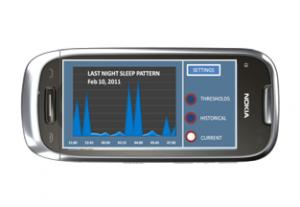
Users can then see a graph on their phones of how much they tossed and turn during the night, which could be an indicator of poor sleep.
IMPak Health, a joint venture between Sweden-based chip and application developer Cypak and New Jersey hospital chain Meridian Health, developed the SleepTrak application, including the monitoring card and apps for Nokia’s Symbian operating system, and a separate app for Android NFC phones.
“Today, NFC has primarily fueled mobile phone payment technology like Isis,” a T-Mobile USA spokeswoman told NFC Times in a statement, referring to T-Mobile’s NFC joint venture with Verizon Wireless and AT&T. “However, the technology is seeing increasing use in the emerging mobile health care field as it offers healthcare professionals an ability to collect clinical data while connecting with patients seamlessly no matter their location.”
IMPak actually introduced SleepTrak, which is available on Amazon for about $30, in April for Nokia’s C7 NFC phone, called the Astound by T-Mobile USA. It added the app for Google’s Nexus S in June.
T-Mobile, which sells both phones, is promoting the application with the Astound, which ran a special Symbian version that activated the NFC chip inside of the phone before C7s sold in Europe and Asia got the NFC-enabling Symbian Anna update.
The promotion of the application by T-Mobile should help sales of SleepTrak, Albert Baker, vice president for strategic alliances with Cypak, told NFC Times. He confirmed that sales of the product are only in the hundreds of units since the company put it on sale via Amazon last spring.
“We as a company have not put a lot of advertisement behind it, and it’s pretty much word of mouth,” Baker said. “This product is direct to the consumer.”
IMPak plans to put more screening products on the market using NFC, including cards that can screen for high cholesterol and diabetes, using blood samples from users. As with SleepTrak, the users up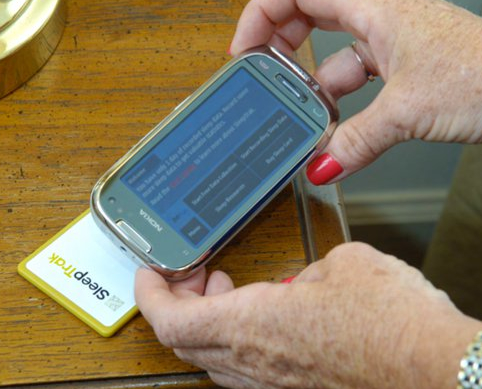 load the data from the cards by tapping them to NFC phones. IMPak will not sell these products directly to consumers. The company earlier introduced pain and weight management applications using NFC.
“It’s really the ease of use, and this is the basis for all our products, and it needs to be at a low cost,” Baker told NFC Times. “NFC, there’s no configuration needed by users.”
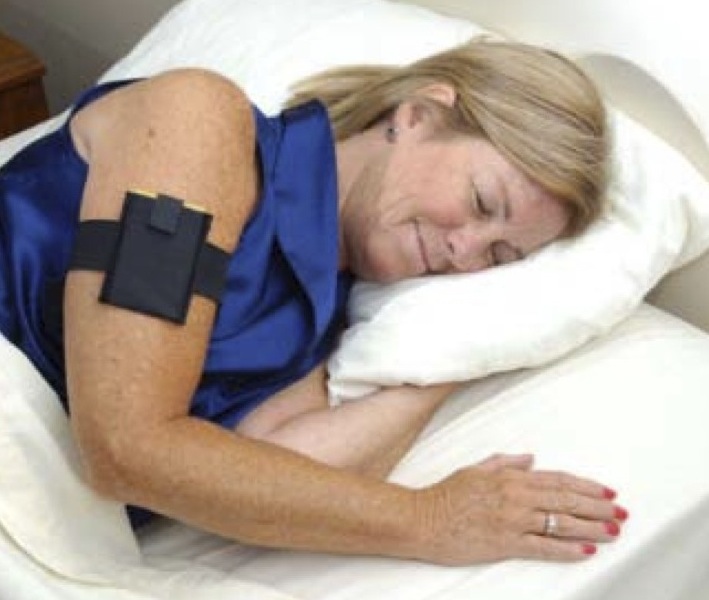
With the recommended use of SleepTrak, users wear a pouch on their upper arms containing the SleepTrak card. The card sports an accelerometer, which measures the user’s movements during sleep, and the card also stores the raw data. Users transfer about 30 kilobytes of data after a night’s sleep, which the apps on the phones convert into an "actigraph," showing users how restlessly they slept the night before.
The company considered using Bluetooth technology for the data transfers, but besides users having to set up the Bluetooth connection, Bluetooth consumes more power than NFC since users would often keep the connection open too long, Baker said.
SleepTrak is the type of application Nokia has been promoting as part of its “open NFC” initiative to push services that don’t require secure elements or complex relationships among ecosystem players. The open NFC applications mainly use NFC’s tag-reading function.
Health-related services are considered key nonsecure applications for NFC phones. They already are used by home-health care agencies in Europe to record time and attendance at patients’ homes and to transfer small amounts of data. Nurses also receive instructions and files over the mobile network.
Other health applications are headed to market or are now under development, including glucose monitoring with NFC patches, prostate cancer NFC tests and NFC thermometers.
Baker said iMPak is also developing SleepTrak apps for BlackBerry NFC phones and will have apps available when the iPhone and Windows Phone operating systems support NFC.
 Sandra Elliott, director of consumer technology and service development for Meridian Health told NFC Times the reason the company is just now joining with T-Mobile to announce the SleepTrak application is that it wanted to take advantage of the publicity surrounding the official launch of the Google Wallet two weeks ago. It also wanted to wait until more NFC phones made it into consumers’ pockets, such as the Nexus S.
And, of course, though few people know it, the first week of October is Sleep Apnea Awareness Week, sponsored by the American Sleep Association, she noted.
 Facebook
 Twitter
 LinkedIn
HEADLINE NEWS


Syndicate

