HEADLINE NEWS

OTI to Supply Contactless and NFC Readers for Gasoline Stations in North America

Israel-based contactless and NFC vendor On Track Innovations announced Monday it had received an order for 30,000 readers for point-of-sale terminals at retail gasoline stations in North America.

Taxis in Major U.S. Cities to Get NFC-Enabled Video Ads

Riders in 5,000 taxicabs in the U.S. would be able to tap on NFC tags on video advertising screens to download apps, brand information, coupons, maps, music and videos, according to technology suppliers that have equipped the taxis for potential advertising campaigns.

Analyst: Banks Have More to Fear from Cloud-Based Technologies Than NFC

Banks have much more to fear from cloud-based mobile payment than from NFC, even if mobile operators control the secure elements that hold the banks’ payment applications.

GSMA Proposes Global Standard for NFC-Enabled Loyalty and Couponing–Using SIM Cards

May 10 2013 (All day)

The GSMA mobile operator trade group is proposing a global standard for how point-of-sale terminals talk to NFC-enabled mobile wallets to enable consumers to redeem coupons and rewards.

Taiwanese Bank Gets Approval for NFC-Enabled Credit Cards; Okay for Other Banks Expected

Taiwanese banking regulators, as expected, have approved the first bank to issue mobile credit cards that could be downloaded over the air to SIM cards.

UK Retailer Marks & Spencer Sees Growing Use of Contactless

Marks & Spencer, one of the UK’s largest retailers, announced today it had rolled out contactless payment to 644 of its UK stores and said 14% of its card transactions under £20 (US$30.97) are contactless.

Identive Reports Growing NFC Business; Blames Flat Sales, Losses, on U.S. Budget Cuts

U.S.-based Identive Group reported growing NFC and smart card reader business, but fell back into the red during for the first quarter, a loss it largely blamed on U.S. federal government budget cuts.

German Bank and Telco Hold Small NFC Trial; Larger Launches Planned in Country This Year

As Germany gears up for NFC, German bank Dortmunder Volksbank along with Telefónica (O2) Germany have launched a small pilot putting a credit application onto SIM cards in Western Germany.

Cashless Technology Company Announces Rollout of Isis SmartTap on Vending Machines

Vending technology company USA Technologies plans to integrate the SmartTap mobile-commerce software into all of the company’s nearly 100,000 NFC-enabled terminals on vending machines nationwide.

Infineon Introduces New Embedded Secure Element, Hoping to Tap Growing Market

Germany-based Infineon Technologies today introduced a new embedded secure element, targeting the growing market for chips that handset makers are including in their NFC-enabled devices.

Vendor Group: NFC Secure Element Market to Grow by Two-Thirds This Year

Smart card vendor association Eurosmart has substantially increased its estimate for NFC secure element shipments for 2012–by 50% to 150 million units–and forecasts that secure element shipments will grow by another 67% in 2013 to 250 million units.

Gemalto Reveals Some Details of MCX Deal; Vendor Will Earn Fees for Transactions

France-based smart card and security vendor Gemalto will operate the mobile-payment platform for U.S. merchant group MCX, earning a fee for every transaction, in addition to what appears to be a hosting fee it says is worth tens of millions.

Inside Secure Seeks to Broaden Customer Base, but Pins 2012 Profit Hopes on RIM

Despite efforts to diversify its customer base for its NFC chips, France-based Inside Secure will rely on sales to BlackBerry maker Research In Motion for the bulk of its revenue in 2012 and for its goal to become profitable by the end of the year.

Inside, which released its earnings report for 2011 today, said it holds to the projection it made last month in the run-up to its initial public offering that it would turn an operating profit sometime in late 2012.

“Obviously, RIM represented the major part of our NFC revenue in 2011,” said CEO Rémy de Tonnac, speaking to financial analysts today. “The bulk of the revenue for NFC (in 2012) will come from RIM.”

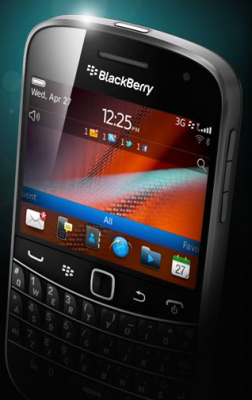
He added, however, that Inside has “sizable activity” with chip maker Intel, which is licensing Inside’s NFC technology for its processors for Ultrabooks and perhaps other devices. And Inside is supplying NFC chips to a major device maker other than RIM.  That handset will be announced in coming weeks, said de Tonnac.

“Of course we are interested in consolidating our position and diversifying our position and customer base with the big first-tier OEM (original equipment manufacturer) of the cell phone world,” he said, continuing to decline to name the device maker.

Inside also plans to introduce a SIM card packing a built-in contactless antenna, dubbed NFC Booster, by the third quarter, and also said it will have its own embedded secure element to stack with its NFC chips by the end of this year.

But Inside’s profit and revenue goals hinge on RIM and on the introduction of the handset maker’s BlackBerry 10 operating system later this year. A successful launch of the new platform is critical to RIM’s survival, many analysts believe.

De Tonnac agreed with an analyst that the introduction of the NFC Booster and other new products by Inside was a hedge against delays in the release of BlackBerry 10 by RIM.

New RIM CEO Thorsten Heins confirmed the release of the new operating system for the second half of year, but also indicated there would be two more quarters of losses. The handset maker this week reported a $125 million net loss for the fourth quarter of 2011.

Lower Profit Margins
Nearly all of the 17.4 million NFC chips Inside shipped during 2011 went to RIM. And all or nearly all of those chips came stacked with a secure chip from Infineon Technologies.

Using the Infineon chip rather than its own secure element hurts profit margins, said Inside. But it won’t have its own qualified smart card chip until the fourth quarter of 2012. The secure chip will be developed in part by the Atmel Corp. smart card chip unit, which Inside bought in the fall of 2010.

The major unnamed device maker that plans to use Inside’s NFC chips will not incorporate an embedded secure element in the devices, de Tonnac said today. In any case, this would have been an Infineon chip, since Inside’s own embedded chip would not be ready in time.

In figures previously released prior to the IPO, Inside said it had an adjusted operating loss of just over $16 million in 2011 and a net loss of $14.6 million, both at least twice as much as the respective operating and net losses the company reported for 2010.

Inside hasn’t yet finished a year in the black since its founding in late 1995.

The vendor said sales for its mobile NFC unit soared to $47 million in last year, just under half of it during the fourth quarter alone. Total revenue for Inside was $151.5 million, down by 3% from 2010, counting full-year revenue from the Atmel smart card unit.

Contactless Bank Card Sales Fall
While NFC revenue was rising fast, Inside saw its sales from contactless and other chips for bank cards fall sharply during 2011, especially during the fourth quarter. U.S. banks are cutting back on issuance of contactless debit and credit cards, as they wait for mandates to take effect largely forcing them to start issuing more secure EMV cards. Inside has been the dominant supplier of contactless chips for contactless bank cards.

An industry source told NFC Times that U.S. banks were also cutting back on their rollouts of contactless cards  because of lower card revenue from the Durban amendment to the Dodd-Frank financial reform act. Also, the banks are not seeing much usage from the cards. For all of 2011, sales in Inside’s secure payment unit fell by 24% to $43.2 million.

Inside’s third division, digital security, had $60.7 million in revenue, mainly from Atmel’s ID chip business. Sales fell by 1% in the unit in 2011.

Access-Control Partner Works with Inside Rival 
This week, longtime partner HID Global announced it was also working with Inside's chief rival, NXP Semiconductors, to roll out contactless corporate credentials on NFC phones supporting NXP's embedded secure chips. These would mainly be Android phones using NXP's Mifare technology.

This would compete with an offer by HID using Inside technology to offer contactless corporate badges on BlackBerry NFC phones.

Inside and HID, which have worked together on card-based access control since 2001, announced a deal in 2010 to put access control applications on Inside's NFC chips. Last fall, HID, which is part of giant digital door lock maker Assa Abloy, said it was adapting its iCLASS technology that Inside helped it develop to enable corporate and student ID card applications to run on embedded chips in BlackBerry NFC phones.

Daniel Bailin, director, program management, strategic innovation, told NFC Times that Inside remains a “strong strategic partner to HID.”

But it's clear that HID does not believe an access-control offer only available on BlackBerry phones is sufficient to meet market demand.

“This announcement reflects how HID is responding to our customers and channel partners who are requesting solutions that will work on any NFC-enabled phone,” Bailin told NFC Times.

Counting on NFC Growth
Inside sees growth prospects for its payment unit in dual-interface and contact-only EMV chips banking cards, especially in the U.S., where EMV rollouts could begin as early as next spring.

In the security division, the vendor expects to ship more chips for machine-to-machine, anti-counterfeiting and secure data storage applications.

But Inside is clearly pinning its hopes on NFC and that was the main reason the vendor more than doubled research and development spending in 2011, to $34.5 million.

It sold its IPO to investors largely on the promise of NFC revenue growth. The offering raised $79.3 million, and Inside’s share price remains above the €8.30 IPO price, set on Feb. 17.

The share price closed today largely unchanged at €9.07, following release of the year-end results and assurances from de Tonnac that Inside was still on track to meet its pledges of profitability.

Inside has declined to release the identity of the large handset maker that will use its chips, saying only the handset maker would also use a major mobile platform other than the BlackBerry OS.

Inside has been trying to crack the dominance of NXP in shipments of NFC chips to makers of Android phones.

Meanwhile, such other large chip makers as Broadcom and Texas Instruments plan to enter the market, mainly with chips that combine multiple wireless technologies, such as Bluetooth and WiFi. Broadcom also plans to introduce a standalone NFC chip.

De Tonnac told analysts he believes standalone NFC chips will dominate the NFC market for at least the next two years. After that, the market for standalone chips will remain strong, and Inside also could sell its secure elements to combo wireless chipmakers.

Meanwhile, Inside said its NFC Booster SIM could be used in countries where rollouts of full NFC phones will lag, such as China.

The planned product gives non-NFC phones a contactless interface without the need to attach a flexible antenna to the SIMs. It embeds the antenna in the standard-sized card itself, and Inside claims the SIM will be able to communicate with contactless point-of-sale terminals at a range of 4 centimeters, similar to contactless cards. That range will hold up even if the SIM slot is positioned underneath the battery, as it is in many phones, Inside said.

The vendor has deals with China-based RF-SIM vendor Sunward Telecom and Franco-German smart card vendor Morpho to market the cards. The first shipments of the product would probably go to China, said Inside.

The vendor also said it earned its first revenue from its licensing deal with Intel during the second half of 2011 and indicated it expected to ship NFC chips to Intel this year for ultra-thin laptops, though not in large volumes.