HEADLINE NEWS

Orange Group NFC Veteran Barnaud Departs for Wallet Vendor C-SAM

U.S.-based mobile-wallet provider C-SAM has hired Vincent Barnaud, the long-serving contactless services head at France Telecom-Orange group.

Telco and Bank in Brazil to Launch NFC Pilot; Rollout to Follow

Mobile operator TIM Brasil and Banco Bradesco have disclosed plans for an NFC trial that they say would enable users to pay for purchases at contactless point-of-sale terminals by tapping their Motorola or LG Electronics NFC phones, with the funds deducted from their debit accounts.

Taiwanese Telco and Banks Announce Plans for NFC-Payment Projects

May 29 2013 (All day)

Taiwan’s largest mobile operator, Chunghwa Telecom, and four banks announced plans today to launch NFC mobile payment, likely starting with Cathay United Bank and a six-month pilot.

Isis Gears Up for National Launch Despite Challenges Ahead

The Isis joint venture continues to gear up for a nationwide launch of its NFC-enabled Isis Mobile Wallet this year and has been in discussions with major U.S. banks along with merchants, NFC Times has learned.

MasterCard Prepares to Offer PayPass on Embedded Chips in Samsung NFC Phones

MasterCard Worldwide is the latest payment scheme to work with Samsung Electronics, with plans to soon offer its PayPass application for embedded chips in new Samsung NFC phones, NFC Times has learned.

UK Taxis Get NFC Tags for Promo Campaign; NFC Dynamic Screens to Play at French Sporting Event

Samsung Electronics, along with Australia-based NFC marketing firm Tapit, UK-based out-of-home advertising company Chiel and terminal vendor VeriFone are rolling out NFC stickers to 80 taxis in the UK, as part of a promotional campaign for musician Robbie Williams’ upcoming Samsung-sponsored tour.

Visa Europe: Contactless Transactions to Continue to Grow Rapidly in 2013

Consumers in Europe did 19 million transactions with Visa-branded contactless bank cards in March, up by nearly 50% from December, announced Visa Europe Tuesday, which predicts monthly transactions will increase to 52 million by the end of 2013.

OTI to Supply Contactless and NFC Readers for Gasoline Stations in North America

Israel-based contactless and NFC vendor On Track Innovations announced Monday it had received an order for 30,000 readers for point-of-sale terminals at retail gasoline stations in North America.

Taxis in Major U.S. Cities to Get NFC-Enabled Video Ads

Riders in 5,000 taxicabs in the U.S. would be able to tap on NFC tags on video advertising screens to download apps, brand information, coupons, maps, music and videos, according to technology suppliers that have equipped the taxis for potential advertising campaigns.

Royal Bank of Canada and Bell Mobility Announce Plans for NFC Launch

May 14 2013 (All day)

Canada’s largest bank and one of its three major mobile operators have announced plans to commercially launch NFC payments by the end of the year, following a trial this summer.

Analyst: Banks Have More to Fear from Cloud-Based Technologies Than NFC

Banks have much more to fear from cloud-based mobile payment than from NFC, even if mobile operators control the secure elements that hold the banks’ payment applications.

GSMA Proposes Global Standard for NFC-Enabled Loyalty and Couponing–Using SIM Cards

May 10 2013 (All day)

The GSMA mobile operator trade group is proposing a global standard for how point-of-sale terminals talk to NFC-enabled mobile wallets to enable consumers to redeem coupons and rewards.

Google Unveils Cloud-Based Revamp of Wallet But Keeps NFC Technology

Google has unveiled the much-anticipated revamp of its struggling Google Wallet–a cloud-based version that opens up the wallet to cards from all major U.S. payment brands, but which continues to use NFC to enable consumers to tap to pay and redeem offers in physical stores.

The new Google Wallet enables U.S. consumers to add their credit and debit cards supporting Visa, MasterCard, American Express and Discover Financial Services to do both in-store and online purchases.

The card accounts will be stored on Google's servers. But for the in-store purchases, Google will link these credit and debit card accounts to a virtual MasterCard card number stored on the secure element in NFC phones that support the wallet. Google calls this virtual card number the “Google Wallet ID.”
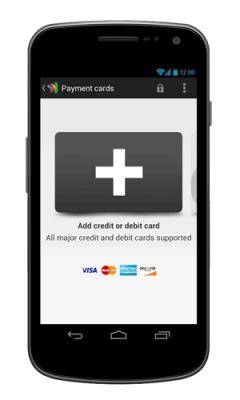
Users will be able to tap to pay at any MasterCard PayPass-enabled point-of-sale terminal in the U.S., with the wallet using the virtual MasterCard card on the phone to initiate and “facilitate” the transaction.

The virtual card number is transmitted from the phone to the POS terminal in contactless mode. The transaction would then be routed through the merchant to Google and on for authorization to the issuer of the Visa, MasterCard, American Express or Discover-branded debit or credit card the consumer selected in the wallet, Google told NFC Times. Google said it “instantly charges” the consumer's credit or debit card that is stored in the cloud following the tap of the phone.

Users could make purchases on Web sites or in the Google Play app store directly with the credit or debit cards in the wallet.

“This announcement actually marks a shift in the way we’re approaching cards in the wallet,” Robin Dua, head of product management for the Google Wallet, told NFC Times, noting that users Google surveyed said they “want a wallet that works with all my cards.” He described the changes to the wallet in a blog post.

Google in the past has tried to recruit banks to offer their payment applications in the wallet, but had managed to sign up just one issuer, Citigroup, for the first version of the wallet, which launched last September. It has also offered a Google Prepaid Card, that could be funded by other cards. Google’s trusted service manager has downloaded and provisioned the applications over the air.

“What we quickly realized was that this is not a very scalable model,” said Dua.

Google said the Citi-issued credit card and Google Prepaid Card will continue to be available in the wallet, at least for now. Both also support MasterCard PayPass.

The MasterCard-branded virtual card will be issued by The Bancorp Bank, which is mainly a branchless bank that issues prepaid cards for private label partners.

MasterCard: Virtual PayPass Card at Heart of Wallet
Mung Ki Woo, group executive, mobile, at MasterCard Worldwide, in a blog post, said that the virtual prepaid MasterCard number is “at the heart of the new version of Google’s cloud-based wallet.” He noted the virtual card number sits in the secure element in the NFC phone.

Woo also noted that consumers could load any MasterCard, Visa, American Express or Discover credit, debit or prepaid card into the wallet as a “funding card.”

“We think this new option will increase the appeal of the Google Wallet–by making it more convenient for consumers with any card issued by any U.S. bank to enjoy the speed and convenience of PayPass Tap & Go payments from their NFC-enabled Android phone,” said Woo in his statement. “We expect to see a lot of new customers signing up for the program linking a card–and tapping at PayPass terminals across the U.S.”

Google said there are now 200,000 PayPass locations in the U.S. And Dua, in response to a question from NFC Times, said the Web giant will not only continue to use NFC to enable consumers to make in-store purchases, but will also continue to use the technology to deliver targeted offers and promotions.

Google Will Keep SingleTap
This is Google’s business case for its wallet, and Dua said Google will still enable consumers to make payments and redeem coupons or offers with one tap of the phone, which Google calls “SingleTap.”

He sidestepped a question on how Google would overcome its apparent problems in recruiting merchants to accept its wallet coupons, deals and other offers, however. Many prospective merchants are said to be having trust issues with Google, unsure whether they can trust the Web giant with their customer data.

While there are perhaps 200,000 locations accepting PayPass and other contactless brands in the U.S., Google has signed up only about 25 national chains for its wallet and even fewer of these can support SingleTap and then only in some of their outlets.

But Dua called the targeted offers and promotions a “key part of wallet experience.”

“Delivering high quality offers is something that we are going to continue making progress in,” he said. Google is not expected to only deliver targeted offers and promotions for use with NFC phones.

The new Google Wallet version also puts to rest predictions by some observers that Google would abandon NFC technology in favor of a PayPal-style mobile-payment concept. PayPal this year has launched its attempted expansion to the physical point of sale and, at present, only enables cloud-based payments. But PayPal might later introduce an NFC component, as well.

Dua said “merchants are behind” NFC and contactless technology and continue to upgrade their point-of-sale terminals to support the technology, though the 200,000 locations still represent 3% or less of total card-accepting merchants in the U.S.

“There is continuing momentum in the states,” Dua said. “We’re certainly continuing to push hard.”

Still Dependent on Secure Element
But storing the virtual card number–or Google Wallet ID–on the secure element in the NFC phones will still require the company to have control of the secure element in NFC phones. That has caused Google problems in the past.

Google said its wallet has been available on six Android phones, along with its new tablet, the Nexus 7. The phones include Google's Galaxy Nexus, the HTC Evo 4G LTE and the LG Viper. All of the devices support the wallet on an embedded secure chip.

But nearly all are only supported on the network of No. 3 U.S. carrier Sprint, Google’s lone wallet partner. Telcos in the competing Isis joint venture, which includes larger telcos Verizon Wireless and AT&T, have tried to block the Google Wallet on some of the Android phones they sell. Isis plans its own NFC wallet launch this summer.

“We are working with Sprint; we’re in discussions with other carriers,” Dua contends. “We are looking at expanding the distribution of the wallet with other carriers and devices.”

Google also has added a security feature to its new wallet version, enabling users to remotely disable the wallet from their Google Wallet account on the Web. It hopes to ease security concerns among consumers, stoked by hacks of its wallet PIN and, more recently, its NFC-based Android Beam technology. The later hack is unrelated to the wallet.

The planned wallet revamp by Google, sometimes referred to as Google Wallet 2.0, had been known for some time–as the Web giant attempts to deal with problems recruiting issuers and merchants and getting new handsets on the market supporting its wallet. All of this has led to disappointing use by consumers for the first version of the wallet.