HEADLINE NEWS

Orange Group NFC Veteran Barnaud Departs for Wallet Vendor C-SAM

U.S.-based mobile-wallet provider C-SAM has hired Vincent Barnaud, the long-serving contactless services head at France Telecom-Orange group.

Telco and Bank in Brazil to Launch NFC Pilot; Rollout to Follow

Mobile operator TIM Brasil and Banco Bradesco have disclosed plans for an NFC trial that they say would enable users to pay for purchases at contactless point-of-sale terminals by tapping their Motorola or LG Electronics NFC phones, with the funds deducted from their debit accounts.

Taiwanese Telco and Banks Announce Plans for NFC-Payment Projects

May 29 2013 (All day)

Taiwan’s largest mobile operator, Chunghwa Telecom, and four banks announced plans today to launch NFC mobile payment, likely starting with Cathay United Bank and a six-month pilot.

Isis Gears Up for National Launch Despite Challenges Ahead

The Isis joint venture continues to gear up for a nationwide launch of its NFC-enabled Isis Mobile Wallet this year and has been in discussions with major U.S. banks along with merchants, NFC Times has learned.

MasterCard Prepares to Offer PayPass on Embedded Chips in Samsung NFC Phones

MasterCard Worldwide is the latest payment scheme to work with Samsung Electronics, with plans to soon offer its PayPass application for embedded chips in new Samsung NFC phones, NFC Times has learned.

UK Taxis Get NFC Tags for Promo Campaign; NFC Dynamic Screens to Play at French Sporting Event

Samsung Electronics, along with Australia-based NFC marketing firm Tapit, UK-based out-of-home advertising company Chiel and terminal vendor VeriFone are rolling out NFC stickers to 80 taxis in the UK, as part of a promotional campaign for musician Robbie Williams’ upcoming Samsung-sponsored tour.

Visa Europe: Contactless Transactions to Continue to Grow Rapidly in 2013

Consumers in Europe did 19 million transactions with Visa-branded contactless bank cards in March, up by nearly 50% from December, announced Visa Europe Tuesday, which predicts monthly transactions will increase to 52 million by the end of 2013.

OTI to Supply Contactless and NFC Readers for Gasoline Stations in North America

Israel-based contactless and NFC vendor On Track Innovations announced Monday it had received an order for 30,000 readers for point-of-sale terminals at retail gasoline stations in North America.

Taxis in Major U.S. Cities to Get NFC-Enabled Video Ads

Riders in 5,000 taxicabs in the U.S. would be able to tap on NFC tags on video advertising screens to download apps, brand information, coupons, maps, music and videos, according to technology suppliers that have equipped the taxis for potential advertising campaigns.

Royal Bank of Canada and Bell Mobility Announce Plans for NFC Launch

May 14 2013 (All day)

Canada’s largest bank and one of its three major mobile operators have announced plans to commercially launch NFC payments by the end of the year, following a trial this summer.

Analyst: Banks Have More to Fear from Cloud-Based Technologies Than NFC

Banks have much more to fear from cloud-based mobile payment than from NFC, even if mobile operators control the secure elements that hold the banks’ payment applications.

GSMA Proposes Global Standard for NFC-Enabled Loyalty and Couponing–Using SIM Cards

May 10 2013 (All day)

The GSMA mobile operator trade group is proposing a global standard for how point-of-sale terminals talk to NFC-enabled mobile wallets to enable consumers to redeem coupons and rewards.

Airline Industry Tech Provider Sees Major Role for NFC to Speed Check-in and Boarding

With the help of NFC technology, airline passengers will routinely tap their mobile phones to pass through security checkpoints and boarding gates by 2018, predicts major airline industry IT and communications services provider SITA.

Switzerland-based SITA announced yesterday that it had demonstrated with partners the use of NFC to load boarding passes over the air to SIM cards in the NFC-enabled Samsung Galaxy S II, which users could then tap to automatically pass through security checkpoints, enter lounge areas and access boarding gates. The partners in the project included mobile operator France Telecom-Orange and its Orange Business Services unit.

NFC phones could store 50% to 80% of all boarding passes by 2018, provided the rollout of NFC phones and other infrastructure meets projections and the airline industry agrees on standards, predicts SITA.
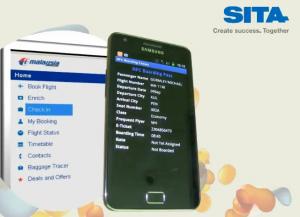
The tech provider, which is owned by major airlines and other global air travel industry companies, so far has only demonstrated the NFC applications to air travel industry executives in a demo room at its Geneva headquarters.

But it plans to launch a pilot with a major European airline this summer with actual passengers in at least one airport, enabling the passengers to use mobile boarding passes loaded onto SIM cards over the air, said Renaud Irminger, director of the SITA lab in Geneva.

The trial could be the first involving full NFC phones with check-in and boarding passes stored on SIM cards. Other tests of contactless-mobile check-in or boarding, including those by Air New Zealand, Air France and Scandinavian Airlines, used mainly passive contactless stickers attached to the backs of phones. In Japan, airline check-in and boarding have been stored on the phones themselves, but these handsets use proprietary FeliCa contactless technology, not standard NFC.

See the video of the Galaxy S II Used for NFC check-in and boarding in the SITA lab.

Beating Bar Codes
Irminger told NFC Times that NFC technology promises to eliminate the problems associated with 2-D bar codes, the medium now used by passengers to present mobile boarding passes at checkpoints and gates.

That includes occasional failure of the bar-code scanners to read the 2-D bar-code boarding passes because of greasy handset screens or passengers holding the phones at improper angles or moving them during the scanning process.

In addition, bar-code-based boarding passes on phones often take longer to scan than bar codes on paper boarding passes, said SITA. And passengers at times have trouble downloading the bar codes over their mobile networks when they need them at airports from the SMS or e-mail messages they receive from their airlines. And if they are roaming, it could cost $10 to $20 for the data connection to download the passes.

With NFC, the boarding passes would already be stored on the phones, and passengers would only have to tap their phones on readers to present them. They wouldn’t need to worry about positioning the screen properly, and it should work even if the phone is turned off. The NFC chip would draw power from the reader.

“All you need to do is take your phone out of your pocket,” Irminger told NFC Times. “You don’t need to wake it up and unlock it. You just tap your phone to the device, the reader, and reader will extract the boarding pass from the phone.

“We see NFC has the capability to really help mobile be adopted more widely across the industry.”

Industry Trade Groups Push NFC
SITA said it has demonstrated four of the six use cases for NFC as outlined by the airline industry’s major trade group, the International Air Transport Association, or IATA, along with the GSM Association, the major trade group for mobile operators. A white paper the two associations issued nearly a year ago describes the benefits of using SIM-based NFC for helping passengers check in, pass through security, enter lounges and board planes.

These are the use cases SITA built for its demo. In addition, IATA and the GSMA identified two other air travel uses for NFC–enabling passengers to tap their phones to check in their bags and to ride ground transportation after their flights. The GSMA has pushed for use of SIM cards, which are issued by mobile operators, to store secure applications in NFC phones.

Passengers could also use the NFC phones to pay for extra baggage fees, fast-track security access and the ground transportation tickets, with the tickets or access keys downloaded over the air to the phones, noted IATA and the GSMA.

Airlines and airports could use NFC for delivering additional information and services via NFC tags in smart posters and could accept frequent flyer card accounts stored on the phones, as well, suggested Irminger.

TSMs ‘Not Ready’
But SITA had to overcome some significant problems to build its demonstrator of an NFC-based boarding pass service. That included the need to develop a trusted service manager, or TSM, to deliver and manage the boarding passes over the air.

In addition, readers on the market generally lacked the ability to read the boarding passes from SIM cards in NFC phones. And SITA had to design more intelligence into the readers to enable them to read the proper boarding pass, in case more than one is stored on SIM cards for passengers taking connecting flights.

Irminger said Orange Business Services developed the TSM functionality for the NFC boarding passes after SITA found established TSMs wanting.

“We thought the industry was more advanced than it is,” he said, noting that most NFC trials using SIM cards that have been held to date have involved preloaded applications on the cards. “A lot of trials or pilots do not include over-the-air delivery of an element. We found, in fact, to our disappointment they (commercial TSMs) were not ready.”

SITA will have to fund further development of the TSM before it launches its planned pilot this summer, Irminger said. “There is nobody we can go to and say, let’s run it tomorrow. There is a lot of work that needs to be done.”

This problem would have to be solved before airlines could roll out NFC-based boarding passes commercially, he said.

Passengers Want to Use M-Boarding Passes
SITA’s prediction that passengers could present 50% to 80% of their boarding passes by tapping their NFC phones by 2018 also assumes the NFC ecosystem continues to ramp up, especially with many more phones becoming available. The industry also needs more standards, Irminger said.

“We need NFC boarding passes from all airlines to be readable on all airports readers,” he said, adding that SITA intends to propose industry standards to IATA in mid- to late 2012.

Last year, about 2% to 3% of passengers used mobile check-in, according to a 2011 passenger survey SITA conducted and a separate survey of airline chief information officers. The passenger survey showed 17% of passengers had used mobile boarding passes at least once.

The passenger survey, conducted last spring among more than 2,400 passengers at six major international airports, including those in Atlanta, Beijing, Frankfurt and Mumbai, India, also found that 73% of respondents said they would like to use mobile boarding passes.

This is one of the main reasons SITA is predicting that more than half of passengers will be using mobile boarding passes by 2018.

But that is unlikely to happen with 2-D bar code technology. And a lot needs to happen before passengers will be routinely tapping their NFC phones to pass through airports and board planes.

“We have today a huge gap of what passengers would like to do, and what they are able to do,” Irminger said.