HEADLINE NEWS

OTI to Supply Contactless and NFC Readers for Gasoline Stations in North America

Israel-based contactless and NFC vendor On Track Innovations announced Monday it had received an order for 30,000 readers for point-of-sale terminals at retail gasoline stations in North America.

Taxis in Major U.S. Cities to Get NFC-Enabled Video Ads

Riders in 5,000 taxicabs in the U.S. would be able to tap on NFC tags on video advertising screens to download apps, brand information, coupons, maps, music and videos, according to technology suppliers that have equipped the taxis for potential advertising campaigns.

Analyst: Banks Have More to Fear from Cloud-Based Technologies Than NFC

Banks have much more to fear from cloud-based mobile payment than from NFC, even if mobile operators control the secure elements that hold the banks’ payment applications.

GSMA Proposes Global Standard for NFC-Enabled Loyalty and Couponing–Using SIM Cards

May 10 2013 (All day)

The GSMA mobile operator trade group is proposing a global standard for how point-of-sale terminals talk to NFC-enabled mobile wallets to enable consumers to redeem coupons and rewards.

Taiwanese Bank Gets Approval for NFC-Enabled Credit Cards; Okay for Other Banks Expected

Taiwanese banking regulators, as expected, have approved the first bank to issue mobile credit cards that could be downloaded over the air to SIM cards.

UK Retailer Marks & Spencer Sees Growing Use of Contactless

Marks & Spencer, one of the UK’s largest retailers, announced today it had rolled out contactless payment to 644 of its UK stores and said 14% of its card transactions under £20 (US$30.97) are contactless.

Identive Reports Growing NFC Business; Blames Flat Sales, Losses, on U.S. Budget Cuts

U.S.-based Identive Group reported growing NFC and smart card reader business, but fell back into the red during for the first quarter, a loss it largely blamed on U.S. federal government budget cuts.

German Bank and Telco Hold Small NFC Trial; Larger Launches Planned in Country This Year

As Germany gears up for NFC, German bank Dortmunder Volksbank along with Telefónica (O2) Germany have launched a small pilot putting a credit application onto SIM cards in Western Germany.

Cashless Technology Company Announces Rollout of Isis SmartTap on Vending Machines

Vending technology company USA Technologies plans to integrate the SmartTap mobile-commerce software into all of the company’s nearly 100,000 NFC-enabled terminals on vending machines nationwide.

Infineon Introduces New Embedded Secure Element, Hoping to Tap Growing Market

Germany-based Infineon Technologies today introduced a new embedded secure element, targeting the growing market for chips that handset makers are including in their NFC-enabled devices.

Vendor Group: NFC Secure Element Market to Grow by Two-Thirds This Year

Smart card vendor association Eurosmart has substantially increased its estimate for NFC secure element shipments for 2012–by 50% to 150 million units–and forecasts that secure element shipments will grow by another 67% in 2013 to 250 million units.

Gemalto Reveals Some Details of MCX Deal; Vendor Will Earn Fees for Transactions

France-based smart card and security vendor Gemalto will operate the mobile-payment platform for U.S. merchant group MCX, earning a fee for every transaction, in addition to what appears to be a hosting fee it says is worth tens of millions.

New NXP Tag Line Targets Advertisers and Other Markets

By: 
Kiona Smith-Strickland

With its recent launch of a second-generation of tag products, NXP Semiconductors hopes to tap into what it sees as increasing demand by advertisers for data analytics on prospective customers.

NXP is positioning the new line of tags, the NTAG21x, as a way for advertisers and brands to more quickly roll out campaigns using NFC tags to collect data online, through such media as smart posters and print ads. There is also a feature that enables advertisers to collect rudimentary data in offline mode. Another feature enables simple authentication of luxury products.

Most of the features in the line are not new and are possible with NXP’s popular NTAG203 chip tag. But the Netherlands-based chip maker, the largest producer of NFC chips worldwide, is continuing to try to encourage demand for NFC technology beyond payment.

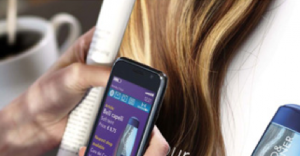
It’s seeking more uses for NFC tags like the attention-grabbing NFC-enabled Lexus ad that ran in Wired magazine in April or the millions of NFC-enabled toys that work with the popular Skylanders video game series.

“The idea behind a product family, instead of a single product, is to address the different needs of NFC applications,” Giancarlo Cutrignelli, senior global marketing manager at NXP Cutrignelli told NFC Times.

Prices would vary for the tags, mainly according to the memory available in the NTAG21x line, which come in a range of sizes.

One of the new features of the chips is what NXP calls “UID ASCII mirror,” which would enable tag producers to more easily combine the UID, or unique identifier serial number, with a URL in each tag.

NXP claims that the unique number could be encoded more easily on the chips so tags could be produced more quickly, which would mean faster rollouts of NFC tag campaigns for brands.

This serial number combined with a URL lets the server identify which tag has been tapped by users to access the URL. Measuring traffic to each tag’s URL helps advertisers see which individual tags in a deployment receive the most attention. 

Advertisers would be able to collect data on devices that interact with the tags, such as browser type and the GPS coordinates of the location.

Unless users have some type of loyalty app for the advertiser or brand on their phones, however, the advertisers would not be able to collect individual user data. For users with these types of apps, advertisers might have access to such data as age and sex, provided by the user who opts in on the application.

Tapping Print Ads
Advertisers have more possibilities to collect data when they use NFC tags in magazine advertisements, since the publisher’s database could offer additional information on subscribers who tap a tag in the publication they’ve subscribed to.

The NFC-enabled Lexus ad in April attracted advertisers’ attention to the possibilities of NFC despite its higher cost compared with QR codes. As NFC Times reported, the advertisers could get the time, date and number of times a user tapped the tags and potentially other information.

Advertisers could then send more narrowly targeted follow-up promotions to those smartphone users demonstrating they are most interested in the NFC-enabled ads, even if they don’t know their names. Of course, even without the names, the tracking would require the consumers to opt in.

IPC Media, which publishes women’s magazine Marie Claire in the UK, said it would introduce an NFC-enabled ad for Nuffield Health in a limited number of copies of the magazine’s December edition. By tapping, subscribers could download a two-day pass to a Nuffield Health fitness center.

It’s unclear how many issues IPC plans to distribute with the NFC tags, but Wired magazine printed a reported 500,000 NFC-enabled copies.

These and other high-volume uses for tags, such as embedding tags in shelf labels through supermarkets or other large retail locations–as French merchant groupe Casino is experimenting with–require affordable tags. The demonstration project in one store alone by Casino has called for 25,000 tags.

NXP and tag producers that use its chips have declined to reveal prices for the tags, though the cost is said to be roughly €.20 (US$.25) apiece for the Casino project.

NXP said it has a range of memory sizes available in its line, including the low-cost NTAG210, with only 48 bytes of space. Other tags range in size from 144 bytes to 888 bytes and all comply with the NFC Forum tag type 2. This would enable all standard NFC phones to read the tags, not just those with NXP chips, as with tags using the chip maker’s proprietary Mifare Classic chips.

Tags supporting NFC Forum’s type 4, not included in the NTAG21x line, sport memory sizes greater than 1 kilobyte.

A 24-bit NFC counter in the NTAG21x line also could keep an offline tally of how many times a tag is tapped by an NFC device. Advertisers could access the counter offline by tapping the tag with a phone using an authentication app, but the counter just reveals the bare measure of how many times a particular tag had been tapped, with no other data.

Cutrignelli told NFC Times that currently, the only way to collect real analytics is through an online connection, when a consumer accesses the URL stored on the tag.

The offline counter is suited for places with poor network coverage or where consumers only want to access offline information, he said.

According to NXP, the counter could be used for promotional offers, such as couponing, in which the first 20 customers receive a discount; or lotteries, in which the hundredth customer gets a prize, said Cutrignelli.

Authenticating Tags and Products
Separate features in the tag line support a digital signature based on the chip’s UID, which users could read and verify with NFC-enabled devices. Users would need an authentication app on the NFC-enable smartphone to read this “originality signature,” but there would not be a need for complex key distribution. The feature is intended for product authentication. 

A separate 32-bit password authentication feature enables an authentication app to send a command containing a password to the tag. The password would be verified offline on the tag itself, said Cutrignelli.

He said that such authentication would be useful for NFC applications that deliver weekly offers, product prices, or links to free downloads, in which the tags must be re-encoded in the field.

He also cited tags with multiple applications, which could benefit from the basic security. “A typical example is a city card, with Web links (open) and offers from local shops (protected),” he said. 

NXP acknowledged that password authentication for NFC tags is not new, but contends that NXP has made authentication more flexible for NFC applications, though the company declined to elaborate. 

“Security is a relative concept,” Cutrignelli noted. “A solution is secure enough if it is able to make it anti-economical for a hacker to hack it.”