HEADLINE NEWS

Orange Group NFC Veteran Barnaud Departs for Wallet Vendor C-SAM

U.S.-based mobile-wallet provider C-SAM has hired Vincent Barnaud, the long-serving contactless services head at France Telecom-Orange group.

Telco and Bank in Brazil to Launch NFC Pilot; Rollout to Follow

Mobile operator TIM Brasil and Banco Bradesco have disclosed plans for an NFC trial that they say would enable users to pay for purchases at contactless point-of-sale terminals by tapping their Motorola or LG Electronics NFC phones, with the funds deducted from their debit accounts.

Taiwanese Telco and Banks Announce Plans for NFC-Payment Projects

May 29 2013 (All day)

Taiwan’s largest mobile operator, Chunghwa Telecom, and four banks announced plans today to launch NFC mobile payment, likely starting with Cathay United Bank and a six-month pilot.

Isis Gears Up for National Launch Despite Challenges Ahead

The Isis joint venture continues to gear up for a nationwide launch of its NFC-enabled Isis Mobile Wallet this year and has been in discussions with major U.S. banks along with merchants, NFC Times has learned.

MasterCard Prepares to Offer PayPass on Embedded Chips in Samsung NFC Phones

MasterCard Worldwide is the latest payment scheme to work with Samsung Electronics, with plans to soon offer its PayPass application for embedded chips in new Samsung NFC phones, NFC Times has learned.

UK Taxis Get NFC Tags for Promo Campaign; NFC Dynamic Screens to Play at French Sporting Event

Samsung Electronics, along with Australia-based NFC marketing firm Tapit, UK-based out-of-home advertising company Chiel and terminal vendor VeriFone are rolling out NFC stickers to 80 taxis in the UK, as part of a promotional campaign for musician Robbie Williams’ upcoming Samsung-sponsored tour.

Visa Europe: Contactless Transactions to Continue to Grow Rapidly in 2013

Consumers in Europe did 19 million transactions with Visa-branded contactless bank cards in March, up by nearly 50% from December, announced Visa Europe Tuesday, which predicts monthly transactions will increase to 52 million by the end of 2013.

OTI to Supply Contactless and NFC Readers for Gasoline Stations in North America

Israel-based contactless and NFC vendor On Track Innovations announced Monday it had received an order for 30,000 readers for point-of-sale terminals at retail gasoline stations in North America.

Taxis in Major U.S. Cities to Get NFC-Enabled Video Ads

Riders in 5,000 taxicabs in the U.S. would be able to tap on NFC tags on video advertising screens to download apps, brand information, coupons, maps, music and videos, according to technology suppliers that have equipped the taxis for potential advertising campaigns.

Royal Bank of Canada and Bell Mobility Announce Plans for NFC Launch

May 14 2013 (All day)

Canada’s largest bank and one of its three major mobile operators have announced plans to commercially launch NFC payments by the end of the year, following a trial this summer.

Analyst: Banks Have More to Fear from Cloud-Based Technologies Than NFC

Banks have much more to fear from cloud-based mobile payment than from NFC, even if mobile operators control the secure elements that hold the banks’ payment applications.

GSMA Proposes Global Standard for NFC-Enabled Loyalty and Couponing–Using SIM Cards

May 10 2013 (All day)

The GSMA mobile operator trade group is proposing a global standard for how point-of-sale terminals talk to NFC-enabled mobile wallets to enable consumers to redeem coupons and rewards.

Analysis: Quick Tap Launches Fast but Expect Slow Take-up

By: 
Dan Balaban

Mobile operator Orange UK and payment issuer Barclaycard face challenges as they seek to get their “Quick Tap” service off the ground, say UK analysts.

Orange, part of the Everything Everywhere joint venture; and Barclaycard, the credit card issuing and acquiring arm of Barclays bank, announced Quick Tap May 20, one of the first NFC rollouts worldwide.

But they were able to launch with only one NFC model, the 2G Samsung S5230, a feature phone available in just 42 Orange UK shops. And there is only one service so far, a Barclaycard-issued application that acts like a prepaid card account, supporting MasterCard PayPass.

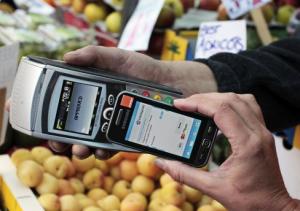
It’s all about getting out there first, say analysts, who give Orange and Barclaycard credit for a full-scale commercial launch and the first-mover advantage.

Still, while Orange and Barclaycard say they plan to get more phones and services into the market, the analysts expect a slow take-up. It’s not only the limited selection of handsets and services. There are other potential problems.

Leaving 80% of Banking Customers Out
With their bilateral agreement, only Barclaycard customers can use the service with the Orange network and SIMs and vice versa. While they are two of the largest players in their respective markets, the fragmentation could cause problems.  

“Orange itself admits that only about 20% of its customers have some sort of relationship with Barclaycard, and it remains to be seen what proportion of this 20% will be interested in the handset on offer, and of that proportion, what share of consumers will be sufficiently interested in going through the steps of loading up their phone with credit via their debit or credit card,” said Gilles Ubaghs, senior analyst covering financial services for UK-based research firm Datamonitor.

He adds that the generous offer by Quick Tap organizers of £10 (US$16.38) cash added to customers' mobile Barclaycard accounts upon activation will encourage some consumers to try the service. And they can receive 10% cash back on all purchases made with the phone in the first three months.

But in many of the other countries where mobile operators and service providers plan to commercially launch NFC, telcos, sometimes along with banks, are coordinating their rollouts or forming joint ventures.

That's true in France, where telcos and banks, along with other service providers, have set rules to ensure consumers can use the same NFC services with any telco or service provider offering the technology.

In the United States, three major carriers have formed a joint venture, Isis, and other players stateside plan to offer NFC mobile wallets that they say will be open. In the Netherlands, the country’s three largest operators and its three major banks have combined for a joint venture. Meanwhile, telcos in Taiwan are also discussing a joint launch; and that’s possible in Germany, as well, among other countries. 

It’s not clear when T-Mobile UK, Orange’s partner in Everything Everywhere will launch Quick Tap, though Orange has said the smaller T-Mobile would eventually join the project.

“Barclaycard and Orange have teamed up to push something through by themselves,” Zilvinas Bareisis, senior analyst based in London for U.S.-based research firm Celent, told NFC Times. “Orange did say that it would be open to other third-party relationships, both in payments, but also in transit, ticketing and advertising. Today it's all about seeding the market and by being first, they hope that they will be better placed to grow it.”

In fact, the bilateral agreement between Orange and Barclaycard probably helped them to launch sooner than other telcos, which are still haggling over how to share revenue. Orange and Barclaycard have not disclosed terms of their deal, which dates from 2009. They’ve already jointly rolled out a contactless credit card.

Orange also plans its own prepaid payment application for Quick Tap. Earlier this year, it issued a contactless prepaid Orange Cash card, with prepaid payment card provider PrePay Solutions, partly owned by MasterCard. It will add Orange Cash to the NFC service.

Still Waiting for Phones
Everything Everywhere announced in January that the NFC launch would happen in early summer. The telco launched instead in late spring, apparently deciding that it was not worth waiting any longer for NFC-enabled smartphones to become available.  

Samsung last year introduced the NFC-version of its popular touch-screen feature phone, the S5230, mainly for trials in France and Spain. Known as the Tocco Lite in the United Kingdom, it is still the only NFC phone on the market available in significant quantities that supports the standard single-wire protocol connection with the SIM card in the phone.

This is a requirement by Orange and a number of other mobile operators, especially in Europe, because it enables them to store payment and other secure applications on the SIM cards they issue–giving them more control over revenue earned from NFC.

The low-cost Samsung phone, called the Player One in France, is being used for a precommercial launch in the city of Nice, where four mobile operators have sold about 3,000 of the handsets. That was the number they had allocated for the project. But subscribers have activated the NFC features on only about 20% of the phones.

Orange France, sister operator of Orange UK in the France Telecom Group, said earlier this spring that it was expecting 8 to 10 NFC models by the end of the year supporting SIM-based NFC applications. That includes one or more BlackBerry models, at least one Android phone from LG Electronics, Samsung’s Wave 578, and at least two 2G feature phones: a Java-based phone from LG and the follow-up to the Samsung S5230.

But while a few of the models could arrive by mid-year, most are expected during the second half of 2011, including the NFC version of Samsung's follow-up to its popular Galaxy S, the Galaxy S II. Orange France has acknowledged it will not meet its goal of selling 500,000 NFC phones by the end of year.

And some of the same phones also will probably carry embedded secure chips that could compete with the operator’s SIMs to store applications.

It’s not clear whether Orange UK is sourcing all of the same handsets as other Orange branches in Europe.

Jason Rees, director of mobile payments at Everything Everywhere, said last fall the carrier was intent on “seeding the market” with new NFC devices by offering long-term commitments to handset makers.

And he told NFC Times recently that, over time, there would be a range of NFC phones available that the operator could use for Quick Tap. But he declined to say when he expected them.

Rees reiterated Orange’s “seeding policy” in the recent interview and added that the Tocco Lite is a popular seller among UK subscribers. “It’s one step on the journey,” he said.

But Rees rejected the notion that Orange and Barclaycard could have waited longer for more NFC phone models to become available, including 3G smartphones.

“I think we waited quite a long time for an operator and issuer to get off the blocks,” he told NFC Times. “We wanted to get out there and make it happen.”

Tom Gregory, head of digital payments for Barclaycard, also said the partners were through waiting for phones.

“You have to start somewhere,” he told NFC Times. “There’s a danger you can always be waiting for the next thing. “We have a live service in the market. That helps us talk to (handset) manufacturers.”

Not Yet a ‘Lifestyle Device’
Both Rees and Gregory also said more applications are coming. Rees last fall pledged the Everything Everywhere NFC phones would become “Lifestyle Devices.” For example, besides paying for their morning coffee with a tap of the phone, users would be able ride the London Underground to work, exchange digital business cards in meetings, redeem loyalty points to buy lunch, buy concert tickets over the network and later tap to enter the venue, and download movie trailers or music videos by tapping smart posters, Rees said. 

He said all those services are still planned. “Mobile payments is probably the hardest of those use cases,” he told NFC Times. Among the new applications will be services around transport.

“I can see ahead, the whole transport proposition,” he said. “Use the phone to pay and act as a ticket, get live updates, tap and get timetables and live travel updates.”

Putting London’s popular transit application, Oyster, onto the phones is not yet an option, however, since the application is too slow when running on a SIM. Transit authority Transport for London requires that communication between its readers and phones happen in 500 milliseconds or less.

The authority next year plans to accept PayPass and other contactless bank payment applications directly on buses and later at its metro gates, but will insist on the same minimum transaction speed of half a second. Vendors contend they could hit that with applications on SIMs.

Related transportation applications, such as tapping for updated transit schedules, would not be a problem since it uses NFC’s tag-reading mode to automatically open an Internet connection or SMS channel. Transit authorities and transit operators have tested this type of service in several NFC trials.

Orange includes some NFC tags in the box with the "Tocco Quick Tap" phone, enabling users to tap to get weekly discounts on pizza and movie tickets, updated transit schedules and to create shortcuts to top up their Barclaycard payment application. Users also could write content to their own tags.

Still, Rees could not say when the telco would add major applications to Quick Tap. And for many observers, payment alone is not enough to get consumers interested in NFC, especially when the selection of models is limited.

“It’s more a question of wanting to be seen as first movers and innovators than a serious bid to launch a commercially viable service,” Guillermo Escofet, senior analyst at UK-based Informa Telecoms and Media, a research firm and conference organizer, told NFC Times. “For banks and payments firms like MasterCard, taking the lead on mobile NFC is a way of securing relevance in the payments market when or if users move en masse to contactless payments. Operators such as Orange want to ensure they get in on the act before over-the-top players like Apple and Google have a chance of disintermediating them from the mobile payments market.”

It also could convince more merchants to accept contactless payment said the analysts, which Barclaycard estimates at about 50,000 locations, mostly in London. Barclaycard’s acquiring arm is responsible for most of these locations, though few are tier-one merchants. But there have been a couple of high-profile chains agreeing to take the contactless plunge of late, including McDonald’s restaurants and Starbucks Coffee, the latter on a trial basis.

Limits on Payment Application
Barclaycard and Orange eschewed a straight credit application for the launch, deciding instead to go with a type of prepaid application. They also are not allowing users to make purchases above £15 (US$24.53) 

To reload the payment account, consumers will have to use their Barclaycard credit, Barclays debit or Orange Credit Card, issued by Barclaycard. They can transfer up to £100 at a time into the payment account before they could tap to pay. The value is stored on the network and the account can hold up to £150.

Barclaycard and Orange said the funding limits are not to ease any security concerns among consumers. Instead, prospective users had told them in focus groups they “wanted to be in control of their money.”

But reloading adds one more step to the payment process. And the £15 limit means consumers who might want to pay with their phones would have to pull out their chip-and-PIN cards and insert them into point-of-sale terminals to pay if the purchase is above this maximum amount.

The same £15 cap applies to contactless cards in the United Kingdom, but this is the same card that can do a contact EMV transaction for higher amounts, so the consumer would already have it in hand.

Barclaycard has said that standards organizations and card networks, such as Visa and MasterCard, have not yet firmed up policies for how to conduct higher-value transactions on NFC phones, including how or whether to enter PIN codes on what many consider to be insecure handset keypads.

MasterCard UK did not answer requests by NFC Times for comment on the issue, though MasterCard Worldwide has reportedly adopted standards first drafted in France to enable high-value payments on NFC phones. These standards mainly call for consumers to tap their phones, enter their PINs on the handset keypad and tap again.

Little Promotional Push Yet
While the Quick Tap launch allows Barclaycard and Orange to cultivate their images as first movers and innovators, there has been a scarcity of advertising and marketing of the service so far, observed Datamonitor’s Ubaghs. Barclaycard, however, has recently adapted its popular roller coaster-themed TV advertisement for contactless cards, inserting the Samsung NFC phone in place of the card.

If the promotion of NFC by Orange and Barclaycard hasn't moved into full swing, it might be because of the limited phone models and services available. More promotion likely will come later. Barclaycard and its parent, Barclays, which have by far been the most aggressive in rolling out contactless cards and terminals, have spent millions on peak-time television advertising and other promotions to back contactless-card payment.

Poor promotion of Quick Tap will not help take-up of the service, noted Ubaghs.

As it is, Datamonitor’s modeling shows that only 8% of UK consumers will be prime candidates to use NFC phones for payment. These consumers have a high or medium likelihood of tapping their phones to pay, estimates the research firm. That's based on the share of UK consumers who already use contactless cards and mobile banking and who pay frequently with chip-and-PIN cards.

“The payments piece is the easy part,” Ubaghs told NFC Times. “They haven’t even begun to hit the hard part yet. How do you convince people to change very entrenched habits in what is essentially a different form factor and a potentially more complicated payment platform, the prepaid mobile wallet?” NT