HEADLINE NEWS

OTI to Supply Contactless and NFC Readers for Gasoline Stations in North America

Israel-based contactless and NFC vendor On Track Innovations announced Monday it had received an order for 30,000 readers for point-of-sale terminals at retail gasoline stations in North America.

Taxis in Major U.S. Cities to Get NFC-Enabled Video Ads

Riders in 5,000 taxicabs in the U.S. would be able to tap on NFC tags on video advertising screens to download apps, brand information, coupons, maps, music and videos, according to technology suppliers that have equipped the taxis for potential advertising campaigns.

Analyst: Banks Have More to Fear from Cloud-Based Technologies Than NFC

Banks have much more to fear from cloud-based mobile payment than from NFC, even if mobile operators control the secure elements that hold the banks’ payment applications.

GSMA Proposes Global Standard for NFC-Enabled Loyalty and Couponing–Using SIM Cards

May 10 2013 (All day)

The GSMA mobile operator trade group is proposing a global standard for how point-of-sale terminals talk to NFC-enabled mobile wallets to enable consumers to redeem coupons and rewards.

Taiwanese Bank Gets Approval for NFC-Enabled Credit Cards; Okay for Other Banks Expected

Taiwanese banking regulators, as expected, have approved the first bank to issue mobile credit cards that could be downloaded over the air to SIM cards.

UK Retailer Marks & Spencer Sees Growing Use of Contactless

Marks & Spencer, one of the UK’s largest retailers, announced today it had rolled out contactless payment to 644 of its UK stores and said 14% of its card transactions under £20 (US$30.97) are contactless.

Identive Reports Growing NFC Business; Blames Flat Sales, Losses, on U.S. Budget Cuts

U.S.-based Identive Group reported growing NFC and smart card reader business, but fell back into the red during for the first quarter, a loss it largely blamed on U.S. federal government budget cuts.

German Bank and Telco Hold Small NFC Trial; Larger Launches Planned in Country This Year

As Germany gears up for NFC, German bank Dortmunder Volksbank along with Telefónica (O2) Germany have launched a small pilot putting a credit application onto SIM cards in Western Germany.

Cashless Technology Company Announces Rollout of Isis SmartTap on Vending Machines

Vending technology company USA Technologies plans to integrate the SmartTap mobile-commerce software into all of the company’s nearly 100,000 NFC-enabled terminals on vending machines nationwide.

Infineon Introduces New Embedded Secure Element, Hoping to Tap Growing Market

Germany-based Infineon Technologies today introduced a new embedded secure element, targeting the growing market for chips that handset makers are including in their NFC-enabled devices.

Vendor Group: NFC Secure Element Market to Grow by Two-Thirds This Year

Smart card vendor association Eurosmart has substantially increased its estimate for NFC secure element shipments for 2012–by 50% to 150 million units–and forecasts that secure element shipments will grow by another 67% in 2013 to 250 million units.

Gemalto Reveals Some Details of MCX Deal; Vendor Will Earn Fees for Transactions

France-based smart card and security vendor Gemalto will operate the mobile-payment platform for U.S. merchant group MCX, earning a fee for every transaction, in addition to what appears to be a hosting fee it says is worth tens of millions.

Turkey’s Top Telco Plans Major NFC Push in 2012, but Faces Challenges

Turkey’s largest mobile operator, Turkcell, is targeting 2012 for a major expansion of its NFC rollout, as it seeks to establish itself as a top-tier telco globally promoting NFC technology.

The carrier this week announced that a third bank, Akbank, is issuing a payment application for its NFC mobile wallet. Akbank joins Yapı Kredi and Garanti Bank with contactless credit applications in the mobile wallet, all supporting MasterCard PayPass. This makes the Turkcell NFC wallet the only one outside of South Korea to offer more than one payment application from a financial institution.

The telco, which is one of the most aggressive globally in its NFC ambitions, faces a number of challenges to expand in 2012, however, including dealing with the fractured situation at the retail point of sale in Turkey and high prices for NFC-enbled SIM cards.

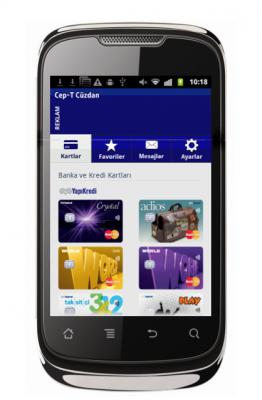
Still, Turkcell has big plans for 2012. The telco told NFC Times that two other banks, DenizBank and Finansbank, plan to join the wallet shortly and a total of 11 Turkish banks are interested in being part of the NFC program.

Turkcell also plans to introduce a second self-branded NFC phone this month, following launch of an Android NFC phone, which Turkcell calls the T20, customized for it by Chinese telecoms equipment manufacturer Huawei. The operator launched the affordable T20, also known as the Huawei U8650NFC Sonic, last summer.

Plans also call for Turkcell to branch out from hosting straight bank payment in the wallet. Following delays, it will introduce a toll-collection application with Bank Asya this month, enabling subscribers to tap their phones at toll booths mainly in and around Istanbul. The telco will also add transit ticketing and probably ID applications in 2012.

And besides commissioning its own NFC phones, the operator is one of the few to have developed its own trusted service manager service, with help from Turkish vendor SmartSoft. Having its own TSM will decrease integration time to introduce new applications, said Ergi Sener, mobile wallet product manager at Turkcell.

Turkcell’s NFC wallet and the 2012 expansion plans put it among the leading telcos rolling out NFC globally. In the competitive Turkish payments market, which prides itself on innovation, that is important

Still, the telco faces major hurdles in its effort to expand its mobile wallet, or “Cep-T Cüzdan.”  

Contactless Payments Remain Small
Consumers are not yet using the contactless- payment applications in the wallet much. Turkcell launched the wallet last April with the Samsung 2G NFC phone, the S5230, and a bridge technology–a SIM with a flexible antenna. It added the T20 in July.

An NFC-enabled iPhone attachment, iCarte, introduced by bank Yapı Kredi with Turkcell a year ago is fairing no better with consumers.

Consumers can tap their Turkcell wallet phones and the iPhone with attachment at any of 60,000 point-of-sale terminals that accept contactless payment in Turkey, which is believed to have the most contactless acceptance points at retail in Europe outside of the United Kingdom.

But this represents only 3% of Turkey’s 2 million POS terminals, about the same contactless penetration as in the United States. And Turkey’s percentage of contactless merchant locations is even probably lower than 3% since a number of Turkish merchants have multiple POS terminals as acquiring banks battle for counter space.

While growing, use of contactless cards by Turkish consumers also remains low–five years after the country’s contactless rollout began. According to figures from Turkey’s interbank group BKM, consumers tapped their contactless credit and prepaid bank cards only about 1.3 million times during October, for just under 4.5 million Turkish lira (US$2.4 million) for the month.

Contactless transactions are not high, acknowledge Murat Çevik and Mert Nuzumlalı of Yapı Kredi in a recent interview with NFC Times. But the bank expects them to grow.

Yapı Kredi has issued a total 650,000 contactless cards, which were used for just under 1 million Turkish lira (US$530,000) in October. In addition, the bank has sold only about 1,000 of the iPhone attachments the past year, even though it is waiving an already subsidized €30 (US$39) cost if customers do at least one transaction.

“We think it’s going to be higher in the near future; we have a limited number of units,” Çevik said of the iPhone attachment. Added Nuzumlalı: “People don’t know what NFC means; no habit of paying with mobile devices.”

Seeking to Expand Beyond Payment
Turkcell wants to introduce more nonpayment applications, such as couponing, loyalty and offers, which it sees as vital to insuring the success of its wallet and earning more revenue for itself.

But it would be difficult to equip existing contactless POS terminals to support the nonpayment applications, especially since the terminals are owned by the banks.

“For the nonpayment applications, there are no standards,” Ali Salcı, head of mobile financial services at Turkcell told NFC Times. “That means if you want them in the POS (terminal), you need to convince each bank to develop it, which is not easy.”

The contactless terminals are mainly at fast-food restaurants, cafés and cinemas and support a maximum purchase of only 35 lira (US$18.57) in contactless mode, he said. But banks do not see a strong business case for expanding contactless to other merchant categories or to widely deploy the technology at the point of sale, he said.

And the fact that banks run their own loyalty schemes–which often results in multiple POS terminals on merchant checkout counters–complicates the situation.

One option is for Turkcell to introduce its own terminals at the point of sale supporting two-way NFC chips and coupons and offers. But in addition to putting yet another terminal on the crowded checkout counters, Turkish banks wouldn’t appreciate the move. And at US$200 per terminal, it would add substantially to costs.

Turkcell isn’t commenting on that option. What is clear is that the telco is seeking to broaden the appeal of its wallet by expanding applications.

“Mobile payments will not be enough for consumers to adopt NFC technology,” said Salcı.

Tapping for Tolls
Moving beyond strictly bank payment, Turkcell plans to expand the wallet to toll collection this month, using an application now running on contactless cards based on Mifare technology. The cards support the KGS toll-collection system, and issuer Bank Asya said commuters use it nearly 400,000 times per month from both Mifare-only cards and the bank’s contactless bank cards that carry a separate KGS Mifare application. Total spending is just under 1.3 million Turkish lira (US$690,000) per month.

Mustafa Olmez, senior vice president in Bank Asya’s payment systems division, said he believes that toll collection and also bus and ferry fare payment will encourage more consumers to use the Turkcell wallet and other NFC wallets like it.

“If people have got options to use their card in contact or contactless interface, generally people choose the contact interface since still they have not got good experience in an contactless environment,” Olmez told NFC Times. “But in bus validators or in (metro) turnstiles, they have to use their cards as contactless. By gaining experience in these contactless-only terminals, customers are more eager to use their card in normal shopping.”

Besides cards for toll collection, Bank Asya has issued a combined 1.1 million contactless credit and prepaid EMV cards, which can be used for retail payments, as well as bus and ferry fares for some of the EMV cards. That helps explain why the bank racks up about 800,000 transactions per month, not counting toll collection, by far more than any other Turkish bank. (See chart). Some of the bank’s EMV credit and prepaid cards also are used for university campus applications, such as payment and access control.

The bank is considering putting its own EMV application in the Turkcell wallet and is planning its own contactless-mobile payment project using microSD cards.

Turkcell had planned to introduce toll-collection in the wallet in 2011, but the T20 didn’t communicate consistently with the Mifare readers at toll booths, probably because of antenna issues in either the phones or readers. That problem has been fixed, said the telco and Bank Asya

NFC SIMs at Serious Prices
Turkcell plans to introduce a transit application, which would also probably use Mifare, along with a highly secure ID application. Both ID and bank payment require much more security than conventional SIM cards offer.

All of this comes at a cost. Turkcell’s NFC-enabled SIM cards are pricey–at up to €4 (US$5.20) apiece, five times more than the telco’s conventional SIMs. Part of the cost is from the higher memory on the cards, up to 512 kilobytes compared with only 64K for the conventional SIMs. But most of the added costs come from NFC software and extra security. Besides certified payment applications, Turkcell wants cards that can crunch public key encryption algorithms for ID applications.

But Turkcell’s Salcı said NFC-enabled SIMs need to come down in price in order for the telco to be able to distribute NFC to the masses.

France-based smart card vendor Gemalto is believed to be the only supplier of the NFC SIMs to Turkcell so far. While not commenting on Turkcell or other NFC SIM supply projects, Frederic Vasnier, a senior vice president in Gemalto’s telecom unit and chairman of the SIMalliance trade group, told NFC Times the substantially higher cost for the NFC SIMs relates mainly to the higher security the cards offer.

“When you want banks to run services on their SIMs, those new NFC SIM cards need to go through a lot of security certification, a lot more secure than traditional SIMs,” he said.

Competition on the Horizon
Turkcell also will face competition for its wallet domestically. NFC Times has learned that rival Vodafone Turkey is gearing up for an NFC launch, probably in early 2012. No. 3 operator Avea introduced mobile-payment last year with Garanti using a bridge technology.

And Google is probably targeting Turkey and its large youth market for its Google Wallet. Turkcell like other operators in Europe with mobile-wallet strategies see Google as a threat and could try to block the Web giant, as telco Verizon Wireless has done in the United States.

Verizon asked Google to keep its wallet off of the Galaxy Nexus Android phone Verizon is selling. Verizon is the largest member of the Isis consortium, which plans to its own NFC wallet later this year.

But Turkcell’s Salcı said the telco wouldn’t try to block Google, though wouldn’t actively help the Web giant either. Google probably would need access to Turkcell’s SIMs if it wanted to roll out its wallet widely in Turkey.

“I can't say that there will be resistance from the operators, but there will not be a support,” he said. “Google’s business model is not structured for mobile operators to benefit from this business.”

Turkcell like other mobile operators see NFC as a major new opportunity to earn revenue from mobile commerce and so are not keen on so-called over-the-top players like Google to enter their markets with its wallet.

Still, with NFC wallets only expected to start taking shape in 2012, it remains to be seen which players will rise to the top and how much revenue they will be able to earn. Turkcell hopes to take a leading role in how the technology is rolled out/  

“NFC is a technology, and we need to change how we do business using that technology,” Salcı said.