HEADLINE NEWS
Report: Contactless microSD Cards are Here to Stay

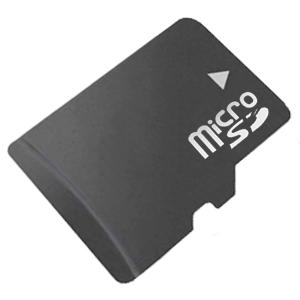
Contactless MicroSD cards that will turn ordinary mobile phones into contactless payment and ticketing devices will likely serve as more than just a bridge to NFC phones.
Instead, they will provide a more permanent option for banks, transit operators and other service providers. That is one of the findings of a new report on the contactless microSDs by United Kingdom-based consulting firm The Human Chain.
“If it does what it says on the tin, it’s more than a stepping stone, it has long-term capability,” Tim Jefferson, managing director of the firm, told NFC Times.

A handful of technology companies are planning to offer microSD cards this year–all embedded with tiny antennas and smart card chips to carry secure payment, ticketing or other applications. That is in addition to a couple of gigabytes of flash memory storage for photos, videos, music and documents.
Interest is growing in the planned contactless versions of the minuscule memory cards, as delays in NFC phones continue. The microSDs, along with contactless stickers and SIM cards with flexible antennas, among other contactless peripherals, provide a way for banks, transit operators, retailers and others–including mobile operators–to offer mobile-contactless services without waiting for full NFC.
But in the past, these peripherals were considered only bridge technologies to NFC phones. Now some observers see them as more than that, especially such options as microSDs, which unlike passive stickers could communicate with the phone and mobile network. The cards will only work in card-emulation mode at first, though some of the suppliers say they are working on incorporating NFC chips that would enable the cards to also read tags and communicate peer-to-peer.
The microSDs could enable just about any bank to offer mobile payment, for example, because a majority of phones shipped today have microSD slots, and the cards could be distributed through a variety of channels, including general-merchandise stores, transit stations and bank branches, as well as mobile operator shops, said Jefferson. But the issuers wouldn’t necessarily have to work directly with telcos, as they would using NFC phones if those phones only supported applications on SIM cards the telcos issue, he said.
“They (service providers) could get to market quicker,” Jefferson told NFC Times. “They could have different business models than what mobile network operators could offer them.”
Interest Grows
Visa Inc. last month announced it would offer contactless microSD cards made by U.S.-based DeviceFidelity with the Visa payWave application onboard. Trials with banks are to begin during the second quarter. And U.S.-based payment processor First Data with its contactless microSD card supplier Tyfone will offer similar cards to banks, retailers and other service providers for trials in the third quarter. They predict real consumers will be tapping the cards before the end of the year.
Interest is also running high among mobile operators to potentially issue contactless microSDs, both for their own applications and those of banks and other service providers, said Jefferson, speaking from the International CTIA Wireless 2010 trade show and conference, which began today in Las Vegas. The consulting firm is introducing the report, “NFC microSD cards: stepping stone or standard?,” at the show, which is the largest annual event for the U.S. mobile industry.
To host applications from other service providers on the microSD cards, the telcos would first have to seal revenue-sharing deals with those organizations, just as they would to put applications issued by other entities on their SIM cards in NFC phones.
But Jefferson said he expected the first contactless microSDs, which he predicted would be issued this year, to carry just one preloaded application. While the microSDs from at least some of the vendors working on the technology support over-the-air downloads and management of multiple applications, the market likely won’t see that until next year. Downloading and managing multiple applications over the air is more complex for both service providers and consumers.
“The mobile industry is riddled with examples of mobile payment and banking applications that have been available over the air, but which have never had large take-up,” said Jefferson.
Other ‘Pre-NFC’ Peripherals
Contactless microSDs are not the only “pre-NFC” contactless options that service providers and card networks, such as Visa Inc. and MasterCard Worldwide, are interested in.
For example, at the Cartes Asia 2010 exhibition and conference in Hong Kong last week, MasterCard was hosting a demonstration of contactless stickers embedded with NFC and Bluetooth chips along with a secure chip for applications. The sticker prototypes, demonstrated by smart card company Sagem Orga, which supplies the secure chip, can also communicate with the phone and mobile network, like contactless microSDs. But the stickers, to be supplied by France-based Twinlinx, can read tags, as well.
“There are quite a few alternatives that could help the industry,” James Davlouros, vice president for innovative platforms at MasterCard told NFC Times. He said MasterCard’s goal is to offer Bluetooth/NFC stickers, contactless microSD cards and other contactless devices, including NFC phones, from different vendors, all certified to carry MasterCard’s PayPass payment application.
The options, including microSDs, are not yet quite ready and require field trials. They also do not work in all mobile phones. The microSDs, for example, only work in phones with microSD slots. That covers an estimated 60% to 80% of phones shipped today, though with some notable exceptions, such as the iPhone. Also, if the microSD slot is positioned behind the battery, the contactless transmissions would be blocked.
Issues at Hand
MicroSD cards could create some certification issues, as well. Because the antennas have to fit inside the tiny 11-by-15-millimeter cards, the read range for transactions will be only about half or perhaps less than the roughly 4-centimeter range of contactless cards.
Contactless microSD card vendors draw power from the phone to accomplish even this much range. But among other things, this requires a piece of software supporting the cards to run on each phone. That means vendors will have to ensure there are no interoperability problems among handsets running different operating systems. And at least one of the vendors requires software to also run on the server of the trusted service manager that downloads and manages applications over the air to the cards.
The Human Chain’s report profiles five vendors that are among those that have announced contactless microSD cards or are working on the technology: U.S.-based DeviceFidelity, Giesecke & Devrient of Germany, Czech Republic-based Logomotion, U.S.-based Tyfone and Wireless Dynamics of Canada. The report, among other things discusses the respective patent claims of these suppliers.


I am very interesting in contactless MicroSD, Can you give more detailed technical informaion about this product. For example: how does antenna be designed to work on ISO14443 compatiable RF reader.
Thanks