
Loan Helps Transit Agency in Planned Move to Open-Loop Payment
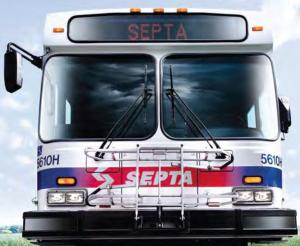
A planned contactless fare-collection system for the Southeastern Pennsylvania Transportation Authority, or SEPTA, will be built to last. It had better be, since the transit agency has borrowed at least a $100 million to fund it.
One of the largest transit agencies in North America still using paper tickets, Philadelphia-based SEPTA plans to use the loan to leap frog magnetic-stripe technology and go straight to contactless smart cards to collect fares on its multiple modes of transport. That includes accepting contactless bank cards for fares.
"The system will be able to accommodate emerging technology without having to redo it again in 10 years," a SEPTA spokesman told NFC Times. "As other (regional) transit agencies get up and running with smart card technologies, there’s a potential for them to be compatible with one another, (meaning) there should be a way for our riders to pay for travel on other transit systems using technology just like that in the Philadelphia system."
It would be interoperable if SEPTA and the other transit agencies accept contactless credit, debit and prepaid cards branded Visa, MasterCard and other payment card brands. Philadelphia is one of the latest cities to be interested in handing over at least part of its fare-collection to banks and the major card brands. That list includes transit officials in London, New York and Chicago. The regional transit agencies could also make their closed-loop transit cards interoperable, but they would need to set up a clearing and settlement system. With open-loop fare collection, processors, banks and payment card networks perform this function.
Philadelphia is especially keen to move away from its outdated fare-collection system. After coming up against a funding barrier, SEPTA’s plans appear to be back on track. Last month, the authority agreed to take out a loan estimated at $100 million to start the project. Earlier reports placing the loan amount at $175 million for the fare-collection system include funding for unrelated capital spending.
The transit authority expects to select one of three vendor finalists to install the system by late spring, and forecasts the project to be completed in about three years.
SEPTA’s New Payment Technology initiative will be designed to let riders pay fares across the multimodal SEPTA system using contactless cards and, later, NFC phones. That is expected to include closed-loop contactless cards for riders who do not have bank cards or do not want to use them to pay fares.
The agency will replace a fare-payment system that now uses tokens, passes and paper transfers to shuttle a million passengers daily across a system spanning 2,200 square miles (5,698 square kilometers).
"We are way overdue, as the last generation of technology passed us by," the SEPTA spokesman said. "A lot of systems that did update to closed systems have or are looking to install the kinds of system we’re moving forward with now."
SEPTA passengers use buses, trolleys, subway trains and commuter rail to traverse metro Philadelphia and into the far suburbs and nearby cities encompassing Southeastern Pennsylvania and parts of New Jersey, Delaware. Some of its 13 rail lines link up with other systems, including Amtrak and New Jersey transit agencies. One day all of these agencies could accept interoperable banking and perhaps other fare cards.
Vancouver: Discounts Important for Open-Loop Riders
One such transit system, Port Authority Transit Corp., a subsidiary of the Delaware River Port Authority, which runs a commuter line that connects to SEPTA and New Jersey Transit, announced earlier this month plans to trial open-loop fare payment with bank cards. U.S.-based systems integrator Cubic Transportation Systems will work on the trial.
Cubic said a partner bank would issue contactless prepaid cards for the year-long pilot. In a later stage of the trial, all contactless bank cards would be accepted.
Cubic is also involved in plans to revamp the TransLink fare-collection system in Vancouver, Canada, including eventually accepting bank cards. The company said it would begin installing the system in the spring. IBM Canada would be involved in the project, which is expected mainly to feature closed-loop prepaid transit cards and passes.
TransLink's eventual aim is providing a way for riders to move easily across the multimodal transit network. The system covers 22 municipalities.
Update: Mike Madill, TransLink's vice president of enterprise initiatives, said an open-loop component of the system would cater primarily to occasional riders and visitors who pay straight cash fares and make up 20% of occasional riders. The other 80%, those who use a prepaid system pass, would be shifted to contactless prepaid fare cards.
Madill said that while a majority of customers are likely to want to continue using TransLink cards because they get discounted fares, a goal of the new system is to enable those regular customers to also use bank cards, but still enjoy discounted fares and other volume ridership perks they get from the present close-loop system.
"Ultimately, we see an account-based system advancing to where open-payment cards will be going beyond cash fares," Madill said. "If we had a price-capping system in the future, where you travel so many times per month and get a lower rate, they might be able to set that up as a backend account system," he said.
Tom Prestia, a consultant with IBI Group and lead engineer for the TransLink system upgrade, said the system Cubic is developing looks to be able to offer the system architecture TransLink is seeking.
"Cubic's hardware has the ability to read all of the cards, and from that starting point, they look well positioned to implement this," he said. End update.
The move to accept open-loop payments as part of fare-collection systems in Philadelphia and Vancouver comes as other large metro transit agencies in London, New York, Chicago, Toronto and Washington, D.C., map out plans to introduce open-loop payment. That is in addition to some smaller agencies, including the Utah Transit Authority, which already accepts contactless bank cards.
Transport for London has already confirmed plans to accept contactless credit, debit and possibly prepaid bank cards on up to 8,000 buses next year. New York City-area transit officials last year expanded its open-loop fare-collection tests to regional systems. And The Washington (D.C.) Metropolitan Area Transit Authority late last year issued a request for proposal for a new system accepting open-loop
 Facebook
 Twitter
 LinkedIn
HEADLINE NEWS


Syndicate

