
Inside Contactless Plans to Acquire Atmel Smart Card Chip Unit
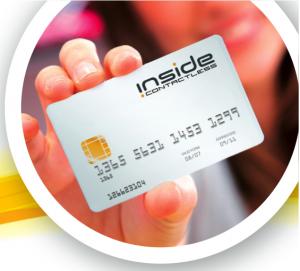
France-based Inside Contactless plans to acquire the smart card chip business of Atmel Corp., enabling the struggling contactless and NFC chip supplier to enter new markets, including chips for EMV banking cards, even SIMs, NFC Times has learned.
The deal, for an undisclosed price, is still being finalized but is expected to be announced as early as next week, said sources. It would nearly double Inside’s headcount to a total of nearly 300, sources told NFC Times. The acquisition would include about 120 research and development, marketing and other personnel located in Rousset, France, and East Kilbride, Scotland, along with intellectual property and other assets of the chip unit. But it would not include any chip manufacturing plants, which Atmel has already sold, meaning Inside will remain a fabless chip supplier.
“They could scale up more quickly because of the R&D resources,” said one market observer. “It could enable Inside to procure its chips from larger fabrication plants.”
Perhaps most importantly, the Atmel unit could give Inside needed designs and implementations for secure chips it needs to stay competitive in the contactless and emerging NFC markets. For example, it could give Inside a dual-interface chip for contactless EMV payment markets in Europe, Asia and other markets outside of the United States. Inside’s own efforts to develop a dual-interface chip have failed to materialize. The acquisition also could help Inside enter the market for higher-end ID cards, both contactless and contact, and perhaps chips for electronic passports. And one source suggested Inside could supply SIM chips supporting the single-wire protocol standard that would be tightly integrated with its Near Field Communication chips. The SIMs could store payment, ticketing and other secure applications.
U.S.-based Atmel, which had revenue of more than $1.5 billion in 2008, supplies microcontrollers and other chips for a range of uses, including consumer electronics, avionics, wireless devices and network base stations. Smart cards make up a small and shrinking portion of the revenue. The company reportedly had a market share for smart card chip revenue in the single digits in 2008, behind Infineon Technologies, Samsung Semiconductor, Renesas Technology, NXP Semiconductors and STMicroelectronics, according to research firm Frost & Sullivan. The firm estimated Atmel had a market share by revenue of 11% in 2007. Atmel’s chips are used in SIM cards, banking, ID and pay-TV cards, along with chips for smart card readers.
Atmel put its smart card chip unit on sale more than 18 months ago and received interest from other chip makers as well as one or two smart card vendors, said a source, including one believed to be Gemalto. Inside began talks with Atmel about a year ago. Atmel in March announced it had sold its chip factory in Rousset to LFoundry, a Germany-based chip fabricator.
Many of the Atmel R&D and other employees that stayed with the smart card chip unit work in Rousset, close to Inside’s headquarters in Aix-en-Provence.
It’s unclear whether Inside will raise the money for the acquisition from its current investors or bring in a new investor. The former is more likely. Since 1995, Inside has raised 83.6 million euros from venture capital firms, such as Sofinnova and Vertex Management and the venture capital arms of Nokia, Samsung, Motorola and Qualcomm, along with an earlier investment from Visa.
With NFC rollouts delayed and with no access to the higher-end EMV and ID markets, Inside lost 7.6 million euros (US$10.7 million) in 2008 and 10.1 million euros in 2007. It had revenue of 35.8 million euros in 2008, the last year for which figures are available, nearly double that of 2007.
The supplier holds a dominant share of the market for contactless bank card chips in the U.S. market, though those non-EMV chips are commoditizing and growth in the market has slowed.
Inside is part of a vendor consortium that will seek to supply contactless chips for transit fare-collection cards and applications for NFC phones and other contactless devices in competition with Mifare technology from Inside’s chief rival, NXP. Inside has also tried to build a market for contactless chips for ID.
Inside CEO Rémy de Tonnac and representatives from Atmel declined comment on the pending deal.
 Facebook
 Twitter
 LinkedIn
HEADLINE NEWS


Syndicate

