HEADLINE NEWS
First Data Announces Contactless microSD Card Offer

Consumers could be tapping their mobile phones to make purchases with contactless microSD cards storing payment applications before the end of the year, said U.S.-based processor First Data, which announced today it would make the cards available with its technology vendor Tyfone.
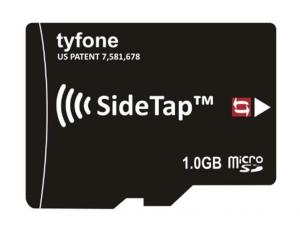
As NFC Times first reported last month, First Data and Tyfone have an agreement that will enable the processor to offer the microSD cards to banks, retailers and other potential payment issuers, with First Data also serving as a trusted service manager to download and manage the applications.
They say trials will start with Tyfone’s SideTap microSD cards in the third quarter.

Visa Inc. last month announced an agreement to work with rival contactless microSD maker DeviceFidelity, enabling banks to issue the flash-memory cards packing a Visa payWave contactless application. Trials with banks are to begin in the second quarter, Visa said.
Demand is growing for the microSDs, which could enable banks or other service providers to offer customers contactless-mobile payment or ticketing without having to work directly with mobile operators. First Data intends to offer open-loop payment applications, such as those from the major card schemes, as well as closed-loop gift or prepaid payment applications.
Over-the-air management of the Tyfone cards requires special software on the trusted service manager’s servers. But it was not clear whether the First Data agreement with Tyfone requires First Data to serve as trusted service manager for all of Tyfone’s cards used for payment.
First Data and Tyfone say the cards would sell for about the same price as conventional microSD cards with the same amount of flash-memory storage. And consumers could buy them at the same locations, including retailers and mobile operator shops, along with new outlets, such as mass-transit kiosks and bank branches.
Unlike passive contactless stickers, the microSDs have a connection to the handset and network, allowing banks or merchants, for example, to manage the applications over the air through trusted service managers and to send down promotions or other communication via mobile wallets on the handsets. The cards also provide storage for music, videos, photos and documents, although Tyfone has versions of the cards available without extra storage.
Tyfone and DeviceFidelity, among a few other vendors developing the contactless microSDs, embed tiny antennas in the cards that are attached to secure chips. In the case of Tyfone’s SideTap and DeviceFidelity’s In2Pay cards, the antennas are connected to secure chips from NXP Semiconductors, which can store one or more applications. That includes transit ticketing complying with NXP’s Mifare application and protocol.
Because the antennas are so small–for the Tyfone card only 1 millimeter by 10mm–the cards draw part of their power from the handsets in order to offer a read range of 1 centimeter or more.
Unlike NFC phones, the contactless microSDs only work in card emulation mode, and cannot read data off of tags or connect with other devices in peer-to-peer mode. The vendors say they are working on putting real NFC functionality into the cards, however. And, they point out, there are as yet few NFC phones on the market.
In addition, the cards don’t work in handsets in which the SD slot is positioned behind the battery, which would block the transmissions. And many handsets do not have flash-card slots, including Apple’s iPhone. But First Data and Tyfone say that more than 60% of the mobile phones on sale come with memory-card slots.